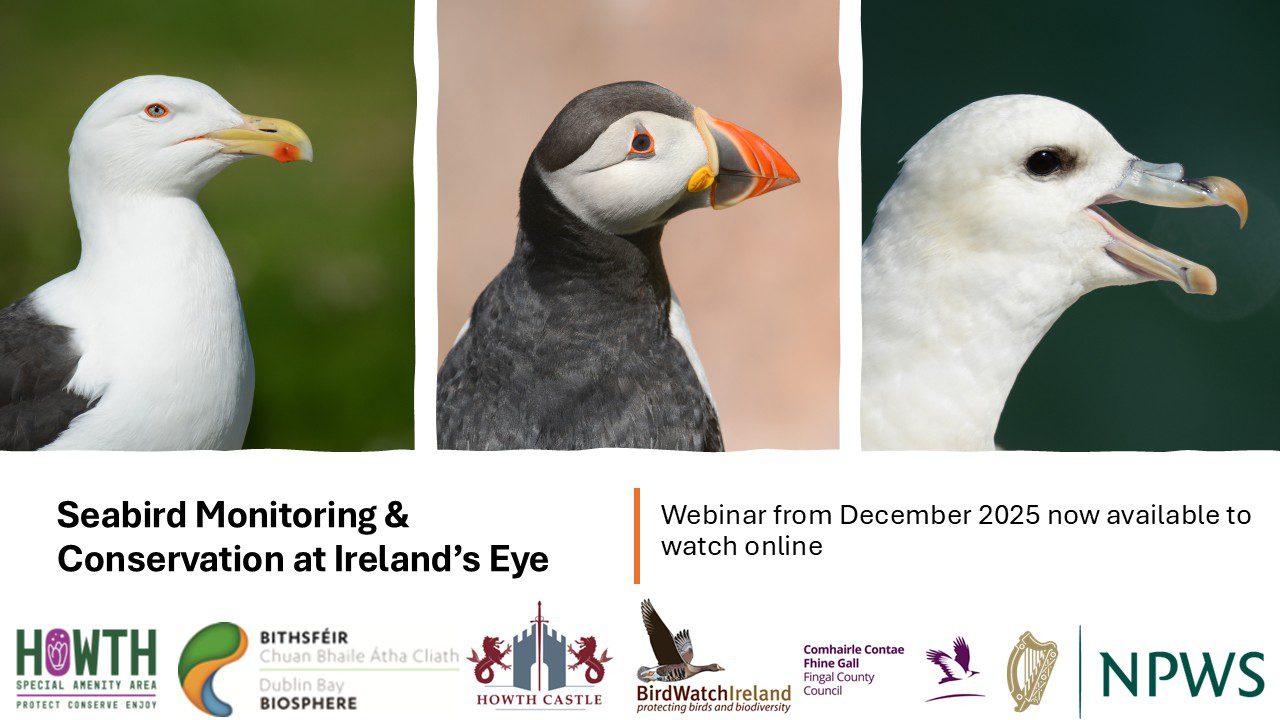
This year we were delighted to work on a seabird monitoring and conservation project on Ireland’s Eye in Dublin, ‘special protection area’ (SPA) with over 9,000 pairs of breeding seabirds across 11 different species. As the year draws to a close we were able to reflect on the results of the project in a webinar, which we have since uploaded for anyone to watch.
The project was funded under the Local Biodiversity Action Fund from the National Parks and Wildlife Service and, through Fingal County Council under the Fingal Biodiversity Action Plan 2023-2030. It formed part of a larger effort under the management plan for Ireland’s Eye, carried out by Fingal County Council and Howth Castle, to better manage the island for biodiversity and for people. Previous monitoring on the island has demonstrated the impact that visitors have on the seabirds during the nesting season. Disturbance of nesting seabirds can cause breeding failure through chilling of eggs and chicks, by stopping adults from feeding their young, by encouraging predation by other species, and simply by increasing stress levels and impeding the normal activities of the adult birds through the busy nesting season.
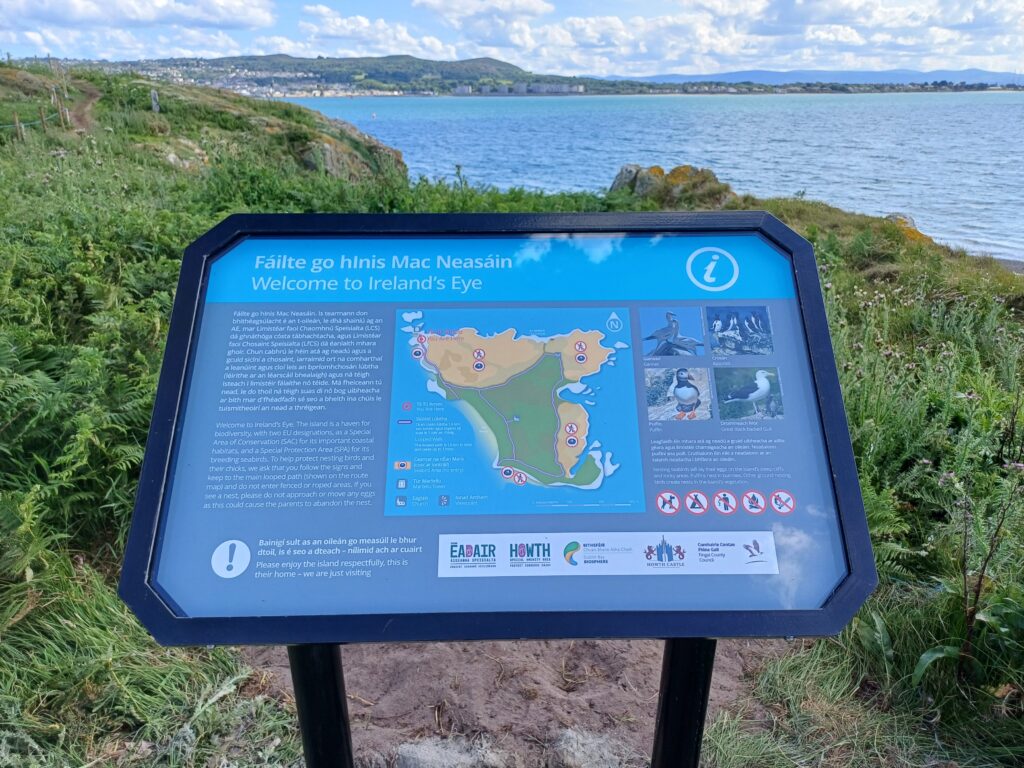

Fingal County Council commissioned BirdWatch Ireland to run a pilot warden scheme and conduct a breeding seabird census from May to August 2025. Wardens engaged with visitors to the island to foster an appreciation for nesting birds whilst keeping a respectful distance and monitored disturbance to assess the effectiveness of newly fenced areas, pathways, and signage installed by Fingal Council in early June. Overall, the measures were perceived as largely successful and the warden’s observations will help inform improvements to future management.
The wardens were also tasked with carrying out a detailed census of the seabirds breeding on Ireland’s Eye in 2025, which they did using binoculars, telescopes and drones. The webinar outlines the results of that census and puts the numbers into context with historical counts at Ireland’s Eye, as well as the national trend for these species in recent years.
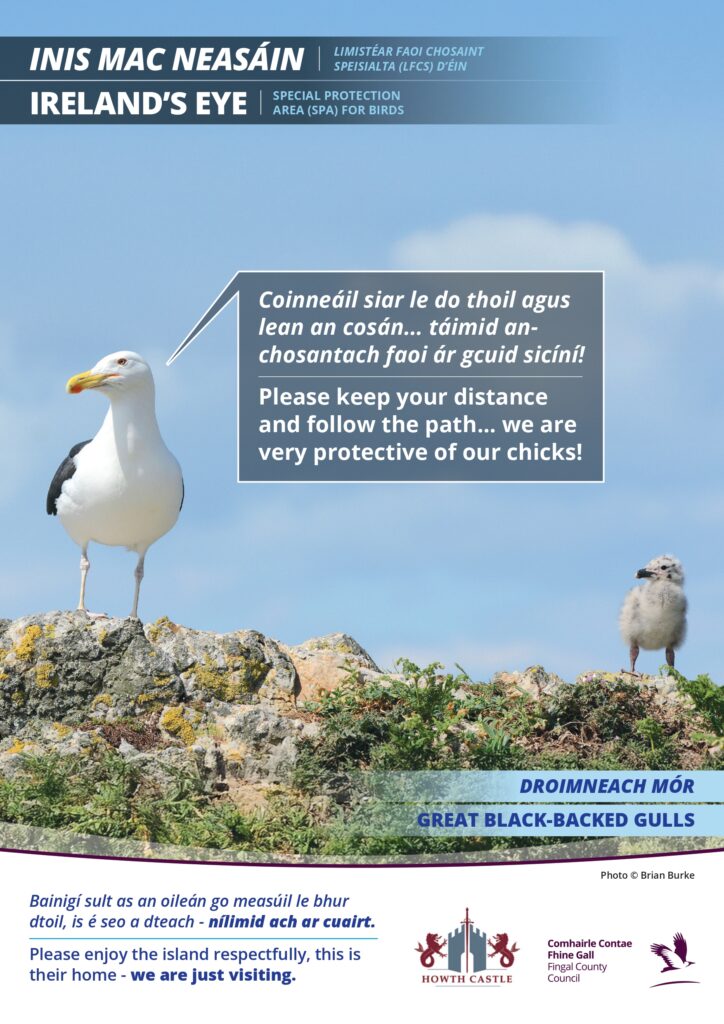
Of Irelands 24 regular breeding seabird species, 23 are either red- or amber-listed meaning they are of high or medium level conservation concern. While many of the threats they face are operating on a broad scale and long timelines e.g. climate change influencing fish distribution and weather patterns, damaging fishing practices, habitat loss and offshore development, there are factors we can influence at site-level and on shorter timescales (i.e. within a breeding season) to help protect them and enhance their numbers. Efforts to reduce disturbance of seabirds at their breeding colonies, through wardening, signage and guidance, often proves to be a valuable conservation action that results in increased numbers of birds fledging, and longer term population stability and growth.
For a full summary of the conservation and wardening efforts on Ireland’s Eye this year, and the results of the seabird census, see the video below.