
BirdWatch Ireland is proud to announce that the latest report from the Irish Wetland Bird Survey is now freely available online at https://www.npws.ie/sites/default/files/publications/pdf/irish-wildlife-manual-162.pdf.
This landmark publication, “The status and distribution of wintering waterbirds in Ireland in 2023: results from the Irish Wetland Bird Survey (I-WeBS)”, documents the most recent population trends in Ireland’s wintering waterbirds. These data have been collected through the Irish Wetland Bird Survey (I-WeBS) coordinated by Birdwatch Ireland on behalf of the National Parks and Wildlife Service.
For 32 years, through sunshine or rain, over 1,100 skilled volunteer observers together with professional staff from the National Parks and Wildlife Service and BirdWatch Ireland have combed through hundreds of wetland sites for I-WeBS. Since starting in the autumn of 1994, data from over 94,000 visits to various wetlands across Ireland have been collected and analysed.
The point of this survey isn’t just for casual birdwatching— I-WeBS is carefully designed to collect valuable long-term data on the numbers of wintering waterbirds using our wetlands so that we can track population changes over time, both on a national and local, site-specific scale. Birds, like many other species of wildlife, are experiencing unprecedented population declines, due to climate change, environmental degradation, resource scarcity, and more. In 2019, the Irish government declared a biodiversity crisis, highlighting the need for scientific evidence to back and guide decision makers. That’s where projects like I-WeBS play a crucial role in shaping our shared future.
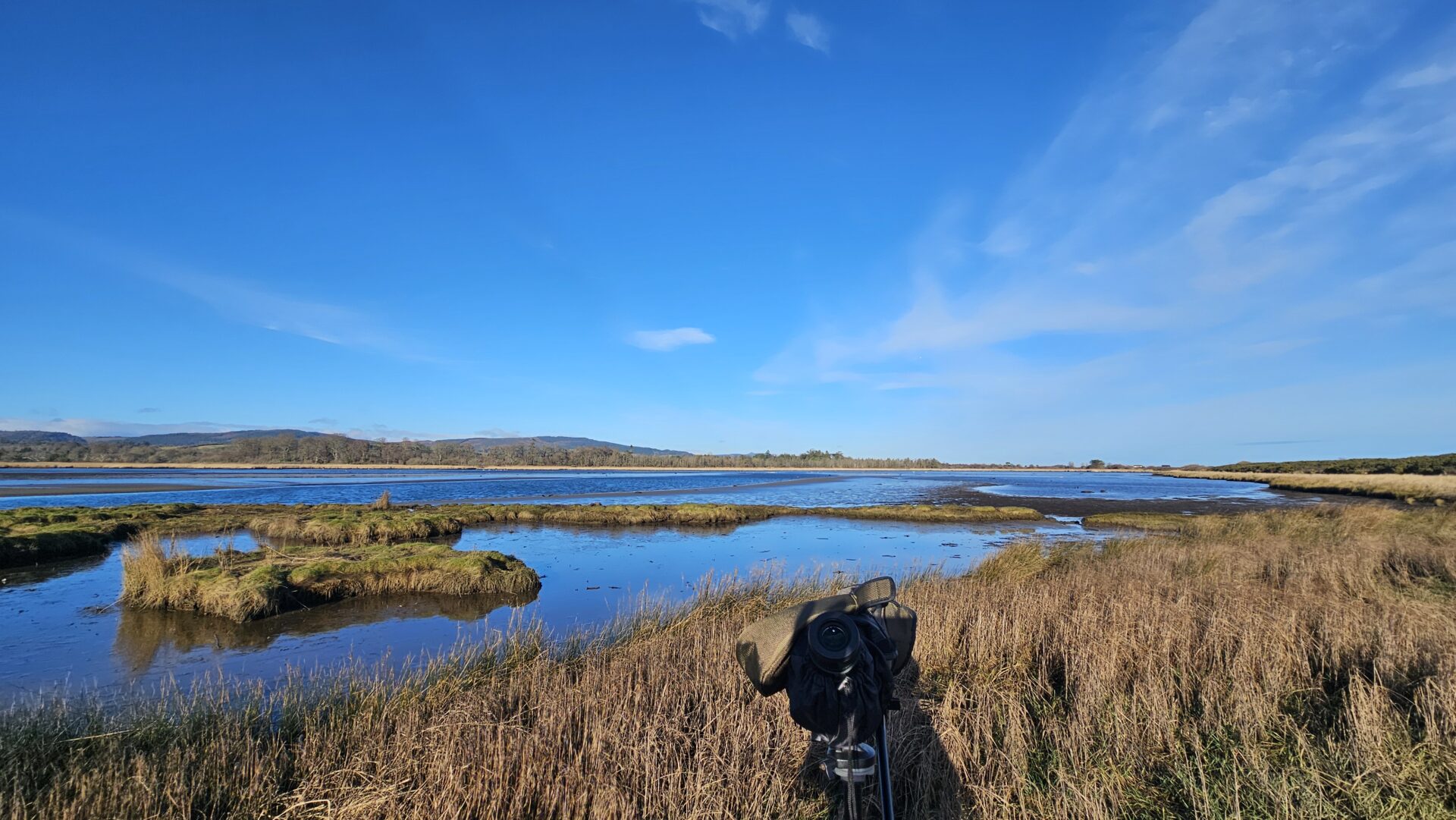 I-WeBS at Broad Lough, Co. Wicklow
Overall Trends
Since the beginning of I-WeBS, the total number of waterbirds wintering in Ireland has declined by 1/3. Overall, 23 species have declining population trends. One of the biggest collapses is evident in diving duck species, suffering declines of over 50% since 1994, including the Red-listed species Goldeneye, Pochard, and Scaup, and the Amber-listed Tufted duck (BOCCI 4). Diving ducks rely on freshwater bodies and typically prefer deeper waters to their dabbling duck counterparts. They need good quality lakes, rivers, and coastal areas to forage. Pollution of these waterbodies, generally leading to eutrophication, is reducing the food available to these species.
Waders with significant declines include the Red-listed Curlew, Golden Plover, Lapwing and Redshank. However, of the 15 species exhibiting a positive trend, waders such as Greenshank and Black-Tailed Godwit are included. Compared to other waders, the populations of Greenshank and Black-Tailed Godwit in Ireland are doing relatively well. Both species are quite adaptable in their habitat choices and can be found foraging across various wetlands both on the coast and inland, a factor which gives them an advantage over species with a narrower niche, such as diving ducks.
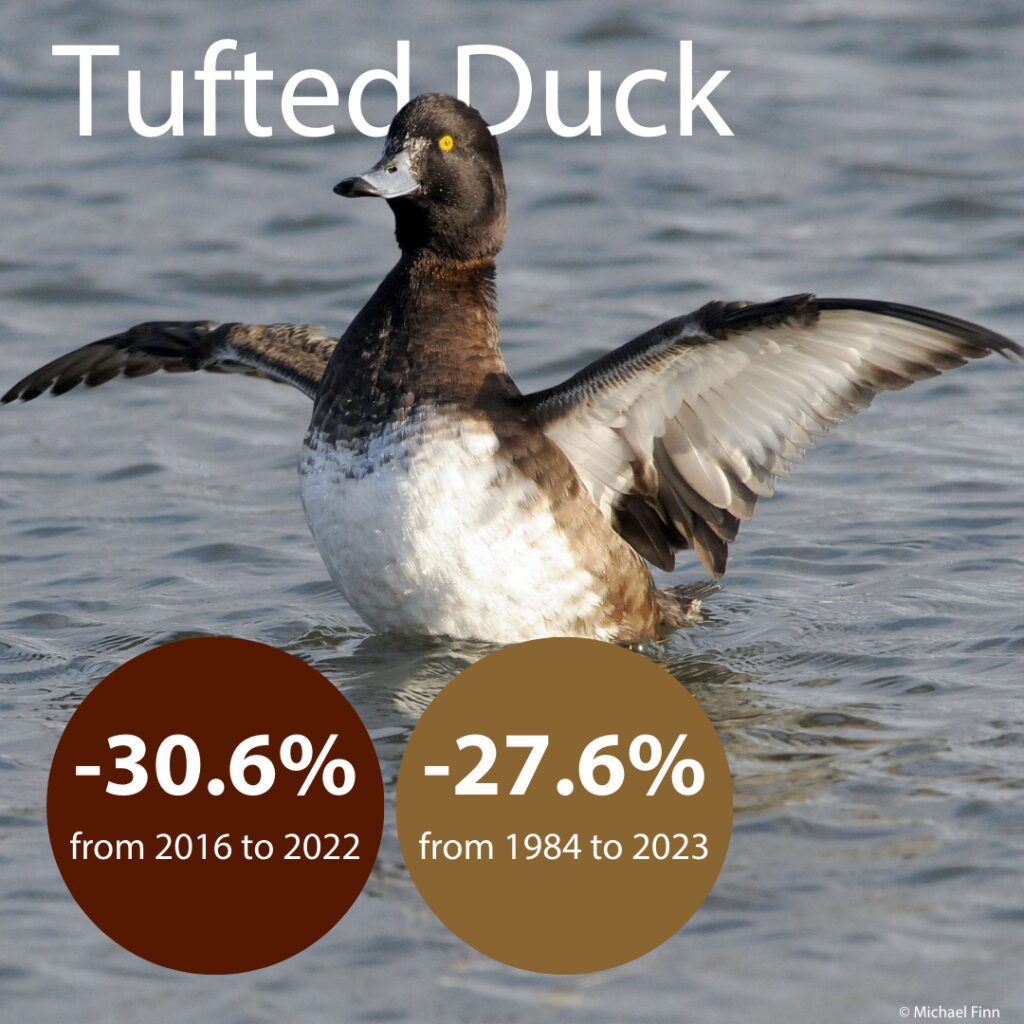 Photo: Michael Finn
The Impact of Climate Change
This report also documents some significant impacts of Climate Change on Ireland. Some species, in particular the Little Egret, have successfully colonised Ireland within the lifetime of I-WeBS due to our milder winters. Other species, such as the Whooper Swan, are seen to be increasing. Alas, for many other species, we are witnessing severe declines.Some species are disappearing completely from places they were once common in. Perhaps this is best described and documented in the loss of Bewick’s Swans from Ireland.
Once a regular visitor to Irish wetlands, the population of Bewick’s Swan has declined by 99.2% over a 30-year period. During the winter of 2022/2023, only 15 birds were observed in the entire country compared to more than 2,000 birds that would have been present forty years ago. So far during the 2025/26 season only three confirmed Bewick’s Swans have been recorded. The dramatic decline seen in the Irish wintering population of this species can be attributed to a phenomenon known as “short-stopping”. As global temperatures become milder, this species which breeds in high-Arctic Siberia, no longer needs to migrate as far west as Ireland in search of ice-free wetlands to roost and graze upon. These birds can now stop further east, in areas which previously would have been frozen over, thus reducing the energy costs associated with migrating to Ireland.
This “short-stopping” is also seen in many other species with longer migration journeys, particularly diving ducks, that come from Northern Europe and Siberia. This highlights the impact that climate change is having, especially when considered in conjunction with more local factors such as pollution, disturbance and habitat loss.
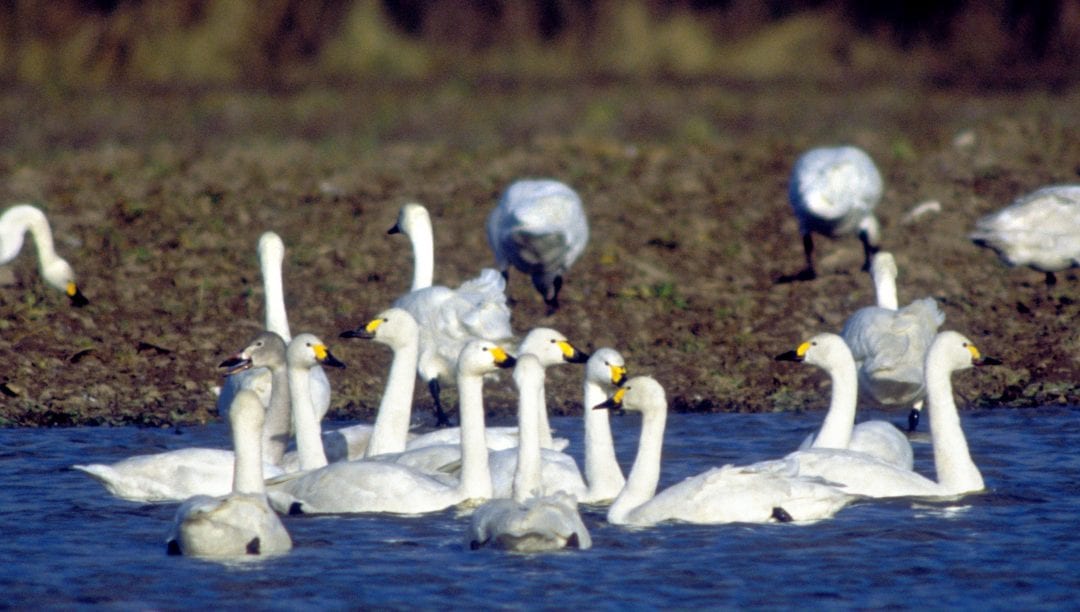 Photo: Richard T. Mills
The Value of this Report
This important report documents species trends, pressures and threats at local and national level, and will serve as a valuable tool to identify and prioritise necessary changes to policies and other interventions including steps to be taken under the Nature Restoration Law.
This analysis is also being fed into international surveys to help understand the greater picture of these waterbird populations.
For those birds that continue to make their epic journey to Ireland for the winter, a successful winter on Irish wetlands will set them up for a successful breeding season in their Arctic breeding grounds. Given the dramatic declines that are revealed for some of these species, it is now more important than ever to take measures such as developing and effectively implementing individual site management plans, improving water quality in our rivers and lakes, and minimising disturbance. We call for a redoubling of efforts to protect and improve our vital wetlands, and to support these iconic species.
Get Involved
The Irish Wetland Bird Survey is one of the longest running citizen-science monitoring programmes in Ireland. A publication like this would not be possible without the invaluable support of our committed and highly skilled volunteer surveyors. Their contributions are the foundation of this scientific report, and allow us to inform policy and conservation measures at local, national and international levels. Our sincere thanks to all those that have contributed to I-WeBS since its inception, for their commitment, diligence and effort – no matter how gloomy the Irish weather may have been! If you are not yet involved but are interested in finding out more, please visit https://irishwetlandbirdsurvey.ie.
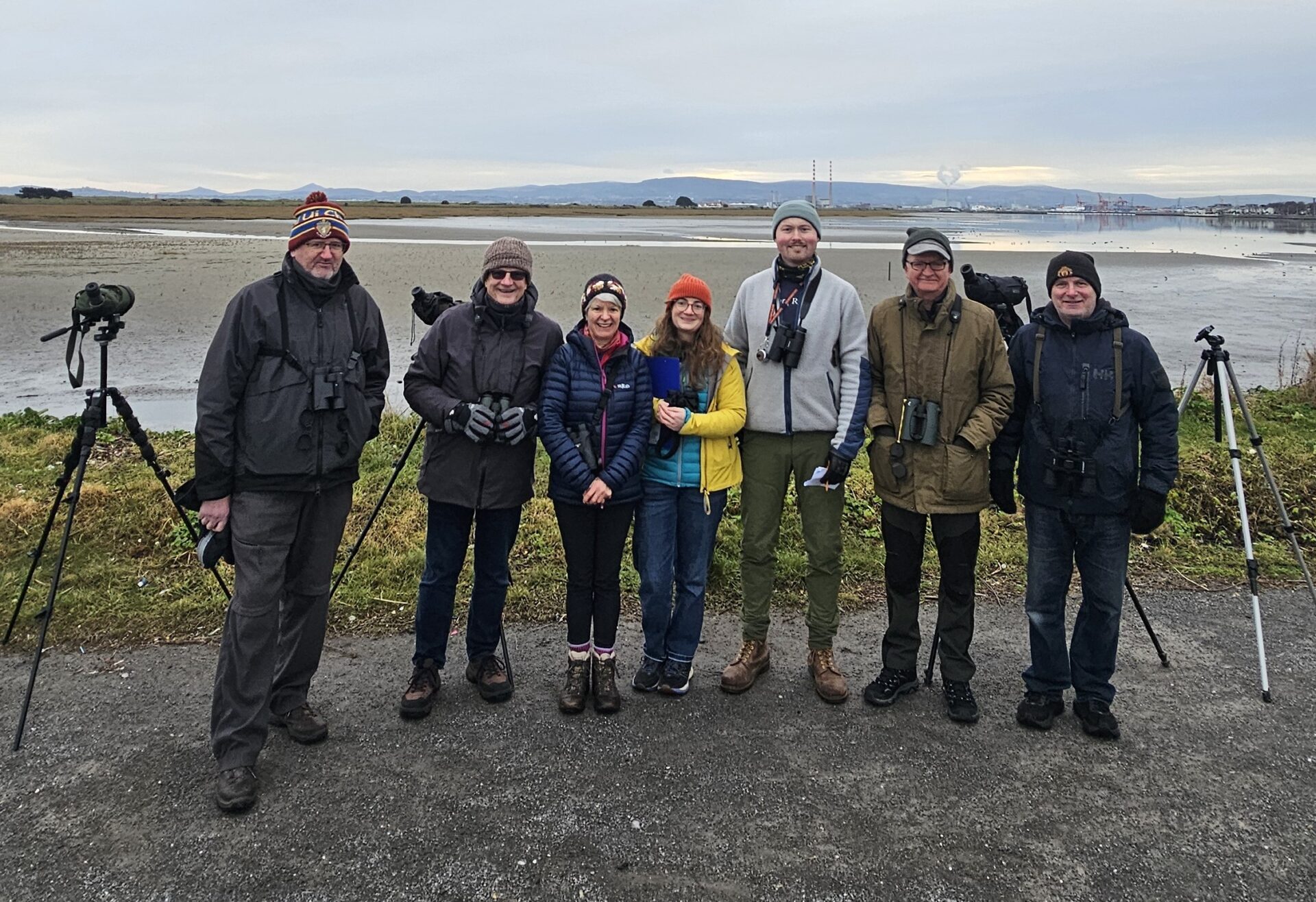 I-WeBS Volunteers at Bull Island, Co. Dublin