

Dr. Samuel Preston, one of BirdWatch Ireland’s 2026 East Coast Seabird Survey team members, writes an update about the seabird breeding season update. 2026 is the third consecutive year in which we have been able comprehensively to census and monitor the cliff-nesting seabirds at six important colonies on the east coast, thanks to funding from the Phase One windfarms in the Irish Sea. All photos are taken under NPWS licensing.
Should I Stay or Should I Go?
Guillemots and razorbills are leaving the cliffs in droves, but kittiwakes, cormorants and shag, fulmar, and gannets are still brooding chicks on the rocks. Why are some birds so slow to leave their breeding sites?
Actually, the real question is, “how are guillemots and razorbill chicks ready to leave so early?”. From as young as 15 days after hatching these chicks can be ready to make their way to the sea (though some will hang around for 3 weeks before they do). They achieve this remarkable speed by abandoning the cliffs before the can even fly. Waiting for flight feathers to grow takes time and would mean more time exposed on land to danger. There’s nowhere to run from predators on a cliff, and auk chicks are not exactly nimble on their feet. They are, however, already well-equipped for swimming. Once guillemot and razorbill chicks are big enough, they take the plunge into the water below and master the aquatic environment before even thinking about the air.
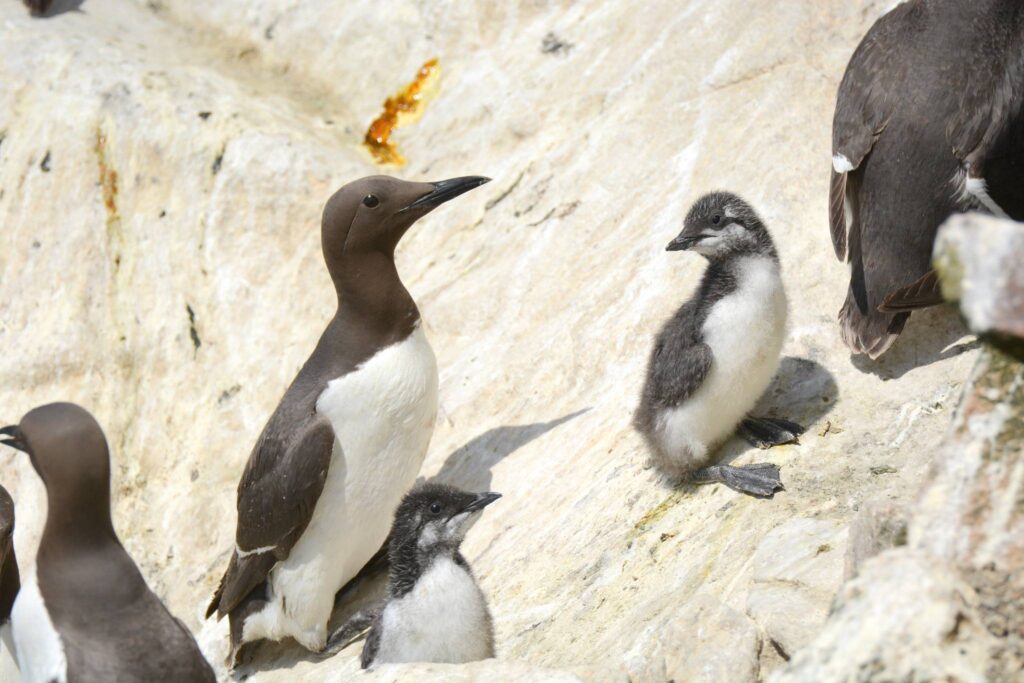
For birds that need to fly to leave the cliffs, naturally it takes a little longer to get started with adult life. Kittiwake chicks take 35-40 days to get going, cormorants and shag take around 50 days to fledge, while fulmar take 70-75 days to go from hatching to flying. Gannets, however, win the prize for longest nestling period on our cliffs: 90-95 days to fledge!
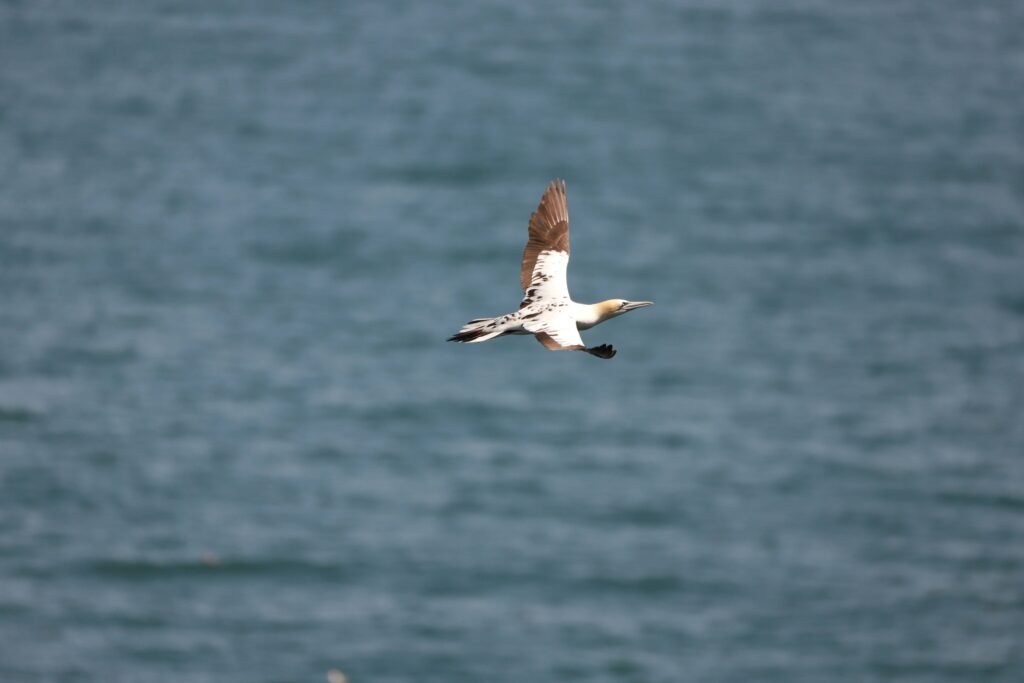
Both short and long fledging times pose challenges. Auks have to pack a lot of growing into a short period and they can’t afford to delay. When everyone leaves the cliffs all at once, so does the protection of the group. Stragglers who are left behind are the most vulnerable. Longer fledging times mean more time exposed to predators, the elements, and the stresses of group living – competition, aggression from neighbours, the risk of disease and parasites. On top of that, you need to master the skill of flying. For some birds, that means practising with short flights and hops. Gannets, however, have to get it right the first time they leap from the cliff. With so little room for error, it’s no wonder they spend the most time preparing.