Whether you’re a birder, nature lover, hiker, or someone who just likes to take a stroll on the beach, binoculars or scopes are handy tools to enhance any adventure. But, if you’re new to the optic world, it can be challenging to navigate which product is best for you, and how they work—spoiler alert; it’s not always as easy as just looking through the lens.
At BirdWatch Ireland, we have a range of optics for you to choose from and experts to help answer any of your questions. To get started on the right foot, we put together a few tips and tricks to get you started.
The Basics
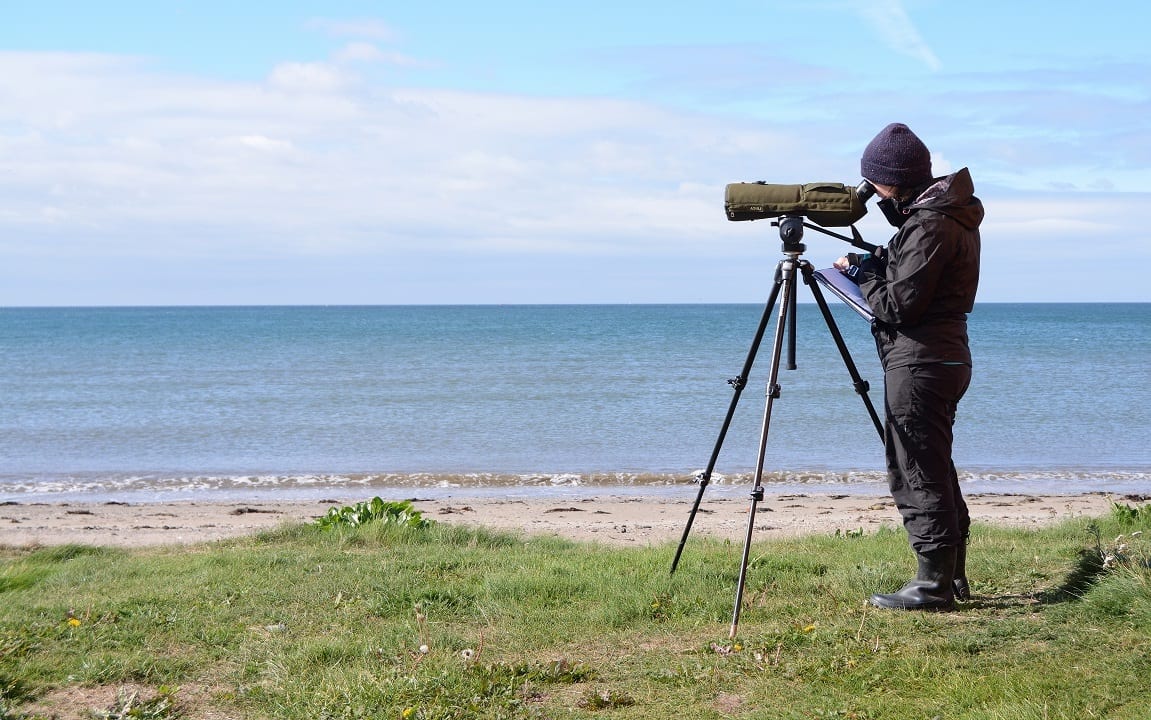
For both scopes and binoculars, the first thing to look at is the two numbers that describe magnification and the objective lens. For example, a scope may be 60 × 68, and a pair of binoculars could be 8 × 32, where the magnification is represented by the 60 or 8, and the diameter of the objective lens is the latter number, the 68 or 32.
The smaller the magnification number, the larger the field of vision is, and the easier it is to keep images steady. Conversely, the larger the magnification number, the more focused and detailed the image is, but it can be harder to track flying or quick moving species for beginners.
Objective lenses control the amount of light is projected through the optic, or how bright the image may appear. Larger numbers mean more light, but it also means a bigger optic, something to consider if you plan on bringing it along for hikes or long walks.
Using the Optics
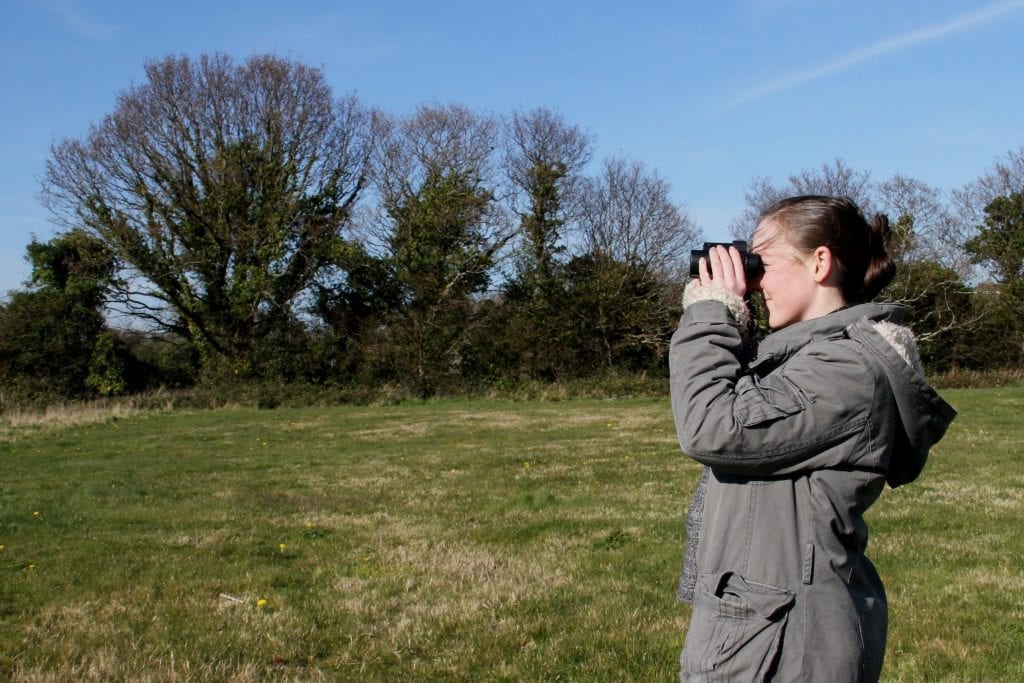
Once you’ve landed on what pair or scope you would like to use, it’s time to actually put them to the test. The end where you peer through is a piece called eyecups. For people with glasses, the eyecups should stay twisted down, while users without can twist it up. Properly positioning these eyecups is an important step to avoid eye strain and the black edges on the image.
With the eyecups in place, use the focusing wheel to blur and sharpen the field of view.
To add the finishing touches for those without glasses using binoculars, a finer wheel, called the diopter adjustment, can be found under the right eyecup. This gear compensates for any vision differences between the eyes. To use the diopter adjustment, there are two steps to follow.
First, close the right eye and adjust the center focusing wheel until you see one sharp image. Next, close the left eye and open the right. If the image isn’t clear, use the diopter adjustment to refine the image until it is again clear. Once the diopter adjustment is set, you can just use the center focusing wheel to change the focus.
Scopes or Binoculars?
Both optics are great for birdwatching, but there are some advantages to both depending on the situation. For on-the-go birding or sightseeing, binoculars are more manageable to transport and use quickly. If you’re generally staying in one spot, scopes are great for feeling up-close to birds without disturbing them, but they can be heavier and less mobile than binoculars. There is no right or wrong answer, and each person may have their own preferences!
Buy Your Optics Today
BirdWatch Ireland’s Shop has a wide range of binoculars and scopes from Hawke and Opticron. We also stock Pulsar optics that allow for night and thermal vision. Stop by in person to try out our products or buy directly from our website here.