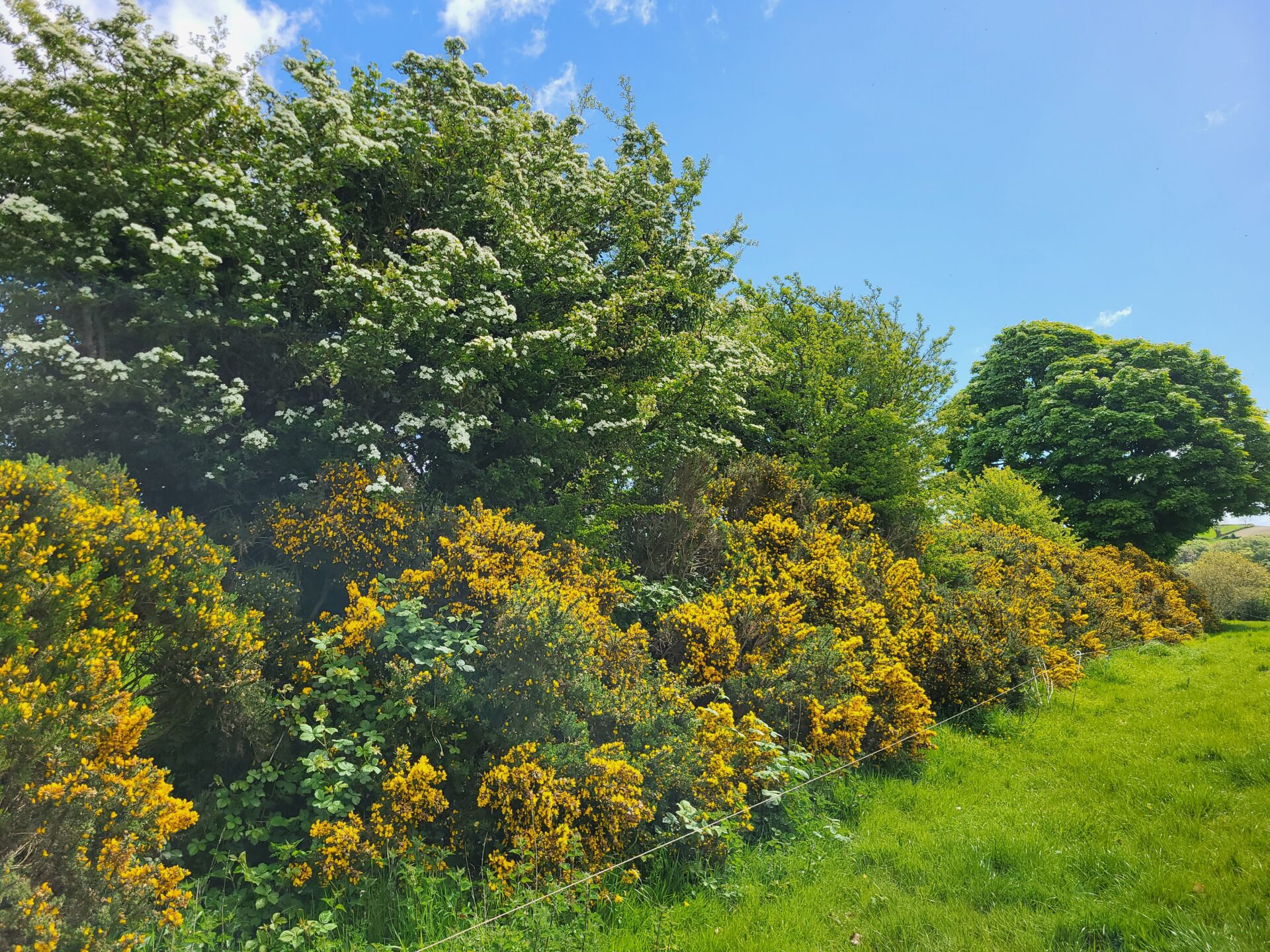
We walk and drive by hedges every day, but have you ever stopped to appreciate them? While some people may consider them a nuisance, they are actually important for us and our wildlife. Unfortunately, up to 6,000 kilometres of hedgerows are lost every year, negatively impacting our communities, land, and animals. With the prohibition of cutting and burning of vegetation, including hedges, between March 1st and August 31st, thanks to Section 40 of the Wildlife Act, now is the perfect time to learn more about these seemingly unassuming pieces of vegetation.
1. Flood Mitigation
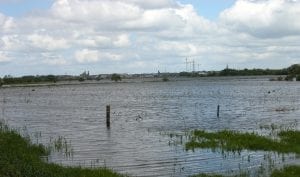
While Ireland is used to its fair share of rain, January 2026 was one of the wettest in Irish history. Many people are saying that there hasn’t been a dry day since 2025. With all of this water, fields and farmland
are prone to flooding. One way to help mitigate and reduce flooding is by maintaining or planting vegetation, because the root systems help increase water infiltration and reduce runoffs.
2. Nesting and Shelter
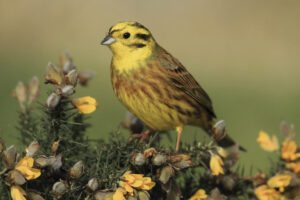 Hedgerows on farmland are hugely important for a range of wildlife, not least birds and insects, and farmers also know that they provide livestock with important shelter. For our breeding birds, hedges provide important nesting sites for many wild birds – including Robin, Wren, Dunnock Whitethroat, Linnet and Yellowhammer, as well as vital shelter and foraging habitat for other, such as Sparrowhawk, Barn Owl and Goldcrest, to name but a few.
Of the above, the Red-listed Yellowhammer has the latest fledging date. While the current legislation permits hedges to be cut from September 1st; at this time, approximately 5% of Yellowhammers may still have chicks in the nest.
3. Food Source and Protection
While some birds and mammals use hedges as homes or for protection, other species, such as Barn Owls or bats, use hedgerows as corridors to travel along and find prey. In the case of hedges with berries and flowers, the hedges themselves provide food for birds and pollinators.
4. A Part of Irish Heritage
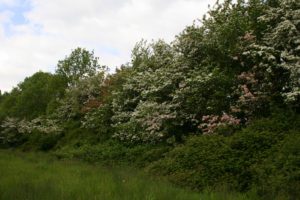 As the Department of Housing, Local Government and Heritage points out, hedgerows are an iconic feature of Irish landscapes and cultural heritage. Some hedges are hundreds of years old and serve as a living reminder of Irish history. Similar to the function of some of today’s hedgerows, previous hedges served as boundaries, windbreakers for farmland, and habitats for wildlife. Without hedgerows, the landscape and charm of rural Ireland wouldn’t be the same.
Learn More about Hedges
To learn more about hedges and hedge-cutting, check out our previous blogs: Hedge-cutting prohibited from 1st March to 31st August and Nesting Season 101 – Hedge-cutting and the Law.
As a reminder, in addition to the ban on hedge cutting or burning, Section 22 of the Wildlife Act, or the Bird Directive, still criminalizes willfully destroying, injuring, or mutilating the eggs or nest of a wild bird. 63% of regularly occurring Irish birds are of serious conservation concern, with 26% of them now Red-listed species of conservation concern and 37% Amber-listed species of conservation concern. With the decline in bird populations directly linked to the loss and degradation of habitat, it is important that we do all we can to preserve what remains.