For many of us, watching the garden birds at our feeders or dash from branch to branch is a favourite pastime—it may even be the way some were introduced to birding. The simple joy of seeing and learning the different species that we see right from our gardens is a daily reminder of our connection with nature. While this link with our garden birds should be cherished, the health and wellbeing of these small creatures come first and foremost. For that reason, we have updated our guidance on feeding garden birds to reduce the transmission of diseases, such as trichomonosis. Here are the answers to some commonly asked questions about the new guidance and trichomonosis.
What is Trichonomosis?
Trichomonosis, also called Finch Trichomoniasis, is a disease that primarily affects finches, but can occur in other species, and has a high fatality rate. It is caused by the parasite Trichomonas gallinae, which is spread through direct contact with infected birds, food, regurgitation, droppings, and shared water sources.
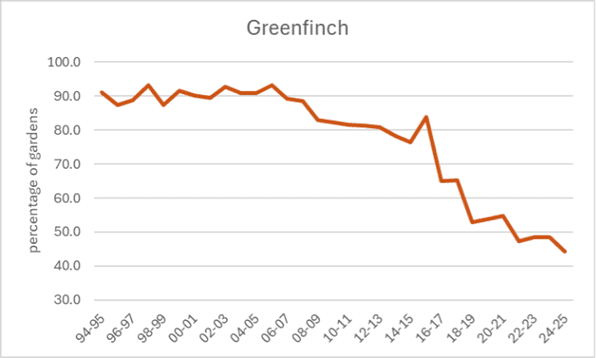
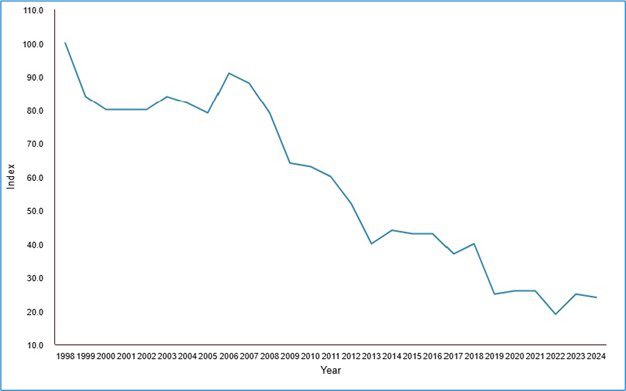
Following recent scientific research conducted by the Royal Society for the Protection of Birds (RSPB) and the British Trust for Ornithology (BTO), BirdWatch Ireland has investigated Irish data and trends. Data from the Irish Garden Bird Survey has shown >30% decrease in garden visits by Greenfinch, compared to 10 years ago (Figure 1). Additionally, there was a 13% decline in gardens visited by Chaffinch and an 11% decline in Goldfinch visits last winter compared to the early 2000’s years ago.
Data collected through the Countryside Bird Survey (CBS) have also shown dramatic declines in breeding Greenfinch since 2006 (Figure 2). There are many pressures impacting wild birds but we are seeing a >50% decline in our breeding and wintering Greenfinch in the last 20 years, since the disease first emerged in 2005. Other finch species are affected too, with CBS records of breeding Chaffinch on the downward trend since 2018, and there is evidence to show that Siskin, Redpoll and Linnet are also susceptible to the disease.
Can I feed birds in the summer?
We are strongly urging people to move away from using bird feeders from May 1st to October 31st to reduce the spread of the disease and allow the affected populations to recover. Research shows that the disease is more prevalent for garden birds in summer and early autumn. The spread of trichomonosis at this time is of particular concern due to the potential of infected parents passing food to their young, which can devastate an entire brood. BirdWatch Ireland therefore agrees with the latest scientific advice to reduce supplemental feeding of birds through garden feeders.
Will the birds be okay without bird feeders? Do I need to wean them off?
You do not need to wean birds off the food you provide in your garden. Birds have plenty of natural resources to survive, especially during the warmer months. Adults don’t rely on bird feeders to provide for their young, as they usually stick to a diet of protein-rich invertebrates for growing chicks.
Birds gain the greatest benefit from garden feeders during winter, when natural food sources like seeds, berries, and insects are scarce. In contrast, summer and autumn provide abundant natural food, allowing birds to feed themselves and their young without supplementary feeding. Encouraging birds to rely on these natural sources helps prevent large gatherings at feeders, which in turn lowers the risk of disease transmission.
Why are we only focusing on feeders? What about bird baths?
The potential spread of trichomonosis is particularly high at bird feeders, which is why we have updated our guidelines. There are, of course, other areas where infection could be spread that we can’t control, but removing feeders in gardens is one of the most effective ways to prevent the spread of infection.
Bird baths are also high contamination areas, as the parasite lives longer outside of the host bodies in water. So, unless you are committed to changing the water every single day to really minimize the risk of infection, try to refrain from using bird baths, too. The most beneficial time to provide water is during freezing conditions in winter, when natural water sources are frozen over.
What it boils down to is to try and avoid attracting and concentrating birds into a small area, which still heightens the risk of infection.
Can I feed birds in the winter?
If you want to continue to support your garden birds in winter, when natural food sources are at their lowest, please do so. We believe that providing feeders and the subsequent garden birdwatching plays an important role in connecting people to nature, which is vital for the broader support necessary to protect Ireland’s birds and nature. However, we would strongly urge you to follow a strict hygiene protocol. A few simple steps could go a long way in the fight against this disease:
- Clean your feeders weekly. Clear out any build-up of food and disinfect thoroughly.
- Only half-fill your feeder. This will reduce any build-up of uneaten food and make regular cleaning easier.
- Do not use flat-surface feeders. These surfaces allow a build-up of potentially infected food, droppings and regurgitated food brought up by sick birds.
- Change water in bird baths daily.
- Move your feeders to different spots in the garden regularly. This reduces the buildup of fallen food on the ground.
How can I support our garden birds?
While it may feel like setting out bird feeders is beneficial for our garden birds, removing feeders in the summer months is a simple act that everyone can do to help support Ireland’s birds.
If you have the ability, we do encourage you to practice wildlife friendly gardening and to provide suitable plants to support your garden birds and reduce the transmission of disease. Make your garden as species rich as possible, with native trees and shrubbery, which will provide natural food sources and encourage natural foraging behaviour. The best trees are the ones that produce berries or seeds, as these will provide natural foods for them in autumn and winter, nesting space in summer, as well as shelter and shade all year round.
Hawthorn, blackthorn, elder, holly, brambles and gorse will all provide food and shelter. Grasses and wildflowers including thistles and dandelions that have gone to seed are also valuable natural sources of food for our wild birds so reduced mowing and leaving parts of the garden to nature, can all help our garden birds.