This story is from our membership magazine, Wings. Become a member today for access to all our past and future Wings stories.
Just a few kilometres from north Dublin’s coastline stands the largest Irish island in the Irish Sea, Lambay. This 630-acre island has been steeped in a unique Irish history for over five centuries. Now, Lambay hosts a troop of Red-necked Wallabies, introduced by previous landowners and, even more recently, became the home base for Lambay Whiskey.
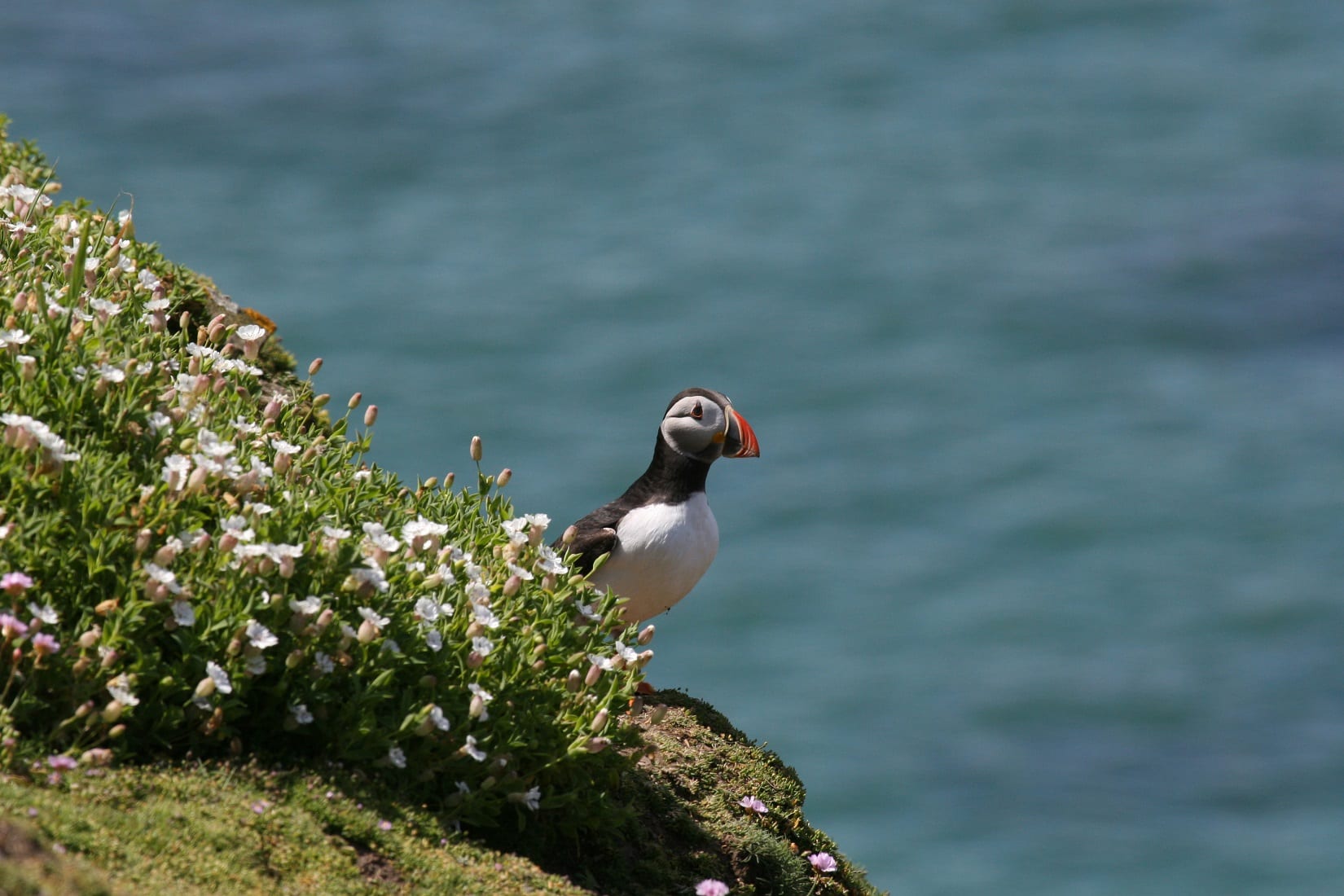
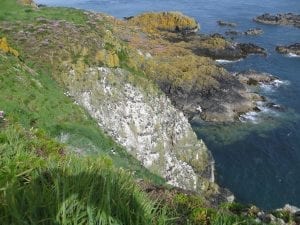
In addition to being known as the island with wallabies and whiskey, Lambay boasts the largest seabird colony in Ireland. Along the jagged cliffs surrounding the shoreline, hundreds of Kittiwakes, Gannets and more nest and feed on and near the island – but perhaps the most iconic of these birds is the Atlantic Puffin.
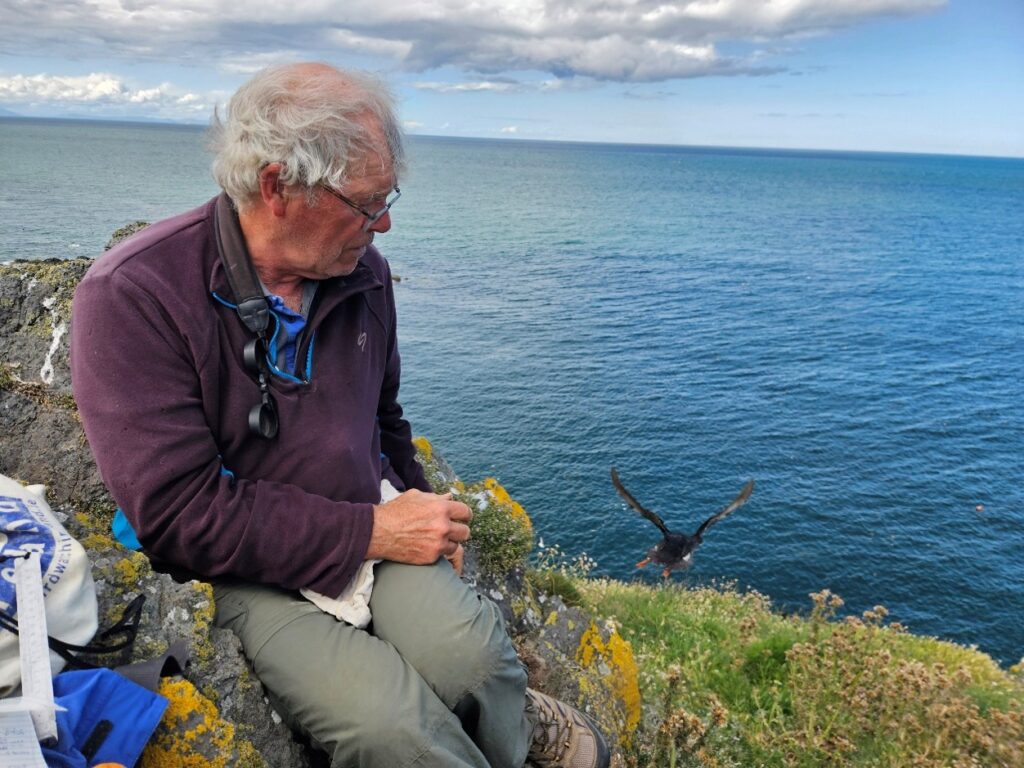
During the last few summer seasons, Dr Steve Newton, BirdWatch Ireland’s Senior Seabird Advisor, has travelled to Lambay to tag Puffins in order to learn more about the colony on the island and to contribute to a larger scientific study. He recently sat down with me, Kaylin Doherty, Communications Officer with BirdWatch Ireland, to answer some questions about the Lambay Whiskey Puffin Project and what’s on the horizon for the 2026 season.
 ■ What is the draw for seabirds to Lambay, and why do we want to learn more about the colonies there?
Lambay is quite a big island for the Irish Sea and is phenomenally important for seabirds. We believe it has the largest colony of seabirds in Ireland, though there are islands on the west coast that have lots of shearwaters and petrels, which are crucial seabirds, but they are nocturnal, so during the day, you will most likely only see a few gulls flying around.
Lambay is the opposite, in the sense that you can watch plenty of Guillemots, Kittiwakes, Cormorants, Razorbills and, of course, a Puffin population we are curious about. We’ve done quite a bit of work on the west coast, especially on Skellig Michael, Co Kerry, where we’ve been tagging and tracking Puffins for a long time, so we know what goes on there. There’s a little bit more of a gap on the east coast, where we don’t know if their behaviour is the same or completely different.
This research on what they do and where they do it is important, as discussions about wind farms in the Irish Sea continue. We know Puffins are there during the breeding season, which means they probably forage 20 to 50 kilometres off the island, which could make them vulnerable to wind farm effects. We also don’t know if they are still in the Irish Sea during the winter, or if they are somewhere else, which is where tagging on Lambay comes in handy.
 ■ How do the tags work?
 ■ How do the tags work?
There are generally two sorts of tags: the first is a GPS-based tag using satellites, and the other is a light-level tag or geolocator tag. The former provides more data, but only over the course of a few days, while the latter lasts about a year, but only provides data output about once a day. Both are tiny bands that go on the bird’s legs and weigh less than a gram, which doesn’t restrict or harm the bird at all. We have to tag these birds anyway, so adding a geolocator to them doesn’t burden the birds at all. In 2024, I tagged ten Puffins on Lambay, but in 2025, I was only able to tag three adults myself.
■ What’s it like trying to tag a Puffin?
At first, the Puffins are quite naïve and allow themselves to be caught, but after the first time, they become much smarter and much harder to tag. The best time to try to tag them is early in the morning or later at night, when they leave to forage. Once I’ve got a Puffin, I have to watch out for its sharp beak and even sharper talons. They have razor-sharp claws that they use to dig their burrows. They’re dead cute, but if you see my hands, they’re covered in scars.
■ What does the data show us so far, and what do you expect from the 2026 season?
We only really have a few data points since starting in 2024, and we are still in the process of analysing some of the data, so we can’t make any major conclusions about their behaviours yet. This year, I am hoping to tag more. Tagging three in 2025 wasn’t the best sample size, but it is better than none.