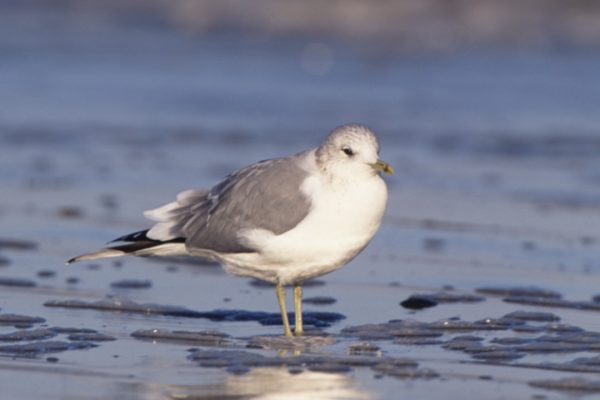
Common Gull
| Irish Name: | Faoileán bán |
| Scientific name: | Larus canus |
| Bird Family: | Gulls |
amber
Conservation status
Conservation status
Status
Local breeding species on islands in larger lakes in western Ireland. Winter visitor to all Irish coasts, with significant numbers arriving from central and northern Scotland, Scandinavia and the Baltic.
Identification
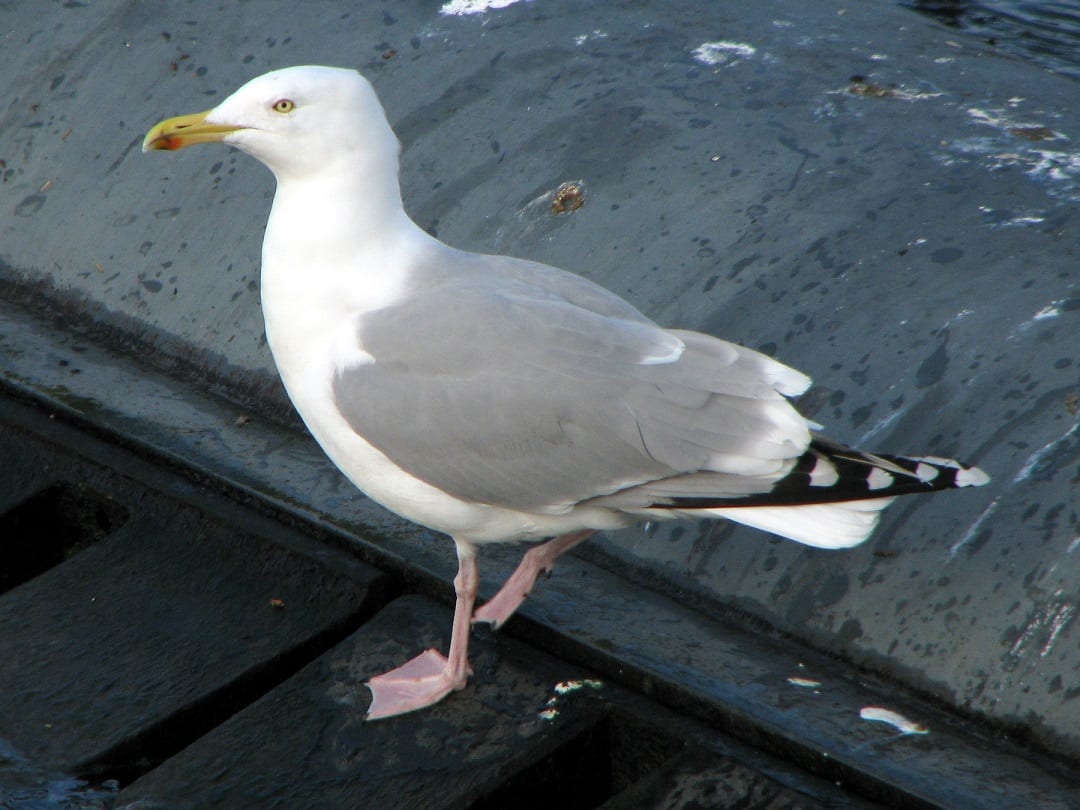
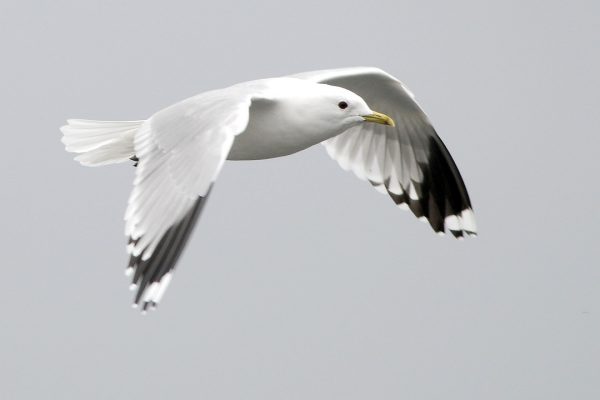
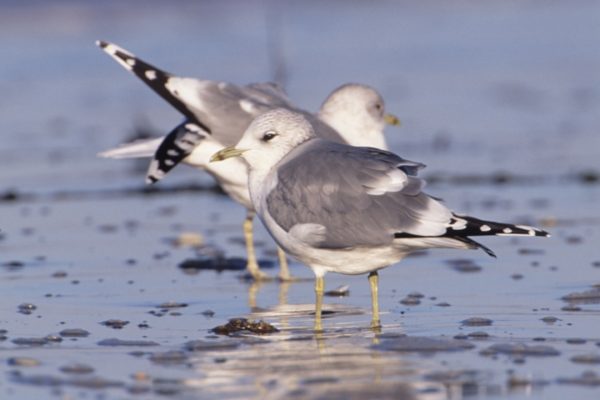
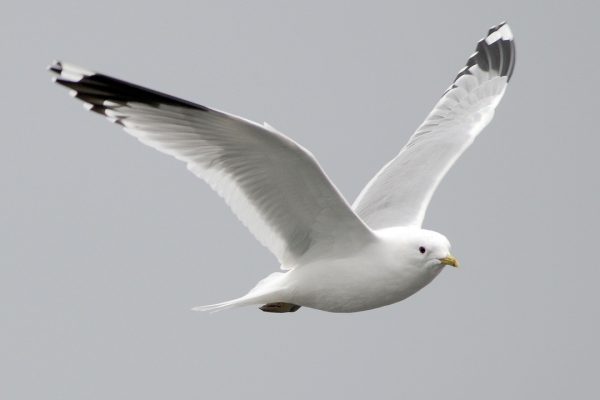
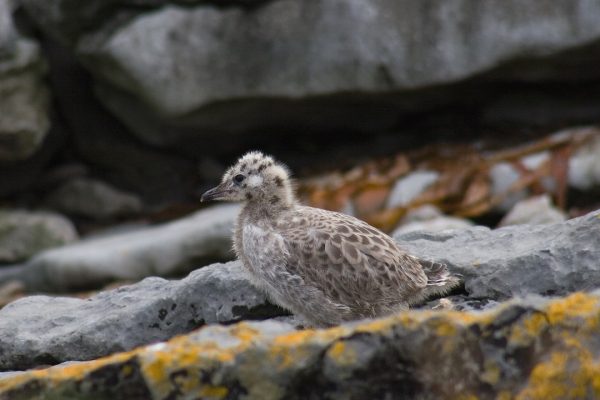
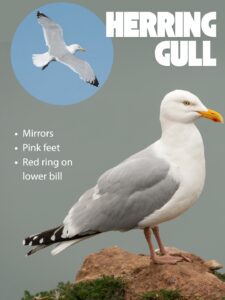
Similar to Herring Gull. In adult plumage, has light grey upperparts and white underparts. Common Gull is much smaller than Herring Gull, with a slighter bill (yellow in adults), and adults have yellow-green legs and often show larger mirrors at the wing tips. Common Gull is also a more delicate Gull with a more rounded head and quicker movements. Like adult Herring Gulls the head is pure white in the summer and streaked in the winter. The species has three age groups and attains adult plumage after two years when they moult into adult winter plumage. Juveniles have dark, strongly marked upperparts, tail band and dark pink legs. First year birds retain the dark heavily marked upperwings and tail band, but have a grey mantle as adults birds do. Second year birds more closely resemble adult birds but show more black markings in the outer wing feathers and only a small mirror.
Voice
Insects and other invertebrates, fish and fisheries waste.
Diet
Terrestrial and aquatic insects and invertebrates, fish.
Breeding
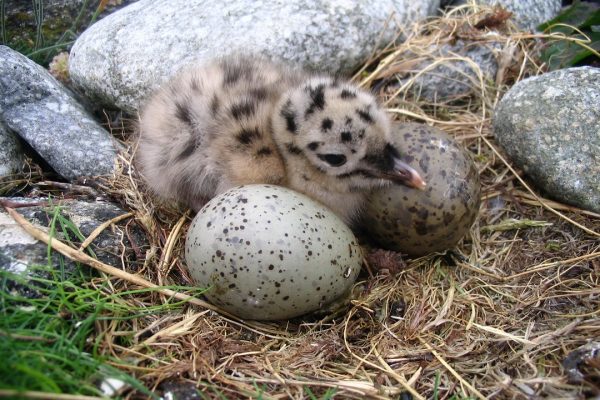
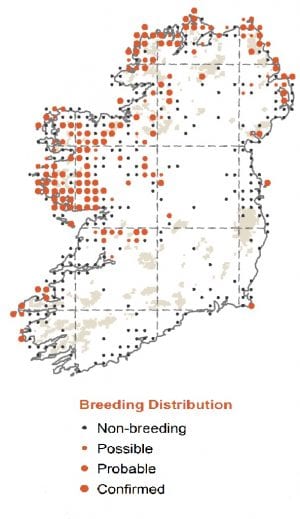
Nests on the ground in a wide variety of situations, including, islands, cliffs and shingle banks. Breeds on the coast and inland in the west of Ireland, from Dingle to Malin Head, with most colonies in Co. Galway, Co. Mayo and Co. Donegal. Inland it can breed on islands in lakes where it has declined. These declines, like those of inland breeding Black-headed Gulls, have been attributed to predation by American Mink, reaching previously safe nesting areas
Wintering
Numbers of resident birds are joined by wintering birds from Europe
Monitored by
Wintering birds are monitored through the Irish Wetland Bird Survey. Breeding seabirds are monitored through breeding seabird surveys carried out every 15-20 years.
Breeding population predominantly in Connacht and Ulster. Less common in Munster and Leinster but a few records exist.
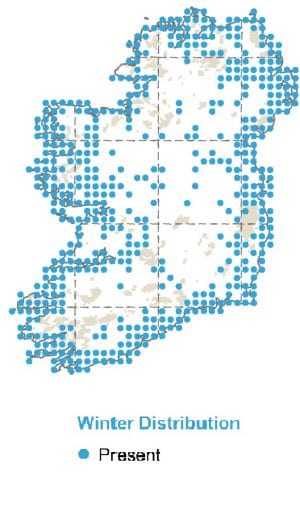
Large increase in numbers during Winter due to migration of birds from Europe.
Blog posts about this bird
Summer Gull Guide
[vc_row type="in_container" full_screen_row_position="middle" column_margin="default" column_direction="default" column_direction_tablet="default" column_direction_phone="default" scene_position="center" text_color="dark" text_align="left" row_border_radius="none" row_border_radius_applies="bg" row_position_desktop="default" row_position_tablet="inherit" row_position_phone="inherit" overflow="visible" overlay_strength="0.3" gradient_direction="left_to_right" shape_divider_position="bottom" bg_image_animation="none"][vc_column column_padding="no-extra-padding" column_padding_tablet="inherit" column_padding_phone="inherit" column_padding_position="all" flex_gap_desktop="10px" column_element_direction_desktop="default" column_element_spacing="default" desktop_text_alignment="default" tablet_text_alignment="default" phone_text_alignment="default" background_color_opacity="1" background_hover_color_opacity="1" column_backdrop_filter="none" column_shadow="none" column_border_radius="none" column_link_target="_self" column_position="default" gradient_direction="left_to_right" overlay_strength="0.3" width="1/1" tablet_width_inherit="default" animation_type="default" bg_image_animation="none" border_type="simple" column_border_width="none" column_border_style="solid"][vc_column_text css="" text_direction="default"]One of the first fun facts you learn as a birder is that there is technically no such thing as a ‘seagull’. While there are dozens of gull species, none of them are specifically named seagull. Shocking, we know.
So, if you're a little behind on your gull identification, don't worry. Ireland is a hotspot for many visiting and resident gull species for you to get to know. Here are some species you might see this summer and how to tell them apart. Just to note, these tips are for adult gulls, juvenile and young birds are a whole other ballgame!

A white head, yellow beak, grey wings with black and white tips. Their legs are yellow green, though juveniles have pink legs. Despite their name Common Gulls are only our fourth most common Gull in Ireland. Their breeding colonies are primarily on lakes and coastal islands in the west, with some on the east coast in Dublin, but we get thousands spending the winter here from Scandinavia and northern Europe.
Next up, we have the Kittiwake, which is technically our only actual sea gull, as they are the only ones that are strictly marine. Their appearance is almost the same as Common Gulls, but Kittiwake feet are much darker, and their wings lack any white mirrors and only show a solid black wing tip.
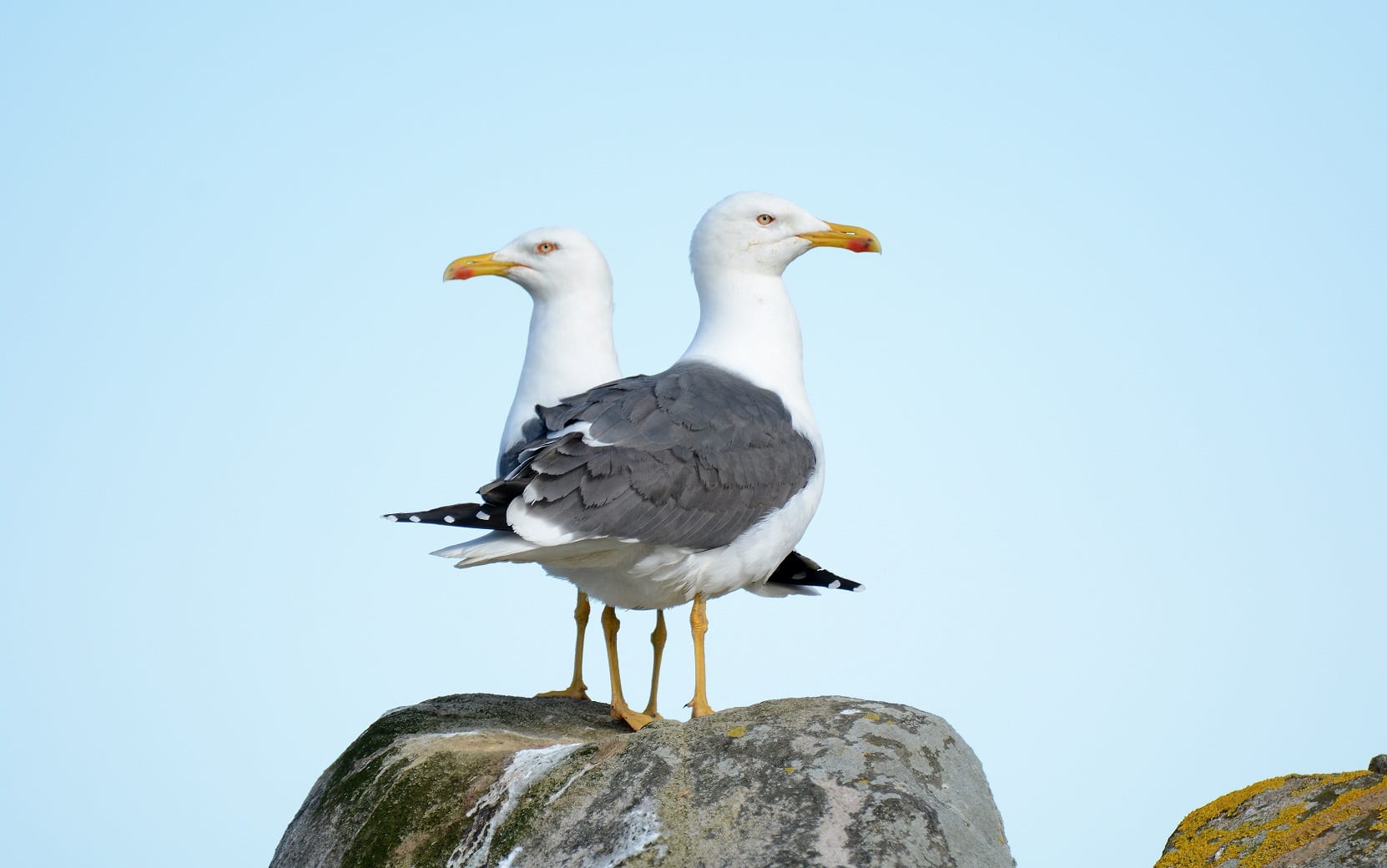
The Lesser Black-backed Gull has dark grey upper parts, along with the black tipped wings with ‘mirrors’. These gulls look and resemble the Herring Gull, but they have a much darker back and yellow legs. Lesser gulls are also coastal like Herring Gulls, but unlike the latter, Lesser gulls nest in large numbers on some inland lakes.
The only other black-backed gull we have in Ireland is the Great Black-backed Gull, which are much bigger, have a chunky bill, and are almost all coastal.
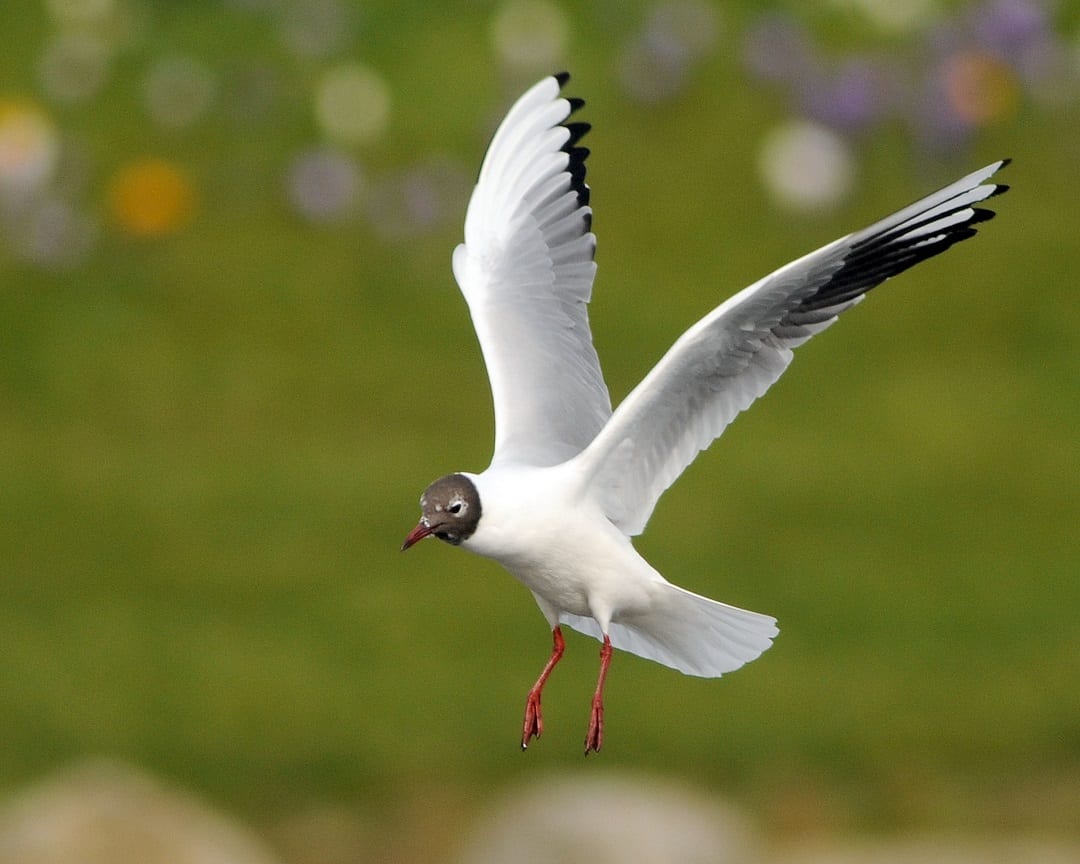
Despite its name, Black-headed Gulls only have black (actually dark brown) heads during the summer months. They are slightly smaller than a Common Gull but can be easily distinguished by the thick white leading edge to outer wing, which can be seen at some distance. A blackish area bordering the white leading edge of the underwing is also evident. These gulls can be seen both on the coasts and inland throughout Ireland. Black-headed Gulls are actually our most numerous gull species, both during the breeding season when they nest on inland lakes, ponds and bogs, and in winter when our Irish-breeding birds are joined by individuals from the UK, northern Europe, Scandinavia and even as far away as Russia. In winter you’ll find them all over the country, on the coast and inland lakes, in parks and towns, and feeding in grassland fields.
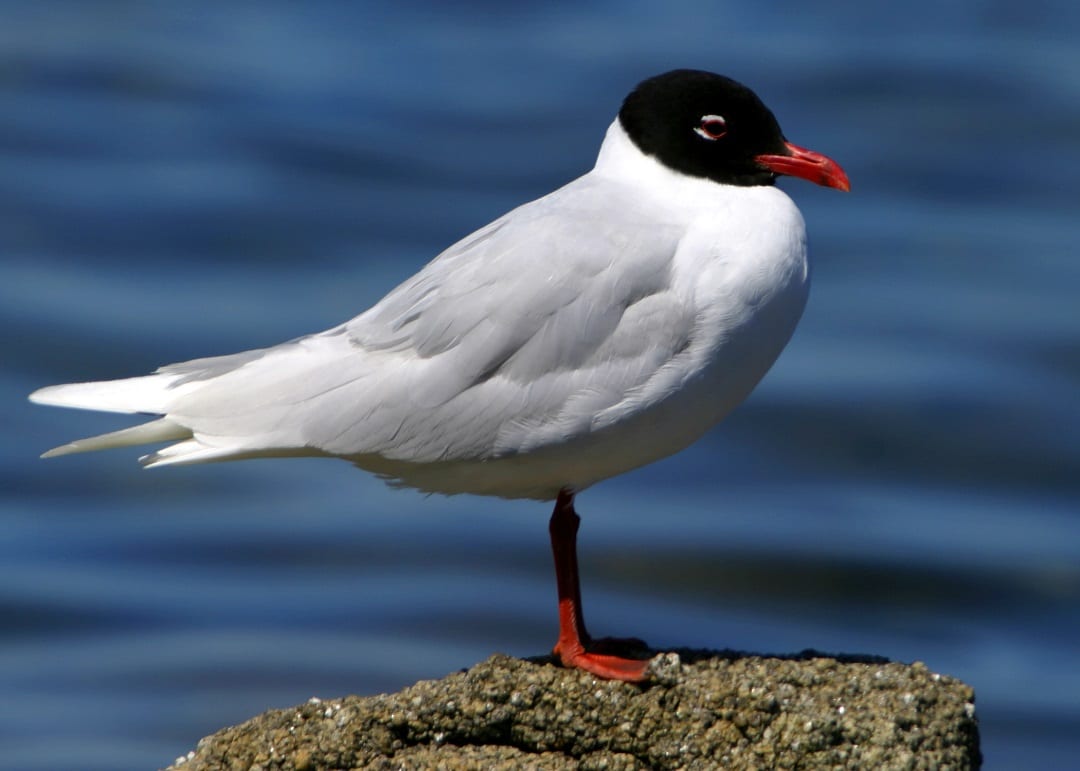
A recent colonist, the Mediterranean Gull arrived in Ireland in 1995 and first bred in the Republic in 1996 in Co. Wexford. The largest colony is now at Lady’s Island Lake in Wexford – an NPWS conservation project, managed in recent years by BirdWatch Ireland. Small numbers also nest on inland lakes in Black-headed Gull colonies. They appear to look like the Black-headed Gull but show a distinctive all black hood, compared to the choclatey brown hood of the black-headed gull, which reaches further down the back of the head and neck. Unlike any of the other gulls listed so far, the Mediterranean Gull has an all-white outer wing.
There are a handful of other species you may see soaring around, but keep your eyes peeled for some of the tips and tricks you've learned so far. To learn more about bird, visit our page for a List of Ireland's Birds. [/vc_column_text][/vc_column][/vc_row]
 Common Gull
 Kittiwake
 Lesser Black-backed Gull
 Black-headed Gull
 Mediterranean Gull