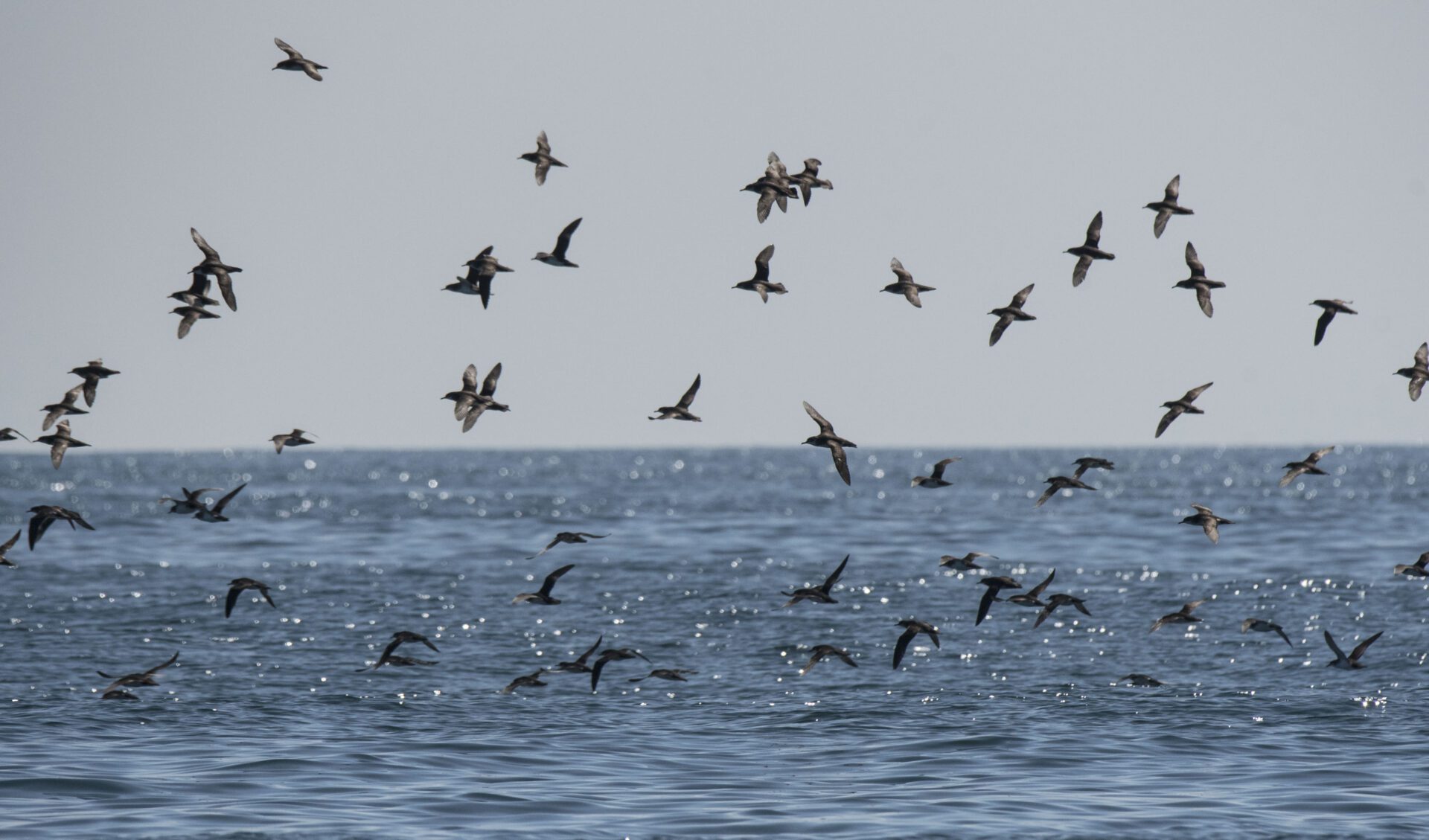
As we usher in a new season, the natural world is full of transitions. Every day, the leaves are slowly changing colors, the sun dips below the horizon a little earlier, and our blackberries ripen to the perfect taste before turning sour. Away from land, our seabirds are changing, too. We’ve said a temporary goodbye to the terns and Puffins, and we will soon welcome back our wintering waterbirds, but for now we have a moment to look for visitors who only briefly stop by our shores during the turning of seasons. Now is the time to head to the west coast in search of shearwaters and skuas.
Sooty Shearwater
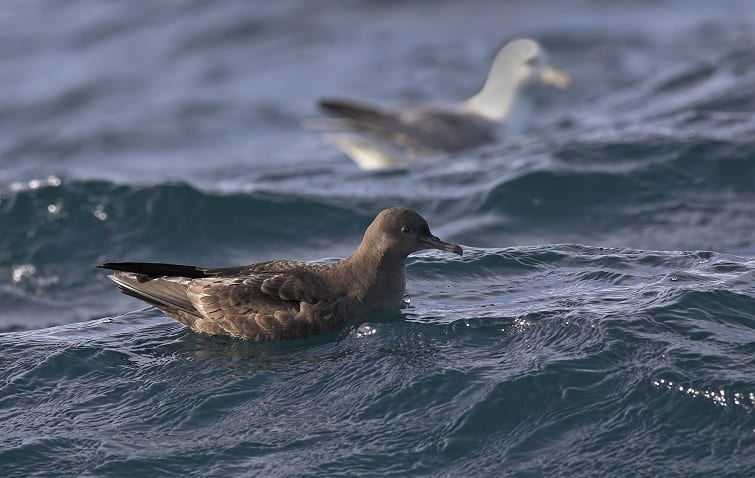
Swift and silent are the Sooty Shearwaters, catching fish and squid on the open ocean. When seen well, Sooty Shearwaters are almost unmistakable, appearing all dark with silvery underwings. In flight, their slender wings are angled-back wings, and can sometimes be seen flying with Manx Shearwaters, which can be distinguished by their white underparts and underwings.
Sooty Shearwater can occasionally be seen from coastal headlands on the southern and western coasts, such as Cape Clear, Galley Head, or Annagh Head, as they make their way from their summer range off the eastern American seaboard to their winter breeding grounds in the sub-Antarctic islands.
Great Shearwater
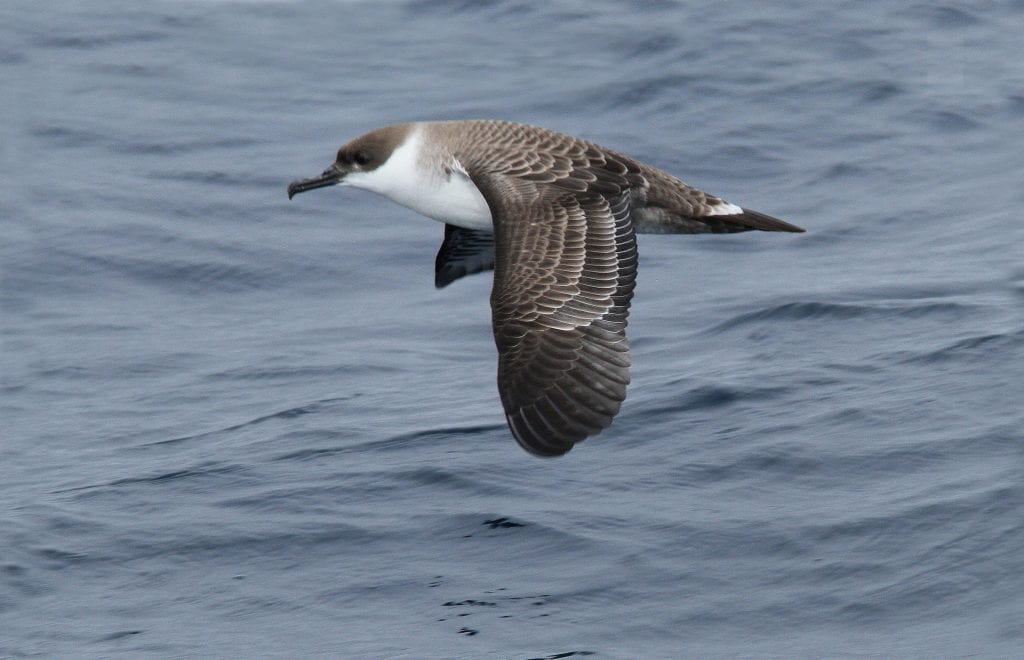
Another shearwater that flies on our western coasts, though much less common, is the Great Shearwater. Unlike the Sooty, Great Shearwaters have dark caps (tops of the head) surrounded by white throats. Their underparts are also white, with dark patches on the belly. One of their most distinctive characteristics is the white, narrow horseshoe-shaped patch above the dark tail.
Great Skua
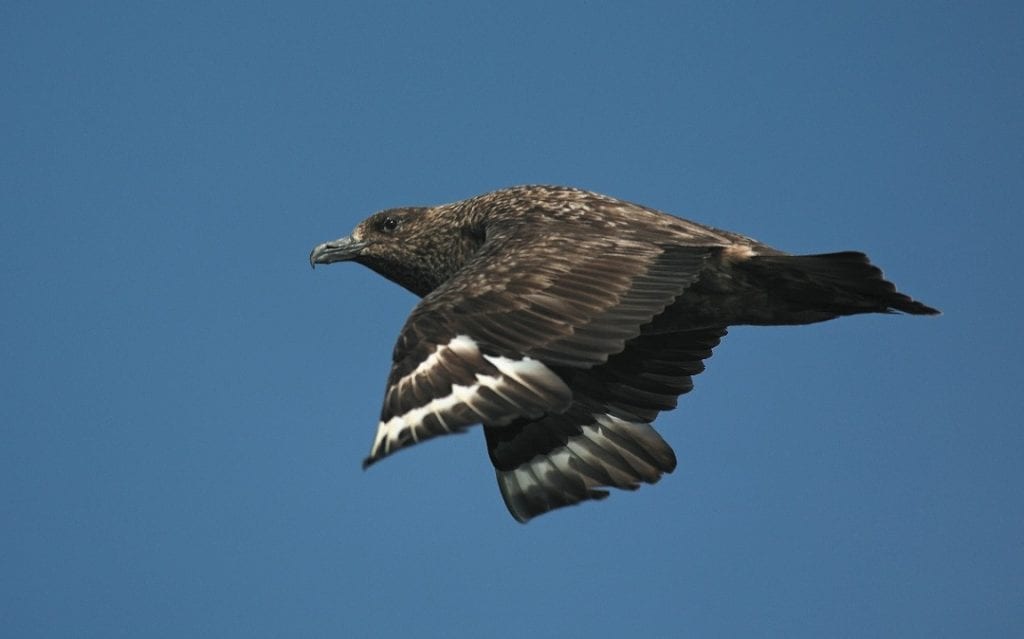
The Great Skua, also called Bonxie, has dark brown upperparts and tail and greyish-brown underparts. Their wings are dark brown with a striking streak of white on their primary coverts (mid-section of feathers on the wings). Bonxies feed by chasing and taking food from other seabirds.
Unlike the shearwaters, Great Skuas can be seen off any Irish coast, including the Irish Sea. This is in part because Scotland is internationally important for the species.
Arctic Skua
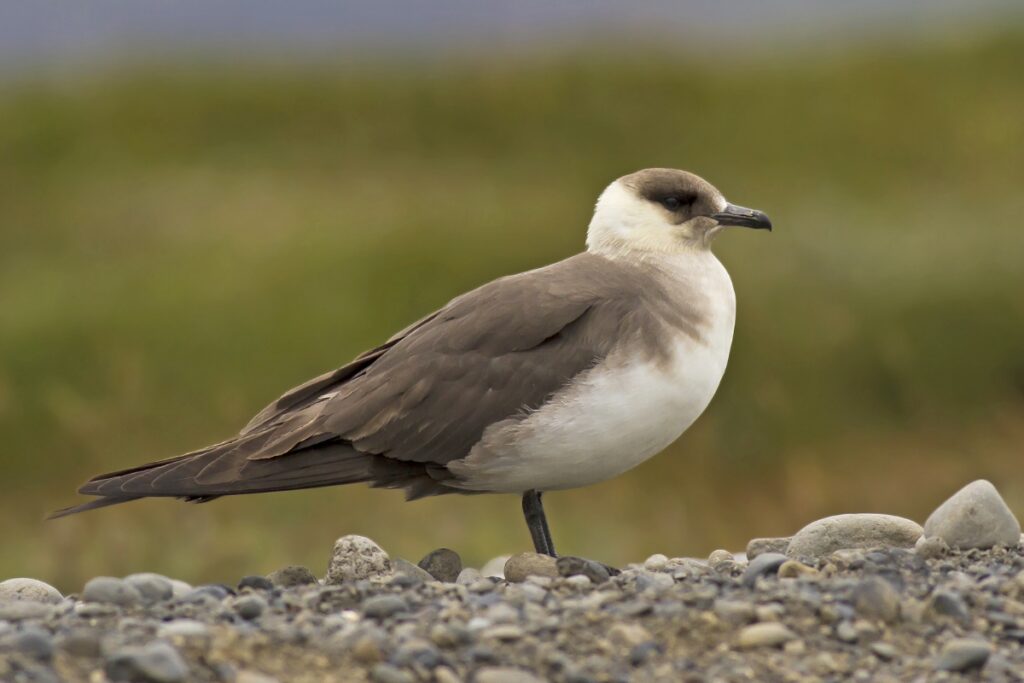
Adult Arctic Skuas have two colour-phases: a pale phase and a dark phase. In both phases, the upperparts of the bird are dark brown, and the wings are also dark with whitish feather shafts, appearing as white crescents on the underwing. The difference between the two phases can be seen on the face, breast and belly of the bird. For the pale-phase adults, birds have a dark cap, yellowish face and white underparts. Dark-phase adults, unsurprisingly, have a completely dark head and underparts. In both phases, the Arctic Skua has short, central tail feathers.
Like the Great Skua, these skuas can be seen from all coastal counties in autumn.
Pomarine Skua
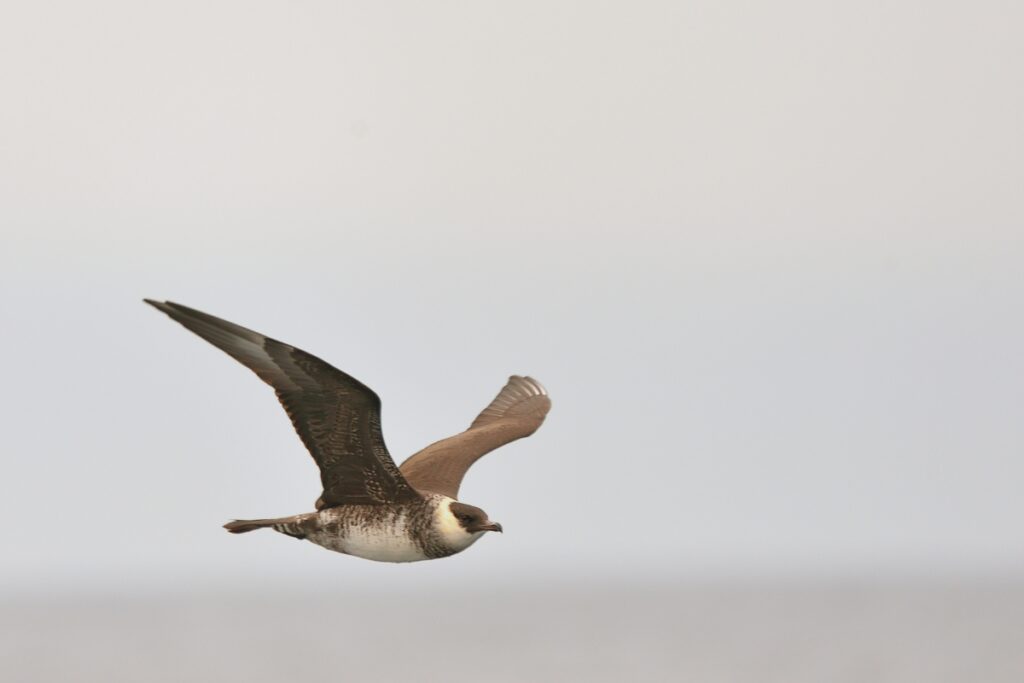
Although less frequently seen, Pomarine Skuas also soar the seas surrounding Ireland. They, too, have pale and dark phases, and look very similar to the Arctic Skua. The biggest difference can be seen in the tail feathers; unlike the pointed central tail feathers of the Arctic Skuas, Pomarine Skuas have blunt, spoon-shaped central tail feathers.
To learn more about birds you can see in Ireland, visit our List of Ireland’s Birds.