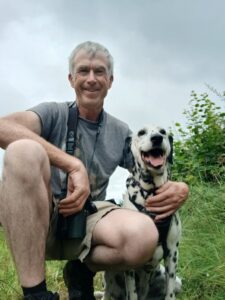

We have long called dogs a man’s best friend, but for some, their friendship and companionship run deeper. That is certainly the case for Declan Murphy and his beautiful Dalmatian, Lucy. Together, the two of them forged through rural habitats and camped in tents and lodges, travelling on a quest to see all of Ireland’s wild orchid species in a single summer.
I had the opportunity to meet with Declan and Lucy to talk about his upcoming book, The Hunt for the Wild Irish Orchid: One Man and his Dog, in which Declan describes the journey of uncovering these delicate plants, his reconnection with nature, and all his adventures along the way.
 What inspired you to write this book?
 What inspired you to write this book?
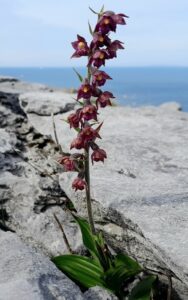
One winter, I came across a dead stick on rocks in the Burren. I remember looking across these big, bare loads of rock and this single, withered flower stem and asking, “What flowers grow out of rocks?” I knew a fair bit about plants, and I eventually worked out that it was a Dark Red Helleborine orchid, but I realised I had never seen it before.
The Burren is a place where I often go birdwatching in the winter, but I had never been there in July when this species would bloom. So, I was left with this idea that if this was just one orchid I’ve never seen because I never went there at the right time, what else hadn’t I seen? As it turns out, quite a lot.
This inspiration also happened at a time when we were in the thick of Covid, and there were questions about whether or not life would go back to normal. We were all coping with the reality of having some of our regular freedoms restricted, so I promised myself that if and when the lockdown was
ended, I would make it a priority to get out and immerse myself in nature and visit all the places I always said I’d go to but hadn’t yet got around to seeing. It’s like I had all this pent-up need to get out, to be outdoors, to reunite with nature.
Each of your previous two books, A Life in the Trees and The Spirit of the River: A Quest for a Kingfisher, also tell a tale of finding elusive species in the wild and exploring the world around us. Was the process of tracking orchids and writing this book similar at all to those journeys?
Yes and no. The first one, A Life in the Trees, was written when the Great Spotted Woodpecker first started colonising Ireland. It was one of the few times we were able to watch a new bird species arrive and nest in Ireland and record the story from the start. It was such an unusual story that I felt that the whole story should be written up.
In writing that book, there were a few pages that didn’t get included that I felt should be used for something, and they gave me the idea of creating the second book. John Boorman [Oscar-nominated director responsible for movies such as Deliverance, Emerald Forest, Excalibur and others] is a dear friend and an incredible environmentalist. He was an environmentalist before the term environmentalist became a thing.
I was always taken aback by one of his films, Excalibur, which was filmed here in Wicklow, about the hunt for the Holy Grail, which, through metaphors, portrays people’s connection to nature and the very seriousness of being disconnected from the natural world and mental health. So, through discussions with him, that story was interwoven into the quest for the Kingfisher.
What was the preparation and actual hunt for Ireland’s orchids like?
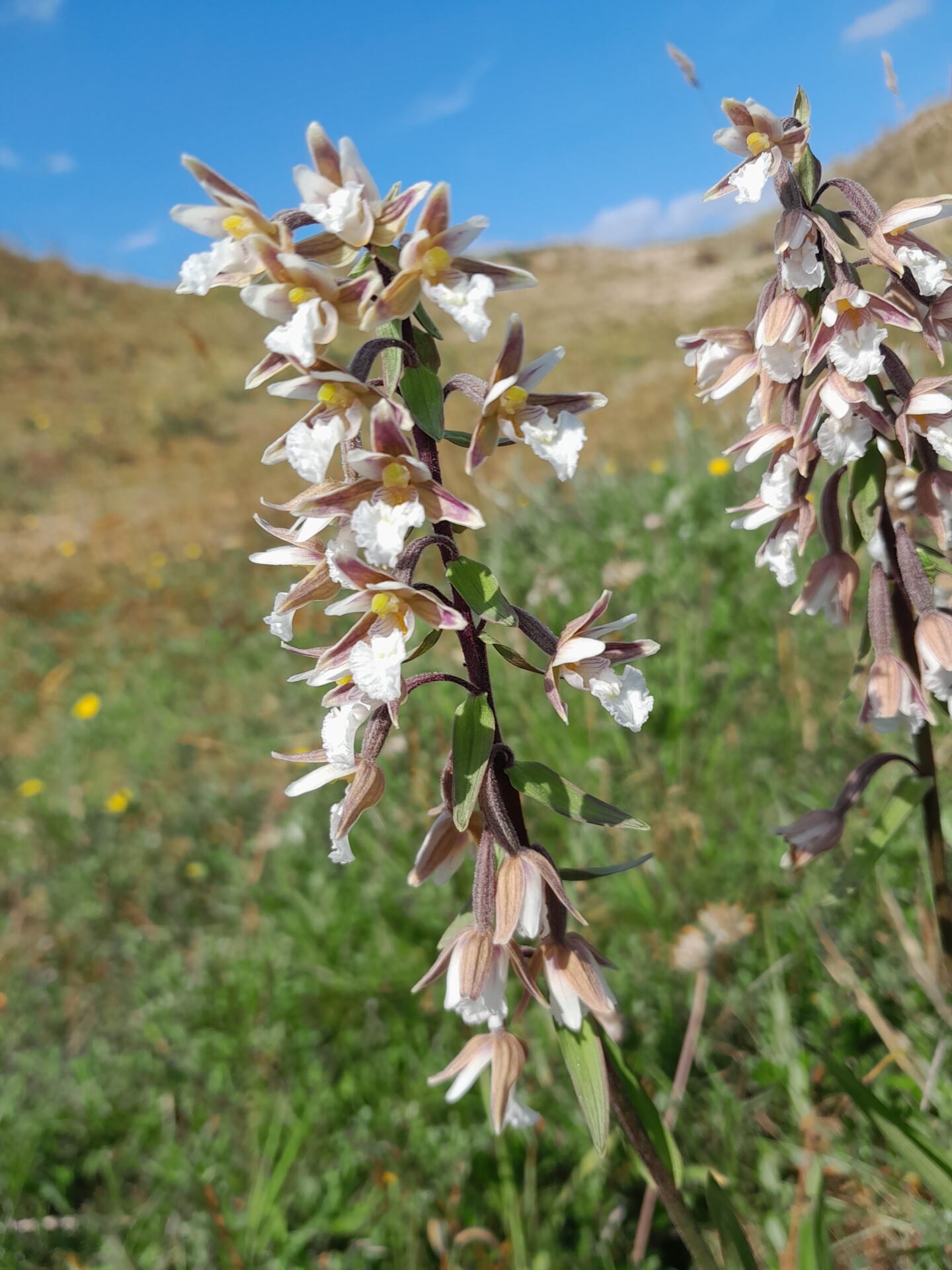
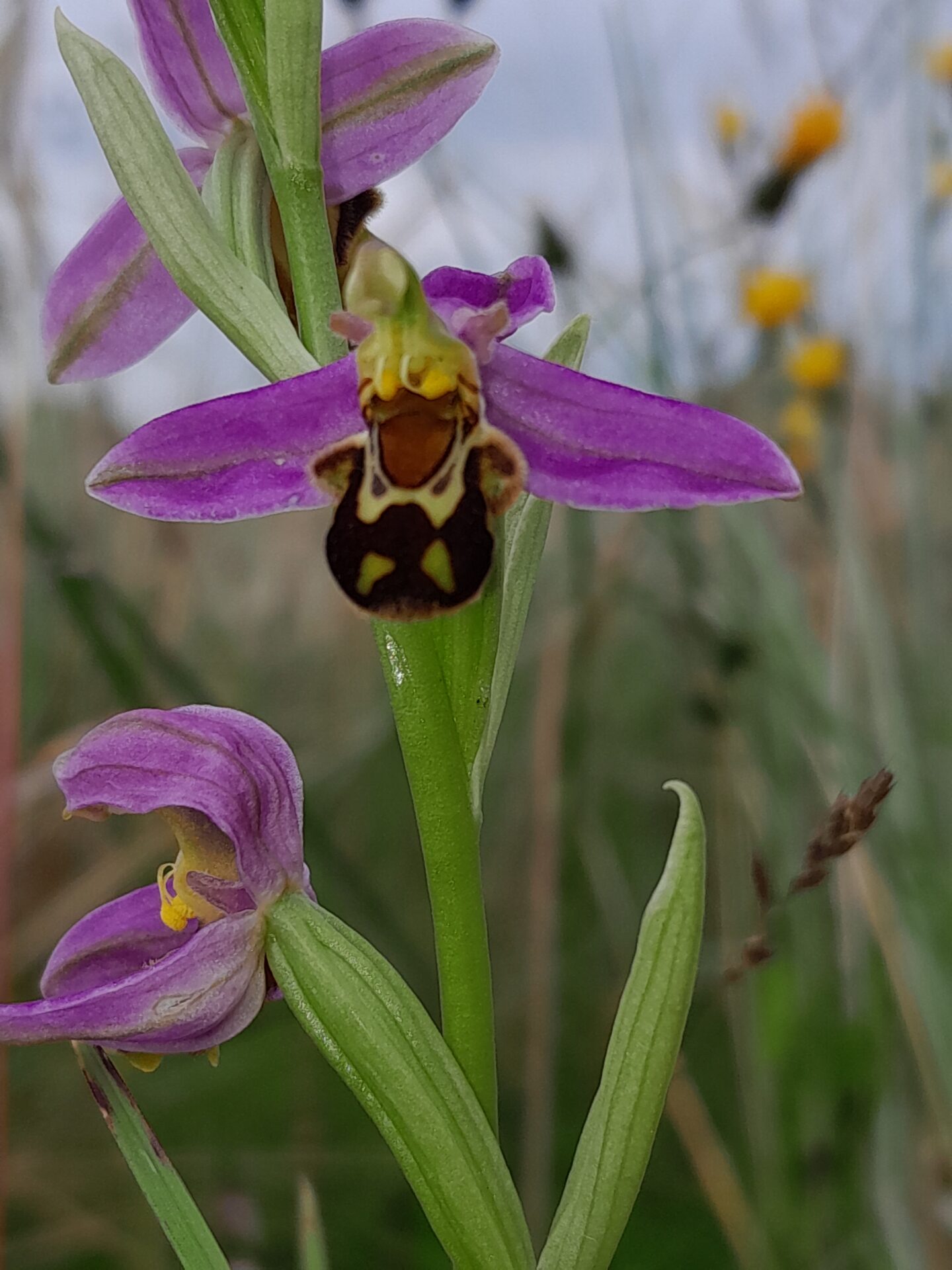
Orchids can be quite devious, so trying to see them all in one year took a good amount of planning, for a few reasons. The first challenge was figuring out the timing. Some species have a very small window in which they bloom. The Dense-flowered Orchid, for example, only has a flowering period of about 14 days in May. I had a window of about two weeks to find this very small, very inconspicuous plant.
Which led me to my second hurdle: location. Someone might say, ‘Oh, I think I saw that species once in Galway, or maybe it was Sligo once in the ‘80s.’ That’s a pretty big area to narrow down where to find a rare flower.
On top of that, some orchids don’t just grow in the way other flowers do. It takes about seven years for some species to bloom, and it requires a symbiotic relationship with specific types of fungus for them to grow. Just because that flower popped up somewhere once, doesn’t mean it will grow there again the following season. That was the case for the Bog Orchid. I searched seven different sites before finding it. I’ve gone back every
year since to the exact location, but it hasn’t grown there again.
The hunt for these orchids took a surprising amount of work, but it led me to places I had never been before, nor would know how to get back to!
Your dog Lucy is a huge part of this story, and is the first dog to see every Irish orchid species in one year. Do you think she has a favourite orchid?
Well, she found one of them! She found the Frog Orchid – the hardest one to find. We had been given an exact pindrop of where this tiny orchid could be growing, and I was searching on my hands and knees for hours. We searched and searched. After a while I thought, “Right. I’m going to make a cup of tea and then I’ll start again.”
I went to sit beside where she was, and right between where she was lying, with her front paws crossed in front of her, was a Frog Orchid. There was another one, right on her side. Those were the only two Frog Orchids we were able to find, and I haven’t seen them since.
Let’s talk about the Burren. It’s where this story begins, and is an area known for its incredible plant biodiversity. What makes this location so special for you?
To me, the Burren is always a contradiction. It’s barren, but it’s rich. It’s bare, but it’s covered in flowers. It’s a place that shows you that things aren’t always what they seem. You go there and look out and there appears to be nothing but bare rock, and yet the diversity of flowers is greater there than anywhere else in Ireland. How does that make sense?
The misconception about the Burren is that only rare flowers grow there, but that isn’t true. There isn’t a flower there that doesn’t also grow in other places. What makes the Burren special is the plant communities that grow there and can’t be found anywhere else in the world.
For example, there is something known to botanists as the “triple crown.” It’s the Spring Gentian, which is more typically associated with the Alpine regions of southern Europe, the Dense-flowered Orchid, which is predominantly a Mediterranean species, and Mountain Avens, which is an Arctic species.
So, you have Alpine, Arctic and Mediterranean species literally growing side by side. You can find all three of these species growing in other places in Ireland, but you won’t find them growing together.
Is there a message or idea you hope readers will take inspiration from while reading this book?
Oh, well, yes, my books all have hidden things in them – the question is, can you find them? I think this book has a lot in it; there’s a lot of me and Lucy, nature and mental health. I think the orchids are a bit of a vector. They carry the story, but the orchids aren’t necessarily the story themselves.
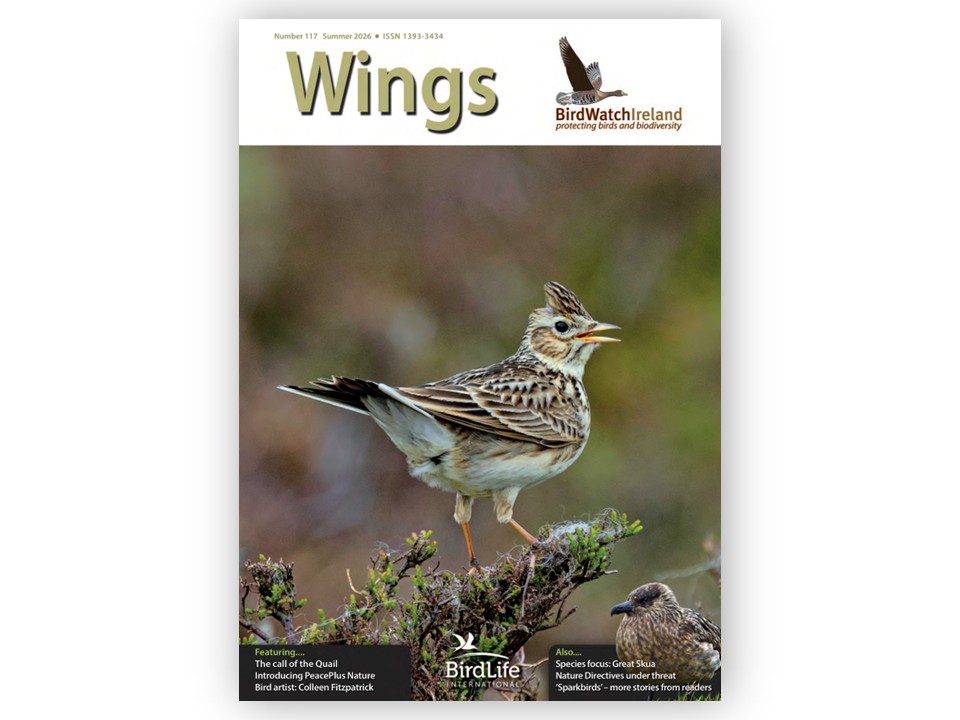
This story is orignaly published in the Summer 2026 issue of our membership magazine, Wings.
The Hunt for the Wild Irish Orchid: One Man and his Dog is due to be published in September 2026 by the Lilliput Press. Excerpts will be featured in the next issue of Wings.