The results of the last International Swan Census in 2020 showed an increase in Whooper Swan numbers in Ireland – up 24.9% in the Republic of Ireland and up 32% in Northern Ireland – compared to the previous census in 2015. At 19,111 birds, this was the highest number recorded in Ireland to date (14,467 in Republic of Ireland and 4,644 in Northern Ireland).
Nevertheless, the proportion of the overall Icelandic-breeding flyway population of Whooper Swans that winter in Ireland is actually decreasing. This is largely due to an increase in the number of birds at sites in England, where there were rapid rises recorded at some key sites.
All of the Icelandic-breeding Whooper Swan population winters in Ireland and Great Britain (with a very small number wintering in the Channel Islands and Isle of Man), while a proportion remains in Iceland. A total of 43,255 birds was recorded across this region in 2020, with ~49% occurring in Britain, ~44% on the island of Ireland, and ~7% overwintering in Iceland. With Ireland supporting such a significant proportion of the international population of this species it is critical that we regularly assess how the birds are faring.
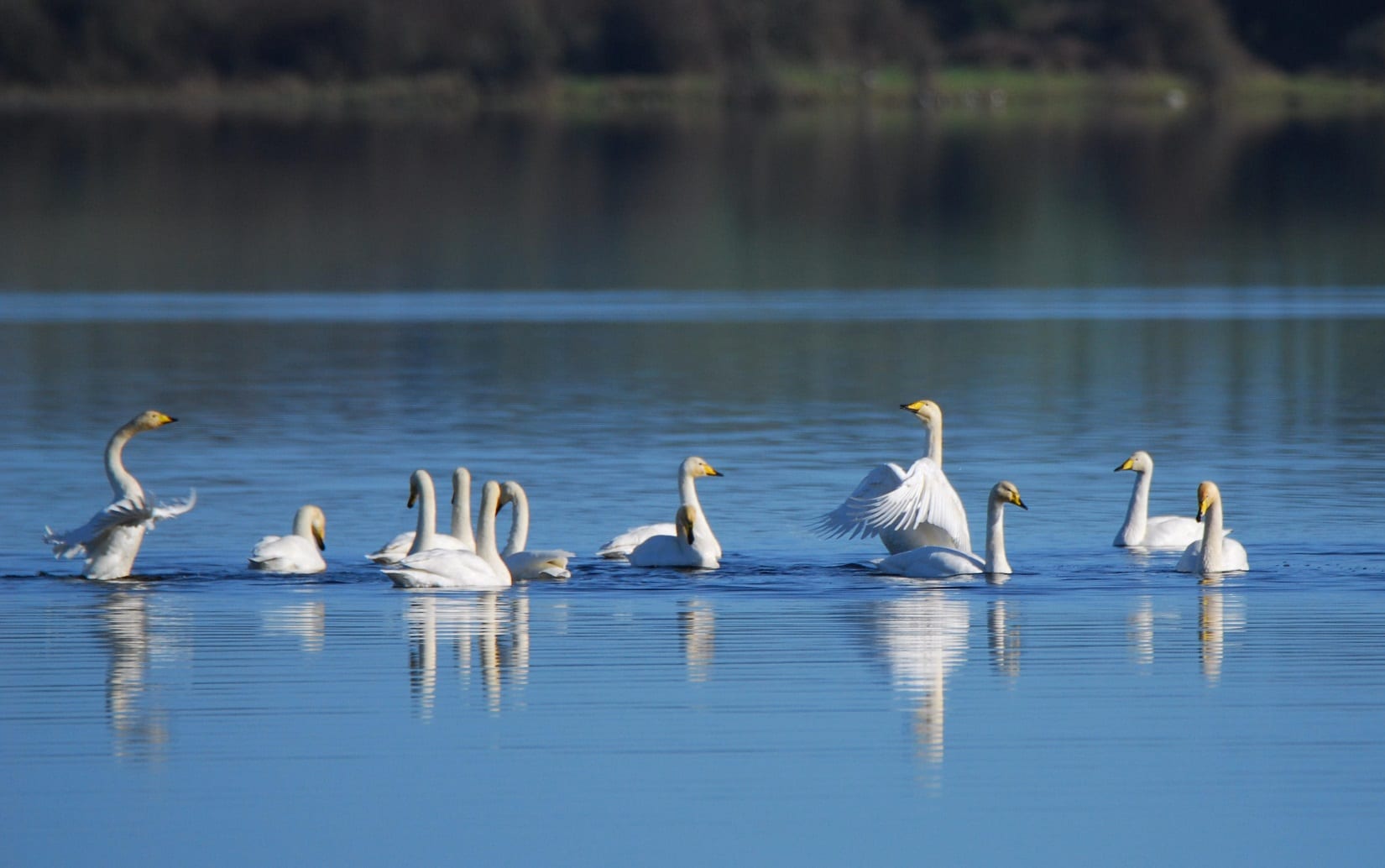
Whooper Swans
(Photo: Brian Burke)
The last census also highlighted how dispersed the population is across Ireland when compared to Britain, where enormous numbers are concentrated at relatively few sites. And previous censuses also inform us that the swans are using habitats across the country that would not be covered during standard I-WeBS surveys, such as pasture fields and grasslands, and that a concerted effort to survey these widely distributed – and otherwise possibly overlooked – sites will be important.
The census is only conducted every five years, making it essential that we get the best picture of the current status of the population – only achievable by covering as many sites as we can throughout the country. For this, we will need your help over the weekend of 17–18th January 2026!
The last census recorded Whooper Swans in every county in Ireland for the first time ever, so no matter where you live there may be swans for you to count.
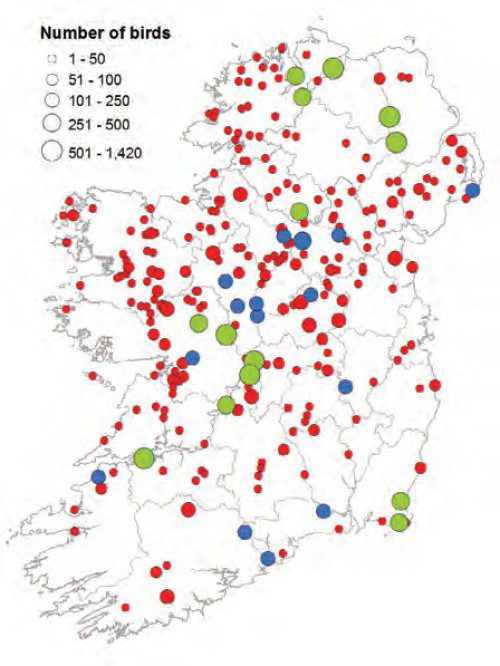
Distribution of Whooper Swans in Ireland in the January 2020 census, at site level. Sites exceeding the international 1% threshold are illustrated in green, those exceeding the national 1% threshold are in blue and other sites are shown in red.
There may not, however, be many Bewick’s Swans to be counted. In 2020, just 12 individuals were recorded, representing an almost 50% decline since 2015. They were recorded at only two sites, with one bird observed in Roscommon, and 11 in Wexford. They are a species whose migratory patterns have been influenced by climate change, with many Bewick’s Swans ‘short-stopping’ closer to their Russian breeding grounds, and numbers in Ireland are not expected to recover.
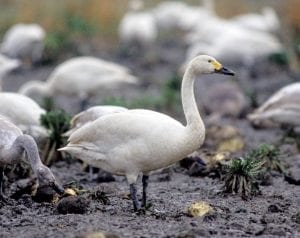
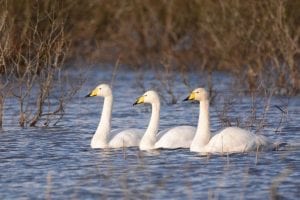
Bewick’s Swan
(Photo: Richard T. Mills)
We will be in touch again in due course with more details and to arrange coverage for all of the key areas for January 2026. The International Swan Census is a great way to be a part of an important international scientific survey effort. It is a great survey to participate in, and one that is well-suited to any novice birdwatchers amongst you.
The International Swan Census is a collaboration of many organisations and individuals, with much of the survey effort being delivered through I-WeBS in the Republic of Ireland and WeBS in Great Britain, with particular acknowledgments to the British Trust for Ornithology, the Wildfowl and Wetlands Trust, Northern Ireland Environment Agency, RSPB, JNCC, NPWS, the Irish Whooper Swan Study Group and BirdWatch Ireland.