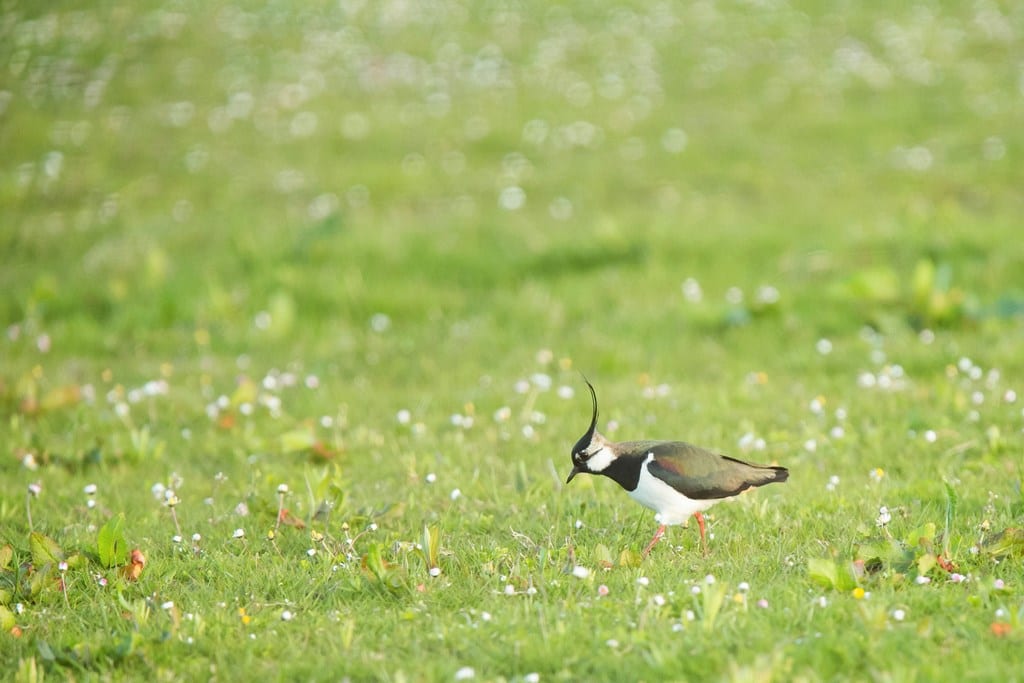
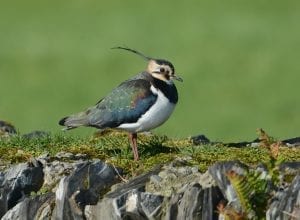
 In 1985, Ireland’s first machair grassland breeding wader survey recorded eight pairs of Lapwing breeding at BirdWatch Ireland’s Annagh Marsh Nature Reserve and adjacent machair plain. Some 40 years later, BirdWatch Ireland are delighted to report that the numbers of Lapwing has now reached 67 pairs this summer. However there have been some ups and downs along the way.
A follow up breeding wader survey, in 1996, recorded just two pairs of Lapwing at the reserve. The declines of breeding waders at the reserve, in particular the loss of one called the Red-necked Phalarope, prompted BirdWatch Ireland into action. And in 2001, they were successful in securing funding through the European LIFE-Nature programme to deliver a project, with partners Teagasc, focused on the restoration of habitats at the Termoncarragh Lake Special Protection Area that included the Annagh Marsh reserve. Work at the reserve started in 2002, and following appropriate management, breeding Lapwing numbers started to increase, reaching 17 pairs by 2004. However, it was found that most of these failed in their breeding attempts and their numbers started to decline again. A comprehensive investigation by BirdWatch Ireland identified foxes as the main predators of the eggs and chicks of these vulnerable ground-nesting birds.
Realising that the fox problem needed to be tackled if Lapwings were ever going to recover, a non-lethal solution was implemented in the form of a predator exclusion fence, which had proven to be a useful management ‘tool’ for protecting breeding waders from mammalian predators at another Irish site. With the support of funding from The Heritage Council, Fiontar Chomhraic Teo, Dublin Zoo and BirdWatch Ireland’s own members, a new fence was installed in the autumn of 2011. Importantly, working closely with the two relevant farmers, the protected area was extended to include the whole machair plain at Annagh.
The following year, three pairs of Lapwing returned and bred successfully. Although some adjustments to the fence were needed in the initial years, the breeding numbers have since gone from strength to strength. Each breeding attempt has produced at least one chick, and more often two chicks, to the flying stage which resulted in a record 42 breeding pairs by 2023.
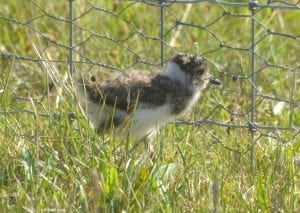 With this success, other potential mammalian predators have been attracted to the site, in particular Otter and, the non-native American Mink. Therefore, the fence, after 12 years of good service, was replaced and upgraded in 2024, with the aim to exclude them from reaching the breeding Lapwing. Since the installation of this upgraded fence, breeding Lapwing numbers have continued to rise, to the point that the summer of 2026 has seen 67 pairs successfully rearing a minimum of 143 chicks to the flying stage.
The fenced area at Annagh Marsh now holds approximately 10% of Ireland’s national breeding Lapwing population, which was recently estimated at around 600 pairs. That figure represents a nationwide decline in the Lapwing population of approx. 90% from pre-1990s levels, showing just how severely threatened the species is and just how important BirdWatch Ireland’s conservation efforts at Annagh Marsh have been.