Guillemot
| Irish Name: | Foracha |
| Scientific name: | Uria aalge |
| Bird Family: | Auks |
amber
Conservation status
Conservation status
Status
Resident, though occur inshore/ land during the breeding season, March/April to August/September.
Identification
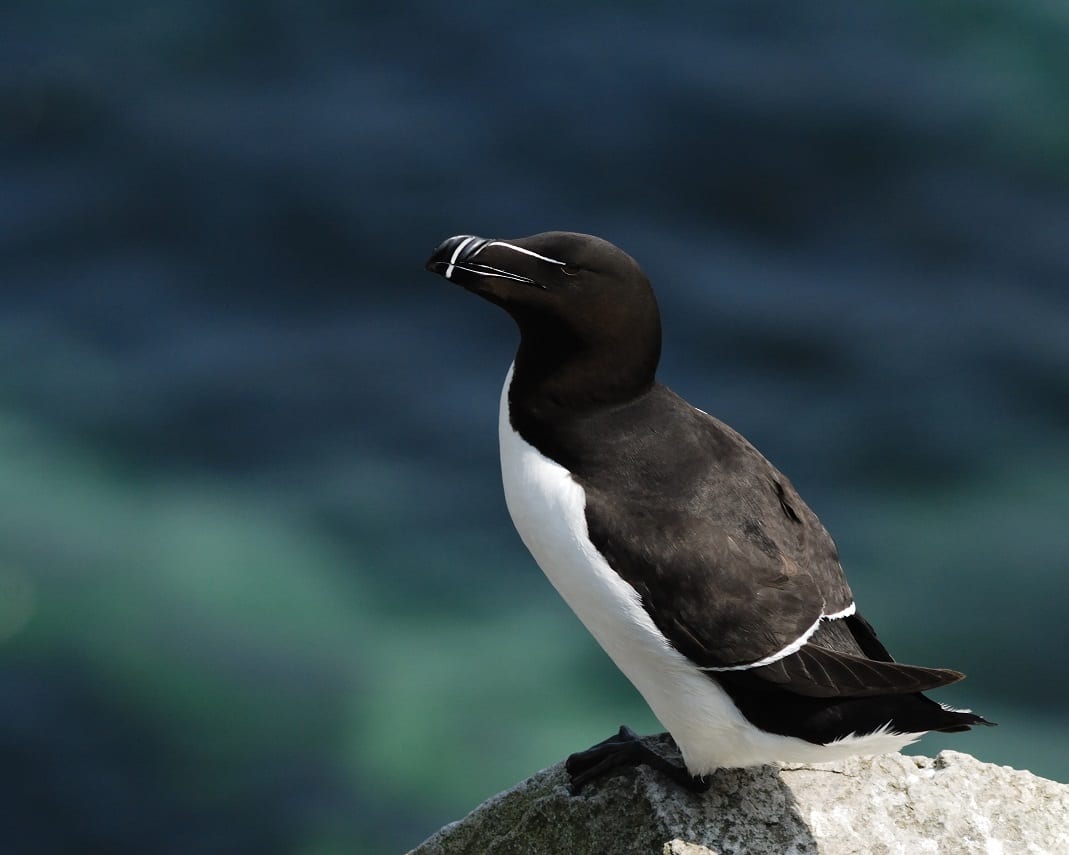
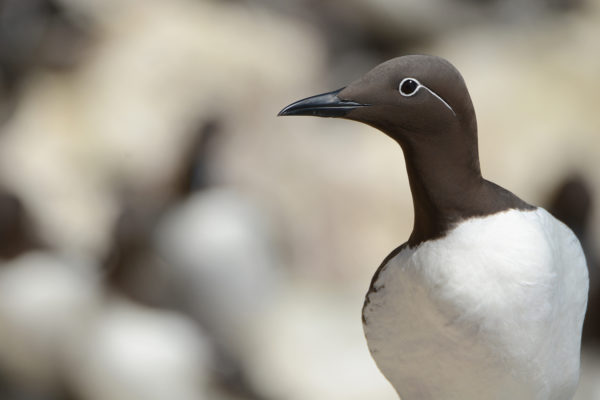
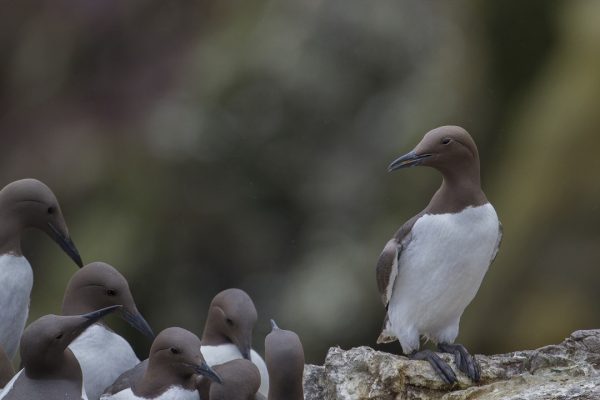
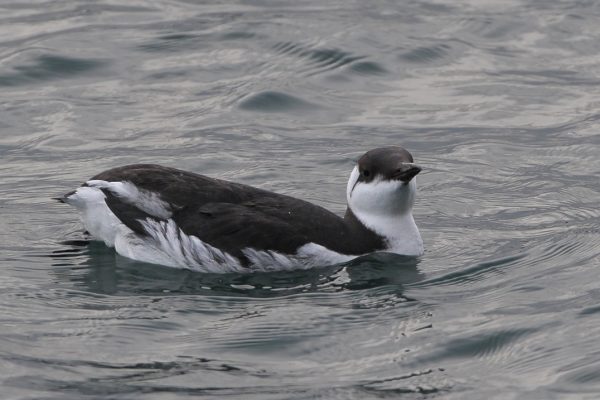
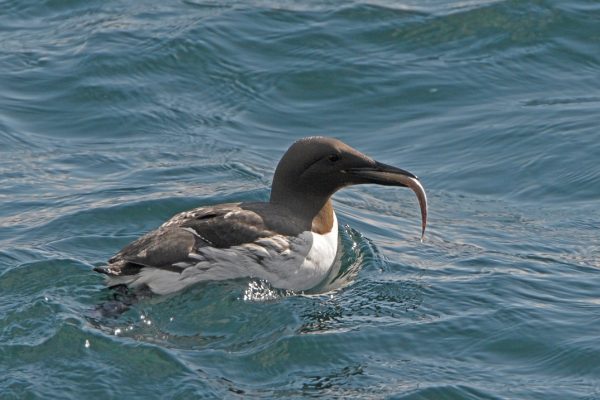
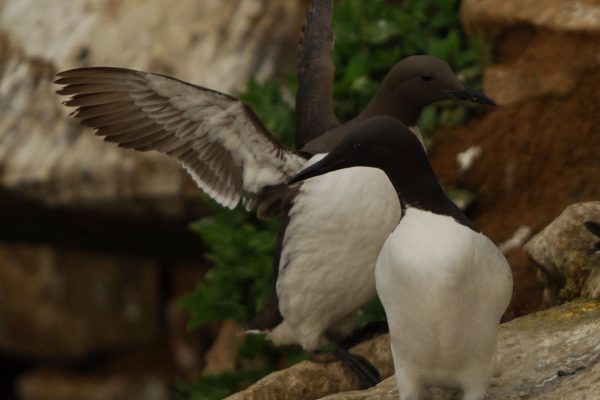
The commonest species of Auk in Ireland, a highly marine species which are only found on land in the breeding season. A dark brown and white seabird, brown above and white below, with a distinct breeding plumage. In the breeding season head and neck completely dark brown, in the winter white on front of the neck and face. At a distance can be confused with Razorbill. Guillemot has a longer body, browner upperparts with less white on the side of the body and a lighter bill. Shows a darker 'armpit' than Razorbill. Seen flying in lines close to the sea with Razorbills.
Voice
Vocal in colonies with birds giving repeated nasal notes and prolonged bellowing. The young on the sea also give a high-pitched call after leaving the breeding colony.
Diet
Mainly small fish, some invertebrates, caught by surface diving.
Breeding
Comes ashore to nest from May onwards, colonies deserted by the first week in August. Nests on cliff ledges, often in large colonies, defends the smallest nest territory, sometimes only 5cm square. Restricted to cliffs with suitable ledges. Lays egg directly on to rock.
Wintering
Winters at sea. Some Irish birds are believed to winter near their breeding sites.
Monitored by
Breeding seabirds are monitored through seabird surveys carried out every 15-20 years.
Coastal breeding bird. With over 21,000 birds, Great Saltee island, off County Wexford holds one of the largest populations. The Cliffs of Moher, in Co. Clare hold over 19,000 birds. Other places include Loop Head in Co. Clare, with over 5,000 birds, and Horn Head, in County Donegal with over 6,500 birds. Numerous smaller colonies occur around the Ireland, especially on the west coast. Can also be seen on Irelands Eye and Howth Head, County Dublin.
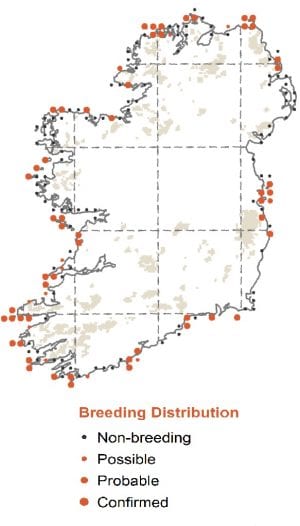
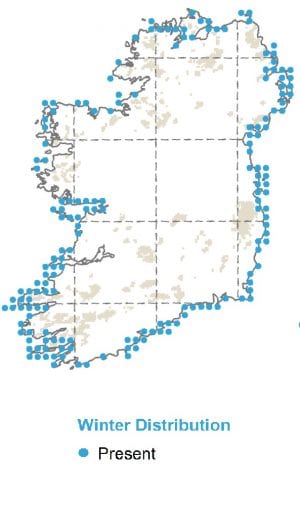
In Winter, widespread out to sea around all coasts.
Blog posts about this bird
Seabird Season is Winding Down
Dr. Samuel Preston, one of BirdWatch Ireland’s 2026 East Coast Seabird Survey team members, writes an update about the seabird breeding season update. 2026 is the third consecutive year in which we have been able comprehensively to census and monitor the cliff-nesting seabirds at six important colonies on the east coast, thanks to funding from the Phase One windfarms in the Irish Sea. All photos are taken under NPWS licensing.
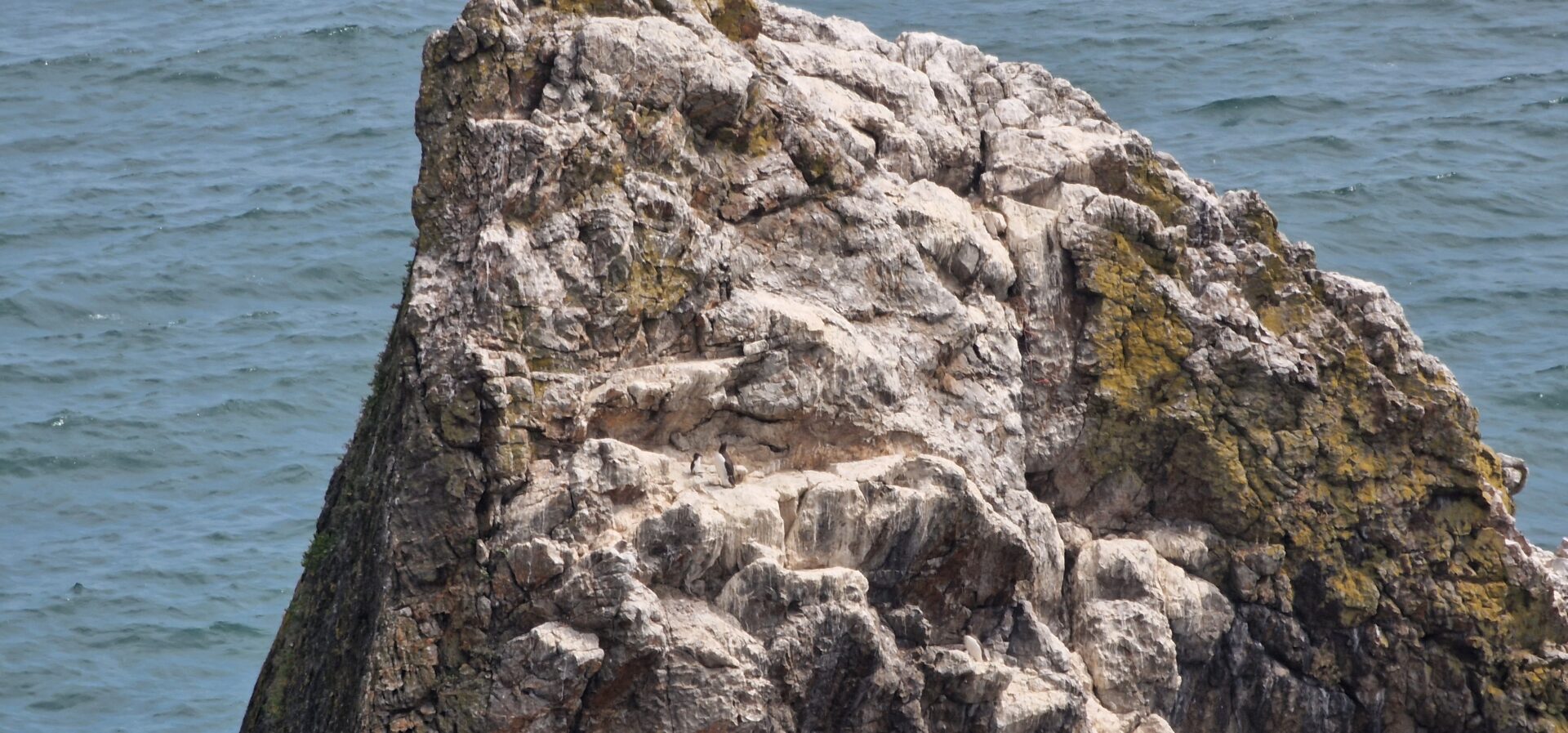
Empty cliff faces greeted us this week as half our study plots were completely devoid of birds. For the auks, that's a sign of chicks fledging. For other birds, it's a sign of nests failing.
Kittiwakes have abandoned their unsuccessful cliffs. Adults that stood guard over empty nests have accepted their losses and gone back out to sea. What remains of their brief homes is reduced to debris being eroded by the wind. The cliffs are a lonely sight without them.
 Nest failure is not unusual; a lot of things can go wrong between laying and fledging. Some eggs will never hatch. Disruptions to incubation can ruin development. Unlucky genetics can make some eggs non-viable, in which case even perfect incubation can't help. Both eggs and chicks are vulnerable to any predators that can get to them, and disease and parasites inevitably take a toll. And, of course, parents have to be able to find enough food for growing chicks. If fish are scarce, starvation is a very real possibility.
Our empty kittiwake cliffs are likely the result of predation. The areas where all kittiwakes have vanished are among the most exposed, and we have frequently observed predators (corvids, bigger gulls, and even peregrine falcon) at many of them. They're also the same areas that failed completely in previous years. Why birds keep coming back to these spots when they never seem succeed in fledging chicks is a mystery. Maybe they're inexperienced parents who haven't figured it out yet. Or maybe they're just making the best of it when all the better areas are full. Whatever the reason, it seems the odds are never on their side on these particular plots.
Nest failure is not unusual; a lot of things can go wrong between laying and fledging. Some eggs will never hatch. Disruptions to incubation can ruin development. Unlucky genetics can make some eggs non-viable, in which case even perfect incubation can't help. Both eggs and chicks are vulnerable to any predators that can get to them, and disease and parasites inevitably take a toll. And, of course, parents have to be able to find enough food for growing chicks. If fish are scarce, starvation is a very real possibility.
Our empty kittiwake cliffs are likely the result of predation. The areas where all kittiwakes have vanished are among the most exposed, and we have frequently observed predators (corvids, bigger gulls, and even peregrine falcon) at many of them. They're also the same areas that failed completely in previous years. Why birds keep coming back to these spots when they never seem succeed in fledging chicks is a mystery. Maybe they're inexperienced parents who haven't figured it out yet. Or maybe they're just making the best of it when all the better areas are full. Whatever the reason, it seems the odds are never on their side on these particular plots.
 It's not all bleak everywhere, though. Those plots that are not as exposed have kittiwake chicks that are starting to think about flying, stretching and flapping their slightly-too-short wings in preparation for their first time in the air. It's like watching them getting ready for their first day at school.
These successful plots are vital. Black-legged kittiwakes are a red-listed species in Ireland and in decline around the world. Climate change and damage to prey habitats mean there's not enough small fish to secure their food supply, and populations have been falling for decades. Here on the east coast, the fate of our kittiwake population rests on those birds clever or lucky enough to nest in areas that escape the worst of predation. That's a lot of responsibility our young birds are carrying on their first flight.
It's not all bleak everywhere, though. Those plots that are not as exposed have kittiwake chicks that are starting to think about flying, stretching and flapping their slightly-too-short wings in preparation for their first time in the air. It's like watching them getting ready for their first day at school.
These successful plots are vital. Black-legged kittiwakes are a red-listed species in Ireland and in decline around the world. Climate change and damage to prey habitats mean there's not enough small fish to secure their food supply, and populations have been falling for decades. Here on the east coast, the fate of our kittiwake population rests on those birds clever or lucky enough to nest in areas that escape the worst of predation. That's a lot of responsibility our young birds are carrying on their first flight.
 Nest failure is not unusual; a lot of things can go wrong between laying and fledging. Some eggs will never hatch. Disruptions to incubation can ruin development. Unlucky genetics can make some eggs non-viable, in which case even perfect incubation can't help. Both eggs and chicks are vulnerable to any predators that can get to them, and disease and parasites inevitably take a toll. And, of course, parents have to be able to find enough food for growing chicks. If fish are scarce, starvation is a very real possibility.
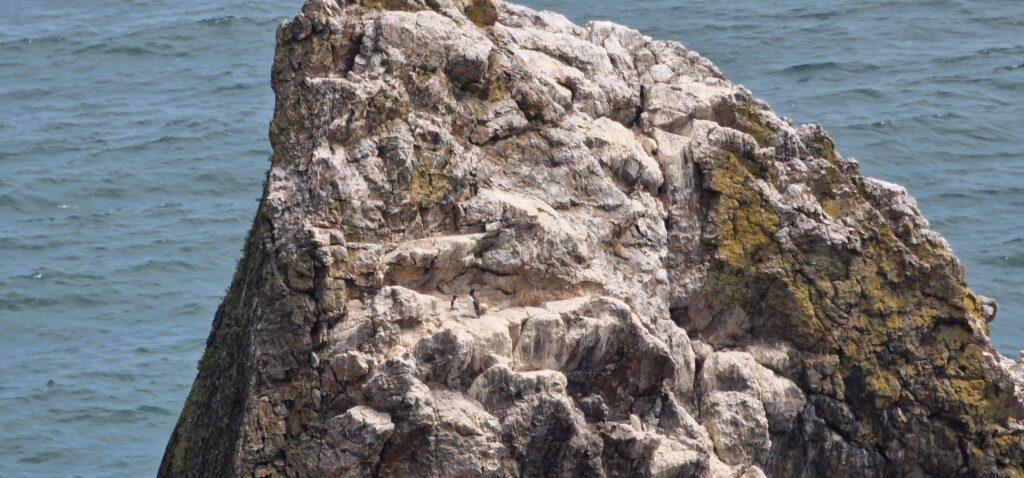
Our empty kittiwake cliffs are likely the result of predation. The areas where all kittiwakes have vanished are among the most exposed, and we have frequently observed predators (corvids, bigger gulls, and even peregrine falcon) at many of them. They're also the same areas that failed completely in previous years. Why birds keep coming back to these spots when they never seem succeed in fledging chicks is a mystery. Maybe they're inexperienced parents who haven't figured it out yet. Or maybe they're just making the best of it when all the better areas are full. Whatever the reason, it seems the odds are never on their side on these particular plots.
Nest failure is not unusual; a lot of things can go wrong between laying and fledging. Some eggs will never hatch. Disruptions to incubation can ruin development. Unlucky genetics can make some eggs non-viable, in which case even perfect incubation can't help. Both eggs and chicks are vulnerable to any predators that can get to them, and disease and parasites inevitably take a toll. And, of course, parents have to be able to find enough food for growing chicks. If fish are scarce, starvation is a very real possibility.
Our empty kittiwake cliffs are likely the result of predation. The areas where all kittiwakes have vanished are among the most exposed, and we have frequently observed predators (corvids, bigger gulls, and even peregrine falcon) at many of them. They're also the same areas that failed completely in previous years. Why birds keep coming back to these spots when they never seem succeed in fledging chicks is a mystery. Maybe they're inexperienced parents who haven't figured it out yet. Or maybe they're just making the best of it when all the better areas are full. Whatever the reason, it seems the odds are never on their side on these particular plots.
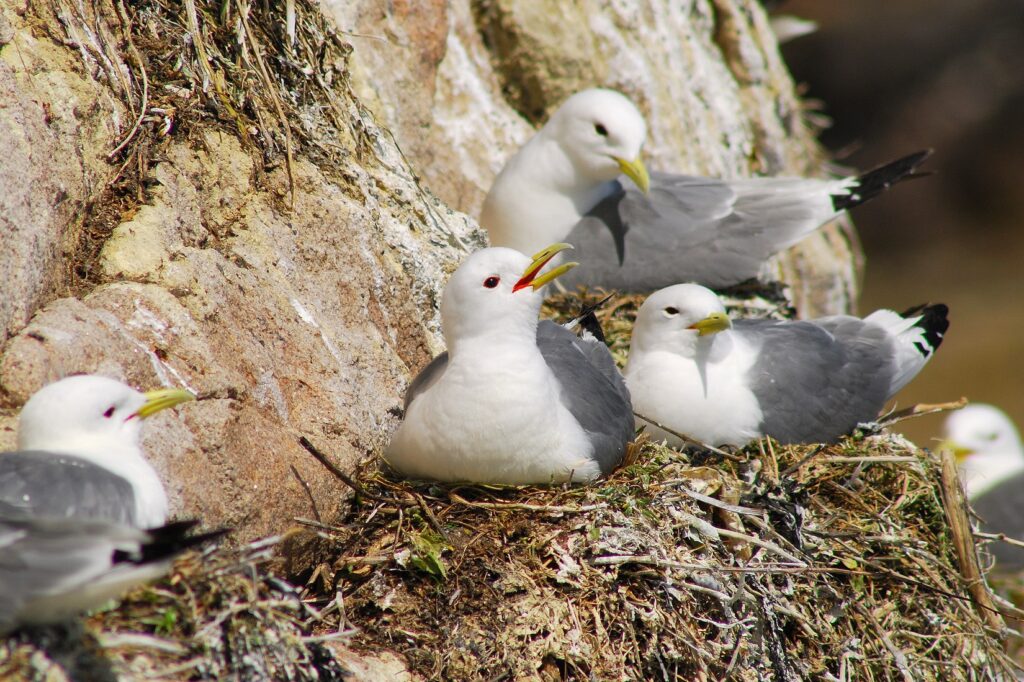 It's not all bleak everywhere, though. Those plots that are not as exposed have kittiwake chicks that are starting to think about flying, stretching and flapping their slightly-too-short wings in preparation for their first time in the air. It's like watching them getting ready for their first day at school.
These successful plots are vital. Black-legged kittiwakes are a red-listed species in Ireland and in decline around the world. Climate change and damage to prey habitats mean there's not enough small fish to secure their food supply, and populations have been falling for decades. Here on the east coast, the fate of our kittiwake population rests on those birds clever or lucky enough to nest in areas that escape the worst of predation. That's a lot of responsibility our young birds are carrying on their first flight.
It's not all bleak everywhere, though. Those plots that are not as exposed have kittiwake chicks that are starting to think about flying, stretching and flapping their slightly-too-short wings in preparation for their first time in the air. It's like watching them getting ready for their first day at school.
These successful plots are vital. Black-legged kittiwakes are a red-listed species in Ireland and in decline around the world. Climate change and damage to prey habitats mean there's not enough small fish to secure their food supply, and populations have been falling for decades. Here on the east coast, the fate of our kittiwake population rests on those birds clever or lucky enough to nest in areas that escape the worst of predation. That's a lot of responsibility our young birds are carrying on their first flight.
Should I stay or should I go: how long does it take chicks to leave the cliff?
[vc_row type="in_container" full_screen_row_position="middle" column_margin="default" column_direction="default" column_direction_tablet="default" column_direction_phone="default" scene_position="center" text_color="dark" text_align="left" row_border_radius="none" row_border_radius_applies="bg" row_position_desktop="default" row_position_tablet="inherit" row_position_phone="inherit" overflow="visible" overlay_strength="0.3" gradient_direction="left_to_right" shape_divider_position="bottom" bg_image_animation="none"][vc_column column_padding="no-extra-padding" column_padding_tablet="inherit" column_padding_phone="inherit" column_padding_position="all" flex_gap_desktop="10px" column_element_direction_desktop="default" column_element_spacing="default" desktop_text_alignment="default" tablet_text_alignment="default" phone_text_alignment="default" background_color_opacity="1" background_hover_color_opacity="1" column_backdrop_filter="none" column_shadow="none" column_border_radius="none" column_link_target="_self" column_position="default" gradient_direction="left_to_right" overlay_strength="0.3" width="1/1" tablet_width_inherit="default" animation_type="default" bg_image_animation="none" border_type="simple" column_border_width="none" column_border_style="solid"][vc_column_text css="" text_direction="default"]Dr. Samuel Preston, one of BirdWatch Ireland's 2026 East Coast Seabird Survey team members, writes an update about the seabird breeding season update. 2026 is the third consecutive year in which we have been able comprehensively to census and monitor the cliff-nesting seabirds at six important colonies on the east coast, thanks to funding from the Phase One windfarms in the Irish Sea. All photos are taken under NPWS licensing.
 For birds that need to fly to leave the cliffs, naturally it takes a little longer to get started with adult life. Kittiwake chicks take 35-40 days to get going, cormorants and shag take around 50 days to fledge, while fulmar take 70-75 days to go from hatching to flying. Gannets, however, win the prize for longest nestling period on our cliffs: 90-95 days to fledge!
Both short and long fledging times pose challenges. Auks have to pack a lot of growing into a short period and they can't afford to delay. When everyone leaves the cliffs all at once, so does the protection of the group. Stragglers who are left behind are the most vulnerable. Longer fledging times mean more time exposed to predators, the elements, and the stresses of group living - competition, aggression from neighbours, the risk of disease and parasites. On top of that, you need to master the skill of flying. For some birds, that means practising with short flights and hops. Gannets, however, have to get it right the first time they leap from the cliff. With so little room for error, it's no wonder they spend the most time preparing.
[/vc_column_text][/vc_column][/vc_row]
For birds that need to fly to leave the cliffs, naturally it takes a little longer to get started with adult life. Kittiwake chicks take 35-40 days to get going, cormorants and shag take around 50 days to fledge, while fulmar take 70-75 days to go from hatching to flying. Gannets, however, win the prize for longest nestling period on our cliffs: 90-95 days to fledge!
Both short and long fledging times pose challenges. Auks have to pack a lot of growing into a short period and they can't afford to delay. When everyone leaves the cliffs all at once, so does the protection of the group. Stragglers who are left behind are the most vulnerable. Longer fledging times mean more time exposed to predators, the elements, and the stresses of group living - competition, aggression from neighbours, the risk of disease and parasites. On top of that, you need to master the skill of flying. For some birds, that means practising with short flights and hops. Gannets, however, have to get it right the first time they leap from the cliff. With so little room for error, it's no wonder they spend the most time preparing.
[/vc_column_text][/vc_column][/vc_row]
Should I Stay or Should I Go?
Guillemots and razorbills are leaving the cliffs in droves, but kittiwakes, cormorants and shag, fulmar, and gannets are still brooding chicks on the rocks. Why are some birds so slow to leave their breeding sites? Actually, the real question is, "how are guillemots and razorbill chicks ready to leave so early?". From as young as 15 days after hatching these chicks can be ready to make their way to the sea (though some will hang around for 3 weeks before they do). They achieve this remarkable speed by abandoning the cliffs before the can even fly. Waiting for flight feathers to grow takes time and would mean more time exposed on land to danger. There's nowhere to run from predators on a cliff, and auk chicks are not exactly nimble on their feet. They are, however, already well-equipped for swimming. Once guillemot and razorbill chicks are big enough, they take the plunge into the water below and master the aquatic environment before even thinking about the air.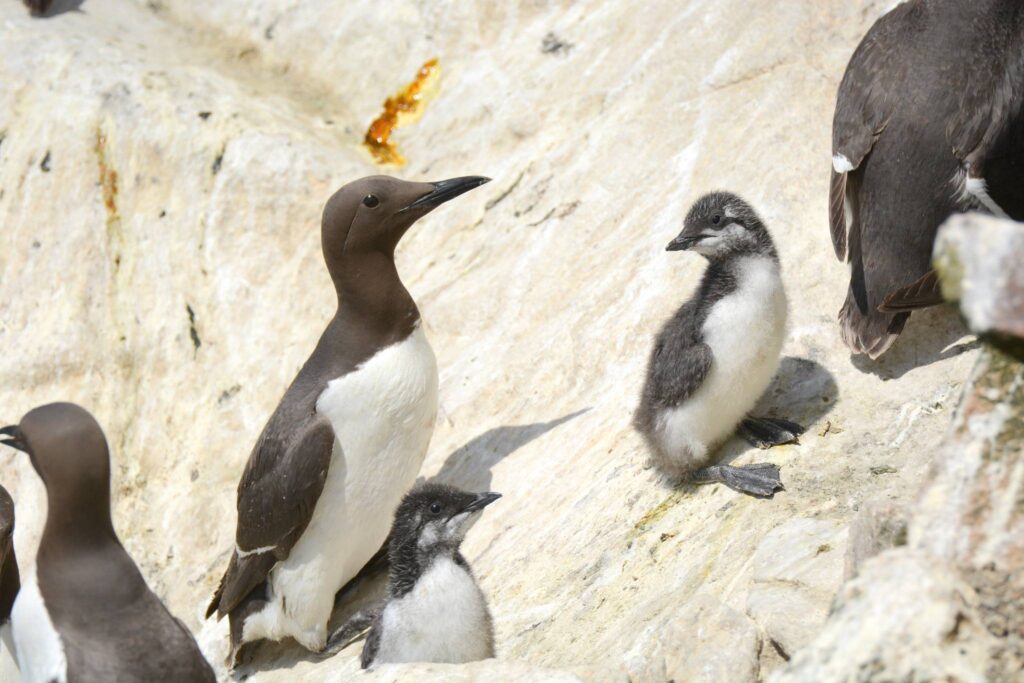 For birds that need to fly to leave the cliffs, naturally it takes a little longer to get started with adult life. Kittiwake chicks take 35-40 days to get going, cormorants and shag take around 50 days to fledge, while fulmar take 70-75 days to go from hatching to flying. Gannets, however, win the prize for longest nestling period on our cliffs: 90-95 days to fledge!
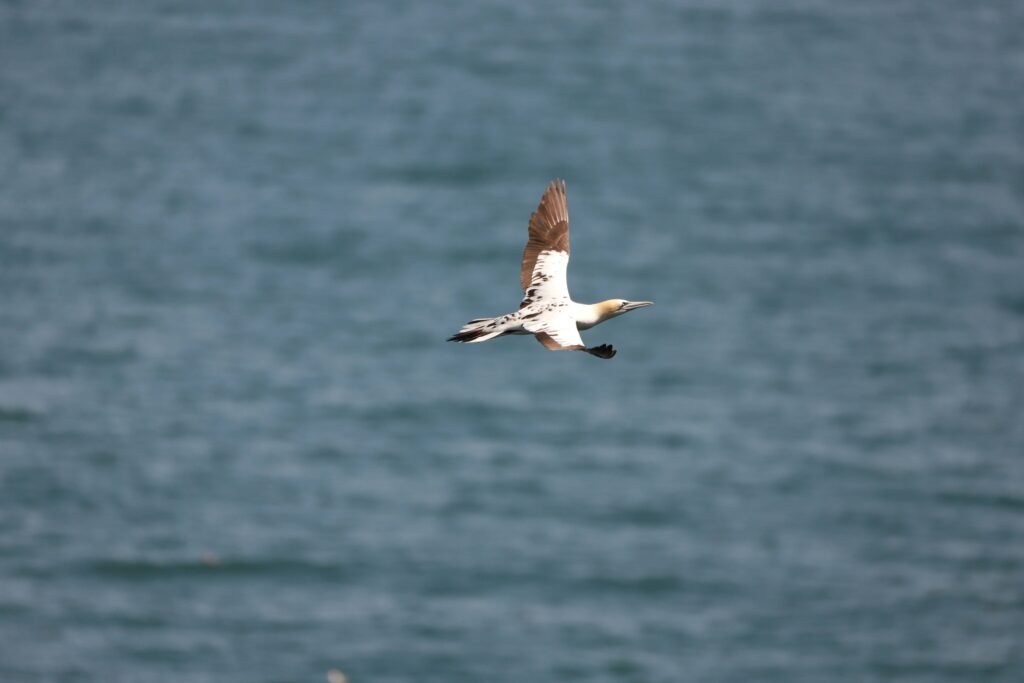 Both short and long fledging times pose challenges. Auks have to pack a lot of growing into a short period and they can't afford to delay. When everyone leaves the cliffs all at once, so does the protection of the group. Stragglers who are left behind are the most vulnerable. Longer fledging times mean more time exposed to predators, the elements, and the stresses of group living - competition, aggression from neighbours, the risk of disease and parasites. On top of that, you need to master the skill of flying. For some birds, that means practising with short flights and hops. Gannets, however, have to get it right the first time they leap from the cliff. With so little room for error, it's no wonder they spend the most time preparing.
[/vc_column_text][/vc_column][/vc_row]
Both short and long fledging times pose challenges. Auks have to pack a lot of growing into a short period and they can't afford to delay. When everyone leaves the cliffs all at once, so does the protection of the group. Stragglers who are left behind are the most vulnerable. Longer fledging times mean more time exposed to predators, the elements, and the stresses of group living - competition, aggression from neighbours, the risk of disease and parasites. On top of that, you need to master the skill of flying. For some birds, that means practising with short flights and hops. Gannets, however, have to get it right the first time they leap from the cliff. With so little room for error, it's no wonder they spend the most time preparing.
[/vc_column_text][/vc_column][/vc_row]