Hen Harrier

Irish Name: Cromán na gCearc
Scientific name: Circus cyaneus
Bird Family: Raptors
amber
Conservation status

Status

Breeds in the uplands and bogs of Ireland.

Identification

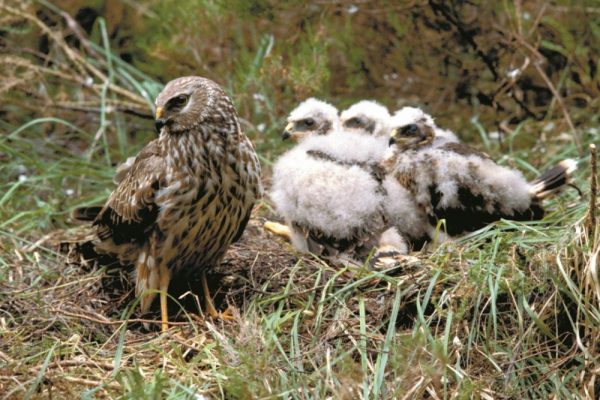
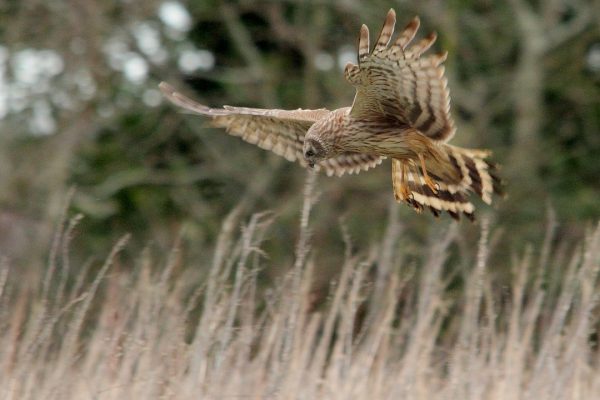
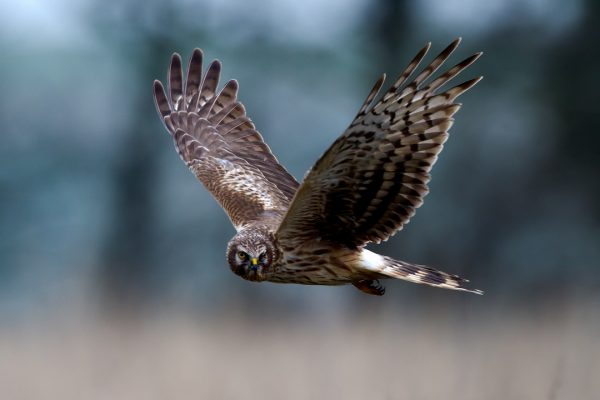
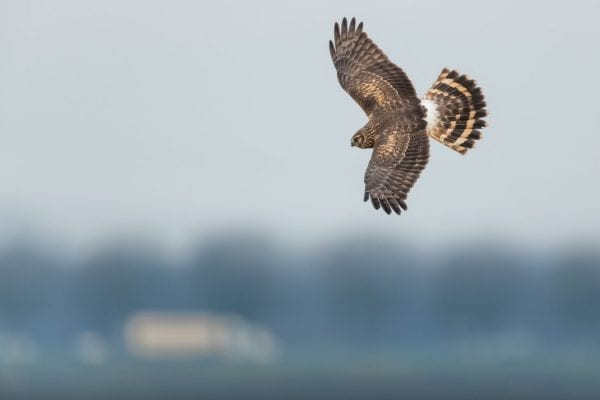
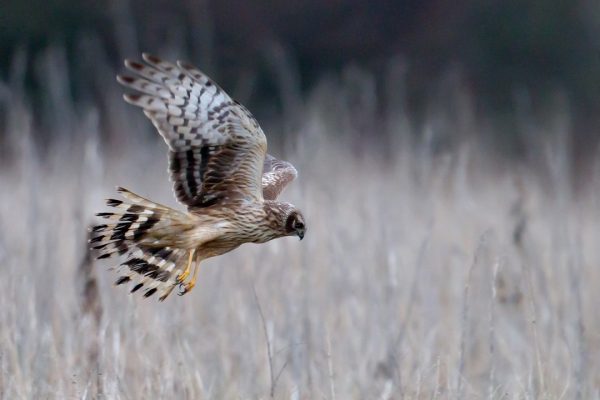
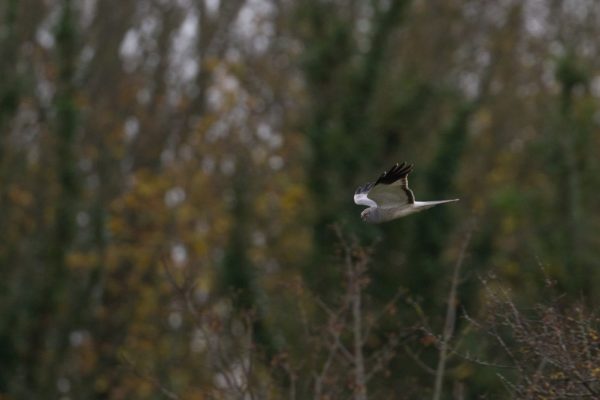
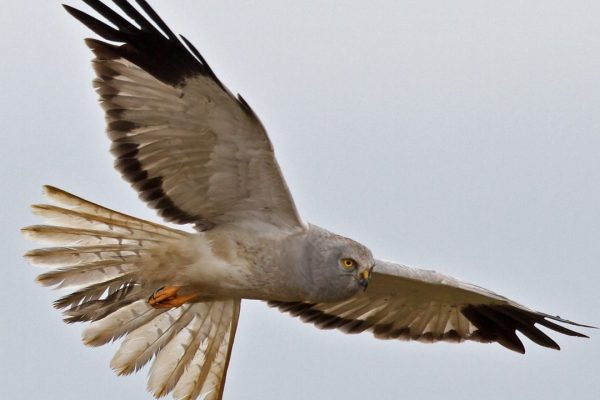
Size between Montagu's Harrier and the larger Marsh Harrier. Females and juveniles similar - brown with white rump and dark rings on the tail, hence often referred to collectively as 'ringtails'. Females are bigger than males. Males very distinctive, appearing strikingly pale below, with blue grey upper parts and jet black wing-tips. Hen Harriers have somewhat of an owl-like face, particularly accentuated in female birds.

Voice

Usually only heard in the breeding season near the nest site. Quick, chattering calls in alarm and display and whistling calls from female to male, when receiving food.

Diet

Small birds and mammals, which are caught by surprise. Will sometimes use cover, such as woodland edges and bushes, to surprise prey.

Breeding

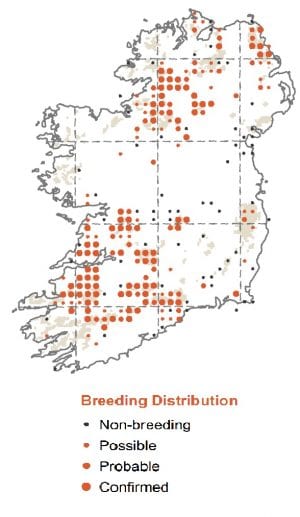
Breeding birds are confined largely to heather moorland and young forestry plantations, where they nest on the ground. Hen Harriers are found mainly in Counties Laois, Tipperary, Cork, Clare, Limerick, Galway, Monaghan, Cavan, Leitrim, Donegal and Kerry. The species has declined, probably due to the loss of quality moorland habitat due to agricultural changes, and maturing forest plantations. Hen Harriers mainly hunt over moorland whilst breeding where they take small ground nesting birds and mammals.

Wintering

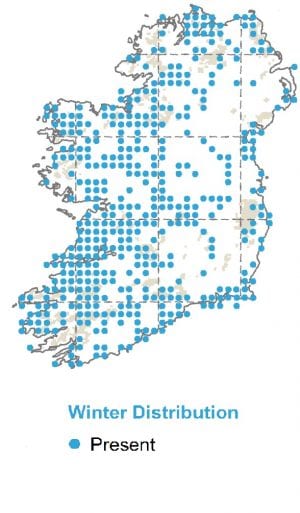
Spends winter in more coastal and lowland areas throughout Ireland hence most easily seen on the coast in the winter months. Good sites include the North Slob Nature Reserve and Tacumshin Lake in County Wexford, as well as the East Coast Nature Reserve in Co. Wicklow.

Monitored by

BirdTrack and the Hen Harrier Roost Survey.

Blog posts about this bird

Action for nature

BirdWatch Ireland welcomes the scrapping of the winter stubble rule

BirdWatch Ireland is pleased that the rule for shallow cultivation of winter stubbles has been scrapped in the latest iteration of the Nitrates Action Programme. It is regrettable, however, that this decision was not made sooner, and particularly before farmers cultivated stubble grounds in 2025, leaving threatened bird species looking for other food supplies this winter. In the medium and long term, Ireland’s Common Agriculture Policy Strategic Plan and National Restoration Plan must incentivise farmers to provide sufficient quantity and quality of habitats to restore both wintering and breeding farmland bird populations. The controversial winter stubble rule was introduced in 2022, despite vociferous opposition from BirdWatch Ireland on account of the risk of severe impacts to farmland birds over the winter months, when food supplies for many Red- and Amber-Listed Birds of Conservation Concern in Ireland are in short supply. The stubble fields left after crops have been harvested often harbour spilled seeds, which seed-eating birds, such as the Yellowhammer and the Skylark, and rodents will consume during the cold winter. These small birds and mammals are prey species for other birds, including the Hen Harrier, a highly protected and increasingly rare bird of prey that is experiencing ongoing declines. In our submission to government at that time, we highlighted that 30 Red- or Amber-Listed Birds of Conservation in Ireland relied on winter stubbles for food.
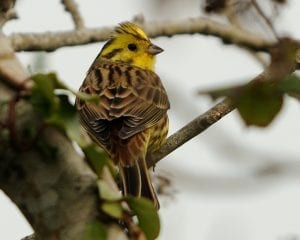
yellowhammer-perched-on-branch-surrounded-by-ivy Yellowhammer: one of the Irish bird species that is most dependent on winter stubble (Photo: John Fox)
Nitrate pollution is a severe problem in Ireland and has to be addressed. It is having well-documented consequences for our waterways and threatens riverine bird species like Kingfisher, Dipper, Grey Wagtail and others. The shallow cultivation rule was introduced to address nitrate leaching from arable land, but without assessment of the impacts to threatened bird species known to forage on stubbles. Furthermore, the Natura Impact Statement of the Nitrates Action Programme in 2022 did not assess the impacts of the shallow cultivation of stubbles rule on Annex 1 Hen Harrier and Golden Plover or any other protected species, as is required under the Habitats Directive. BirdWatch Ireland raised its concerns about this with government. The shallow cultivation rule was also not in line with known ecological requirements for Hen Harrier, especially juvenile birds, in the Hen Harrier Threat Response Plan, also published by government. In 2022, government charged Teagasc with researching the impact of a reduction in winter stubble after the rule had been brought in. This research is ongoing.

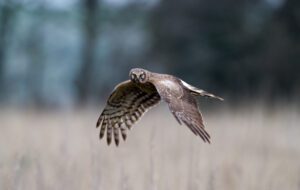
Hen Harrier: winter stubble is a very important habitat for this highly threatened bird of prey species (Photo: Shay Connolly)
A 2023 study undertaken on 30 farms in an area of south Cork looked at the habitat associations of farmland birds, including on arable land. The study found that the most important field type for farmland birds over winter in terms of numbers (48%) and scale was winter stubble. It was on this basis that the decision was made by government to scrap the winter stubble rule Oonagh Duggan, Head of Policy and Advocacy at BirdWatch Ireland, said: “We welcome this decision to scrap the shallow cultivation of winter stubble rule in the Nitrates Action Programme. The rule was introduced in a knee-jerk reaction to address nitrate pollution, where it was stated that ‘all sectors had to play their part’, but there was really inadequate consideration, ecological assessment or mitigation of the impacts to least 30 bird species, many threatened, that forage on winter stubbles. The research on the risk of effects on farmland birds should have been commissioned first, before any changes were proposed for winter stubbles, and not after the fact. Nitrate pollution has to be addressed, but when trying to address one environmental problem, it makes no sense to create another one. “The scrapping of the rule comes too late in the day to help threatened farmland birds this winter, however, as farmers will have already cultivated their fields. It was an irresponsible decision to mandate farmers to shallow-cultivate without adequate consideration of the effects on declining bird species. Ireland is in the midst of a biodiversity crisis and farmland birds represent the fastest declining group of birds in Ireland. Uncultivated and unsprayed stubble fields are extremely important for birds like Hen Harrier, Skylark and Yellowhammer, especially in the absence of diverse habitats on farmland. The shallow cultivation rule is one more threat to them. “BirdWatch Ireland used every opportunity possible to advocate with officials and politicians at national and at EU level for the scrapping of this environmentally destructive rule. BirdWatch Ireland now calls on government to incentivise farmers appropriately to restore habitats on farmland, including assistance for stubble fields in Ireland’s next CAP Strategic Plan and National Restoration Plan, in order to halt and reverse the declines of Ireland's farmland birds.”
Advocacy

Extinction of Slender-billed Curlew must be a wake-up call for global biodiversity action

In recent days, scientists sounded the death knell for Slender-billed Curlew, declaring the migratory shorebird globally extinct. Published in IBIS, the International Journal of Avian Science, the analysis of the Slender-billed Curlew’s conservation status was a collaboration between RSPB, BirdLife International, Naturalis Biodiversity Centre and the Natural History Museum. This is the first known global bird extinction from mainland Europe, North Africa and West Asia and, unless biodiversity loss is treated as the crisis that it is, it won’t be the last. Indeed, the extinction of the Slender-billed Curlew should serve as a wake-up call to protect other vulnerable species from a similar fate.
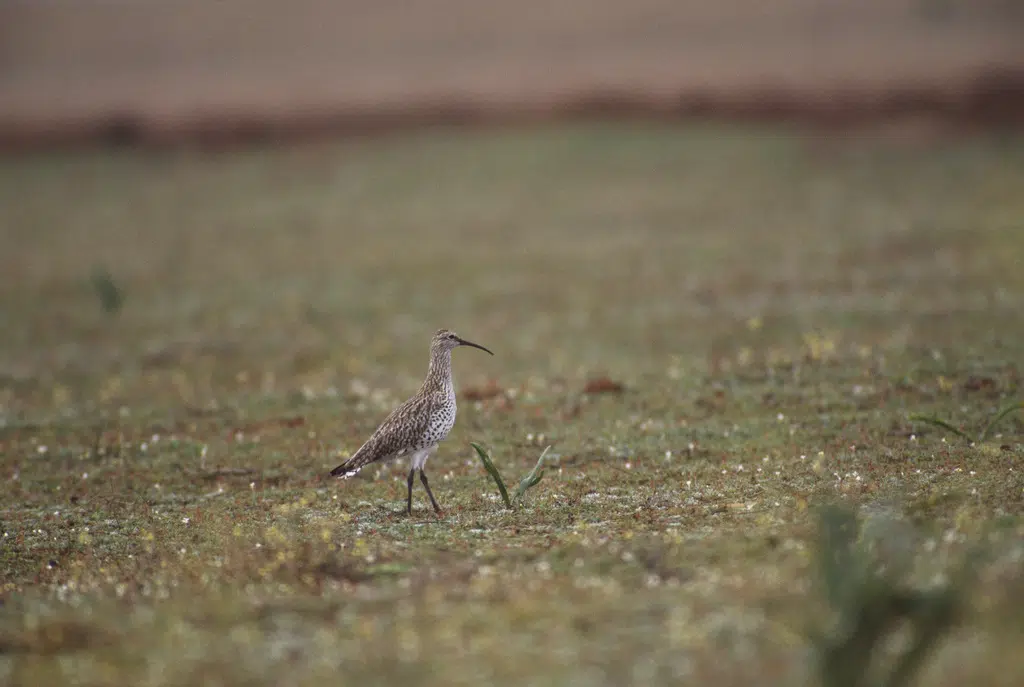
What happened to the Slender-billed Curlew?

The Slender-billed Curlew was a migratory shorebird that once bred in western Siberia and wintered around the Mediterranean. A brown and beige wading bird similar in appearance to the Eurasian Curlew, it was distinguished by a striking flash of white under its tail, visible only in flight. As noted in the IBIS paper, records suggest that the Slender-billed Curlew was in decline as early as 1912, with the possibility of the species becoming extinct raised as early as the 1940s. However, it was not until 1988 that the species was identified as being of high conservation concern and classified as Threatened. The last undisputed sighting of the Slender-billed Curlew was in Morocco in 1995, despite extensive and intensive searches for the species since then. The recent research concludes that there is a 99.6% chance that this bird is now extinct. While the paper notes that the factors that led to the Slender-billed Curlew’s decline may never be fully understood, it points to possible pressures including extensive drainage of their raised bog breeding grounds for agricultural use, the loss of coastal wetlands used for winter feeding, and hunting, especially latterly, of an already reduced, fragmented and declining population. There could have been impacts from pollution, disease, predation, and climate change, but the scale of these impacts is unknown. Alex Berryman, Red List Officer at BirdLife International, and a co-author of the study, said; “The devasting loss of the Slender-billed Curlew sends a warning that no birds are immune from the threat of extinction. More than 150 bird species have become globally extinct since 1500. Invasive species have often been the culprit, with 90% of bird extinctions impacting island species. However, while the wave of island extinctions may be slowing, the rate of continental extinctions is increasing. This is a result of habitat destruction and degradation, overexploitation and other threats. Urgent conservation action is desperately needed to save birds; without it we must be braced for a much larger extinction wave washing over the continents.” It is now up to the International Union for Conservation of Nature (IUCN) to determine whether to officially declare this species extinct.

Global shorebird declines

This news comes just weeks after an IUCN report revealed steep declines for migratory shorebird populations globally. 16 species of shorebird, including several species that winter in Ireland and are monitored through the Irish Wetland Bird Survey (I-WeBS), have had their conservation status reclassified to a higher threat category in the latest IUCN Red List update. Grey Plover, Dunlin and Ruddy Turnstone are among the species affected. Additionally, we know the seven other Curlew species share more than a name with the Slender-billed Curlew. Indeed, many other species of Curlew are experiencing declines. The last known sighting of an Eskimo Curlew was in 1963, when a lone bird was shot in Barbados. It is presumed to be extinct. Closer to home, the Eurasian Curlew has plummeted by over one-third in just 30 years, while central Asian populations have also experienced significant declines. Once a widespread breeding species in Ireland, a 2021 National Parks and Wildlife Service (NPWS) survey reported just 105 confirmed breeding pairs of Eurasian Curlew. This represents a 98% decline in breeding pairs in the Republic of Ireland since the 1980s. Habitat loss and degradation (as a result of agricultural intensification, land drainage and afforestation) have been identified as the primary threats to breeding Curlew populations in Europe. For decades, BirdWatch Ireland has spearheaded surveys and conservation efforts for Curlew and other breeding waders in Ireland. We also advocated for the introduction of a multi-million euro scheme which supports farmers to undertake measures aimed at saving Ireland’s breeding waders from extinction.  We are pleased that the Government has responded, with the introduction of the Breeding Wader EIP earlier this year.

Extinction in real-time

The devastating loss of the Slender-billed Curlew serves as a stark reminder that extinction is not some far-away concept. It is happening in real-time, on our watch, and within our own country. The Corn Bunting, a once common farmland bird, has been extinct in Ireland since the 1990s. Species such as the Hen Harrier are on the brink of extinction, with only 85-106 breeding pairs believed to remain in the country, while just one known pair of Ring Ouzel remains in Ireland. As previously mentioned, Ireland's breeding population of Eurasian Curlews is also in critical danger. Scientists know what needs to be done to reverse species declines and it is up to global leaders to step up and take meaningful action. This work must be collaborative and inclusive if it is to be effective. Migratory birds cross borders, so conservation efforts in one country can be undone by harmful actions in another that shares the same species.

Giving nature a voice

Extinction is permanent. While it may be too late for the Slender-billed Curlew, some hope remains for countless other species, if we act quickly and decisively. As a member of the public, your choices and voice can help protect the future of many species still at risk. As we approach a General Election in Ireland, we encourage our supporters to prioritise the issues of biodiversity loss and climate change when engaging with and voting for their General Election candidates. You can find our list of asks for people, nature and climate in the next Government here.   Featured Image: Slender-billed Curlew Morocco, Chris-Gomersall/rspb-images.com.

Similar Species

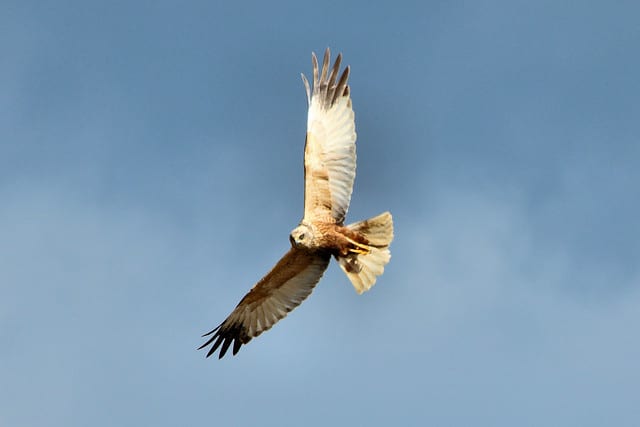
Marsh Harrier

Irish Name:
Cromán móna
Scientific name:
Circus aeruginosus
Bird Family:
Raptors

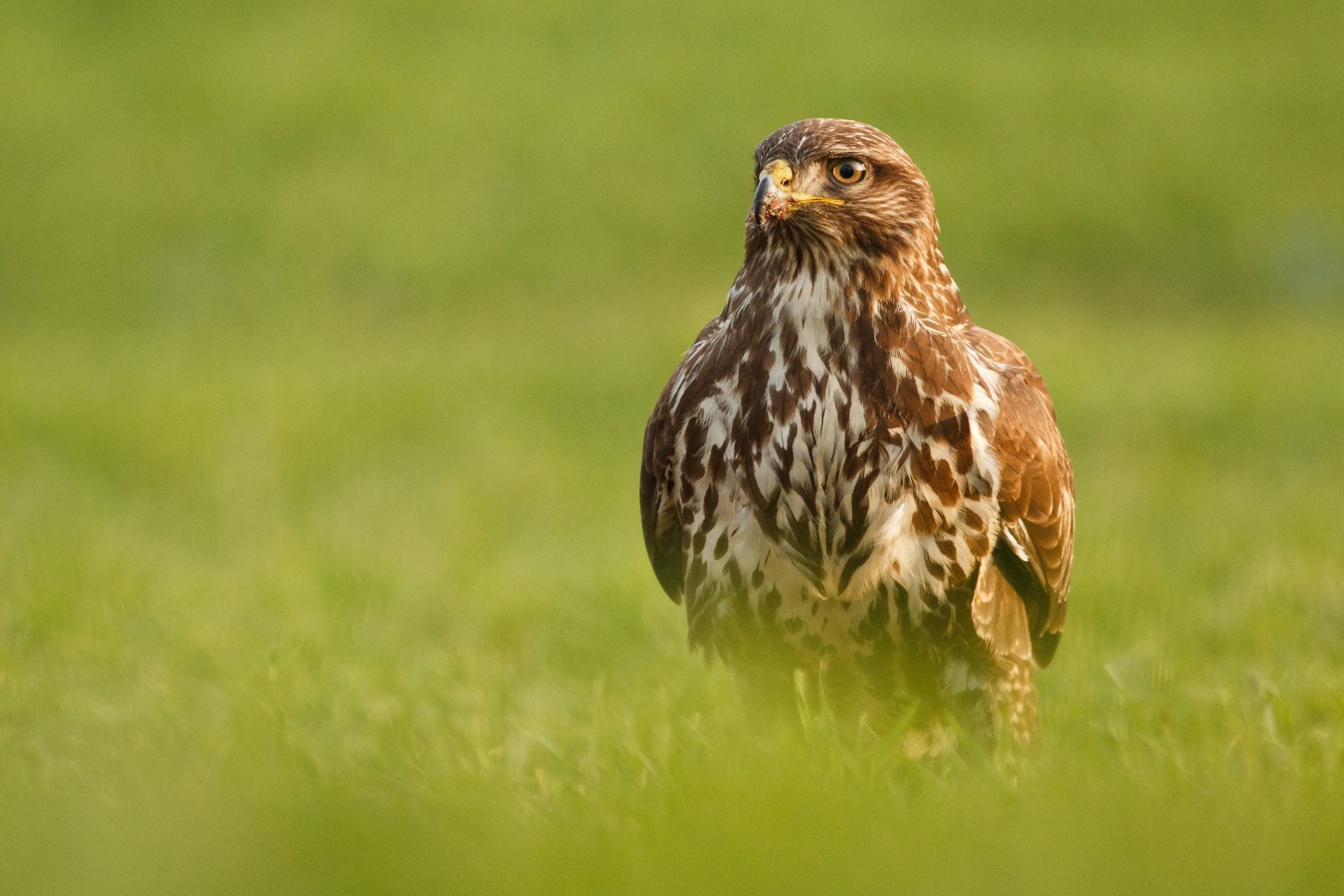
Buzzard

Irish Name:
Clamhán
Scientific name:
Buteo buteo
Bird Family:
Raptors