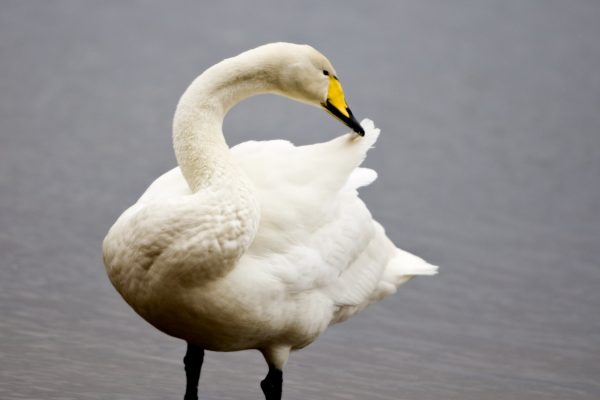
Whooper Swan
| Irish Name: | Eala Ghlórach |
| Scientific name: | Cygnus cygnus |
| Bird Family: | Swans |
amber
Conservation status
Conservation status
Status
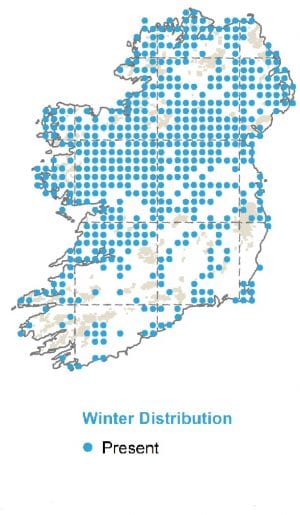
Winter visitor to wetlands throughout Ireland from October to April.
Identification
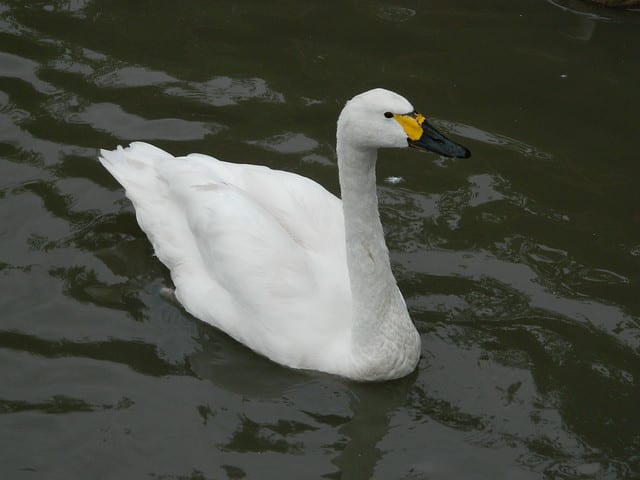
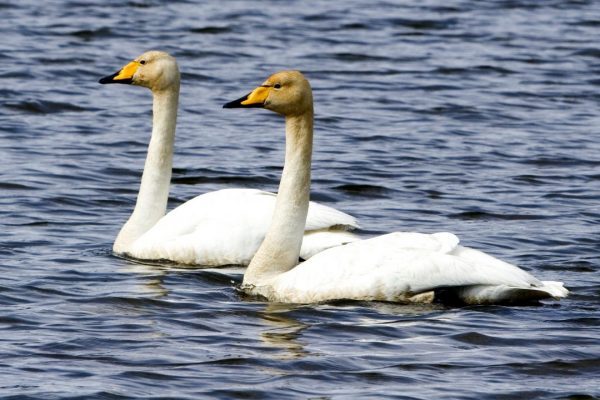
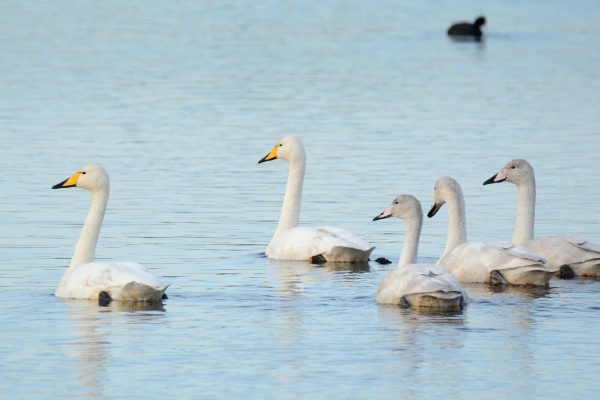
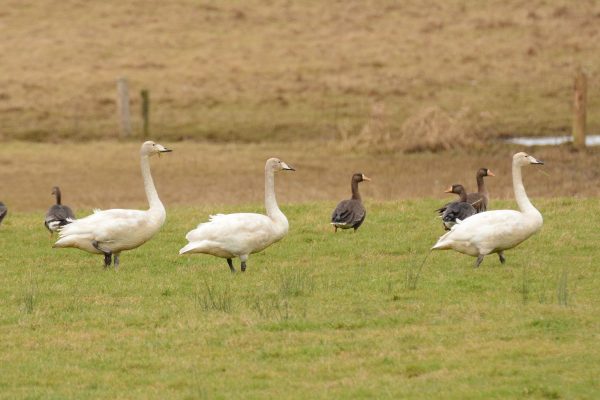
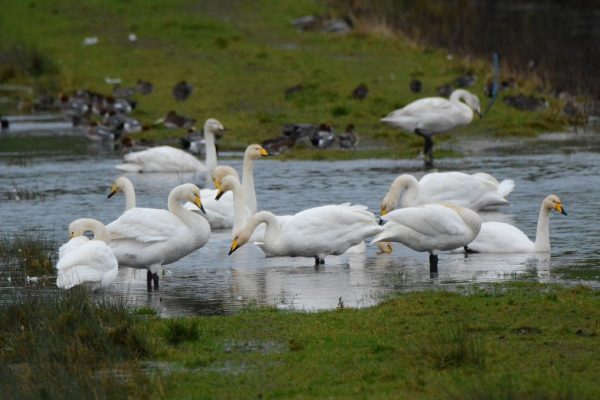
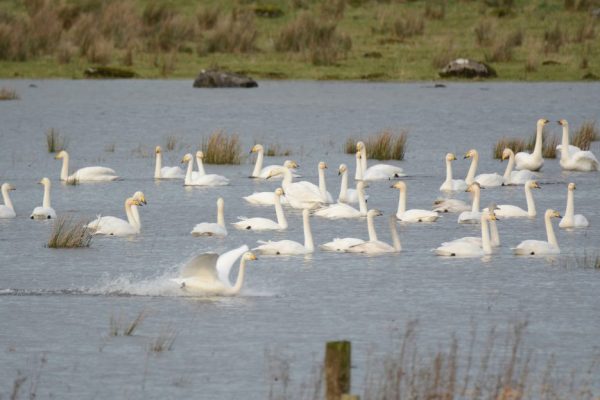
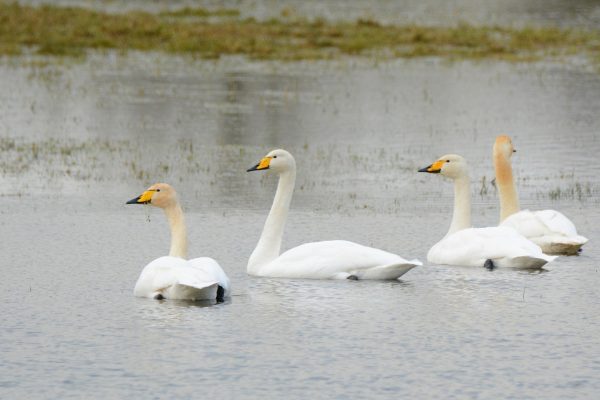
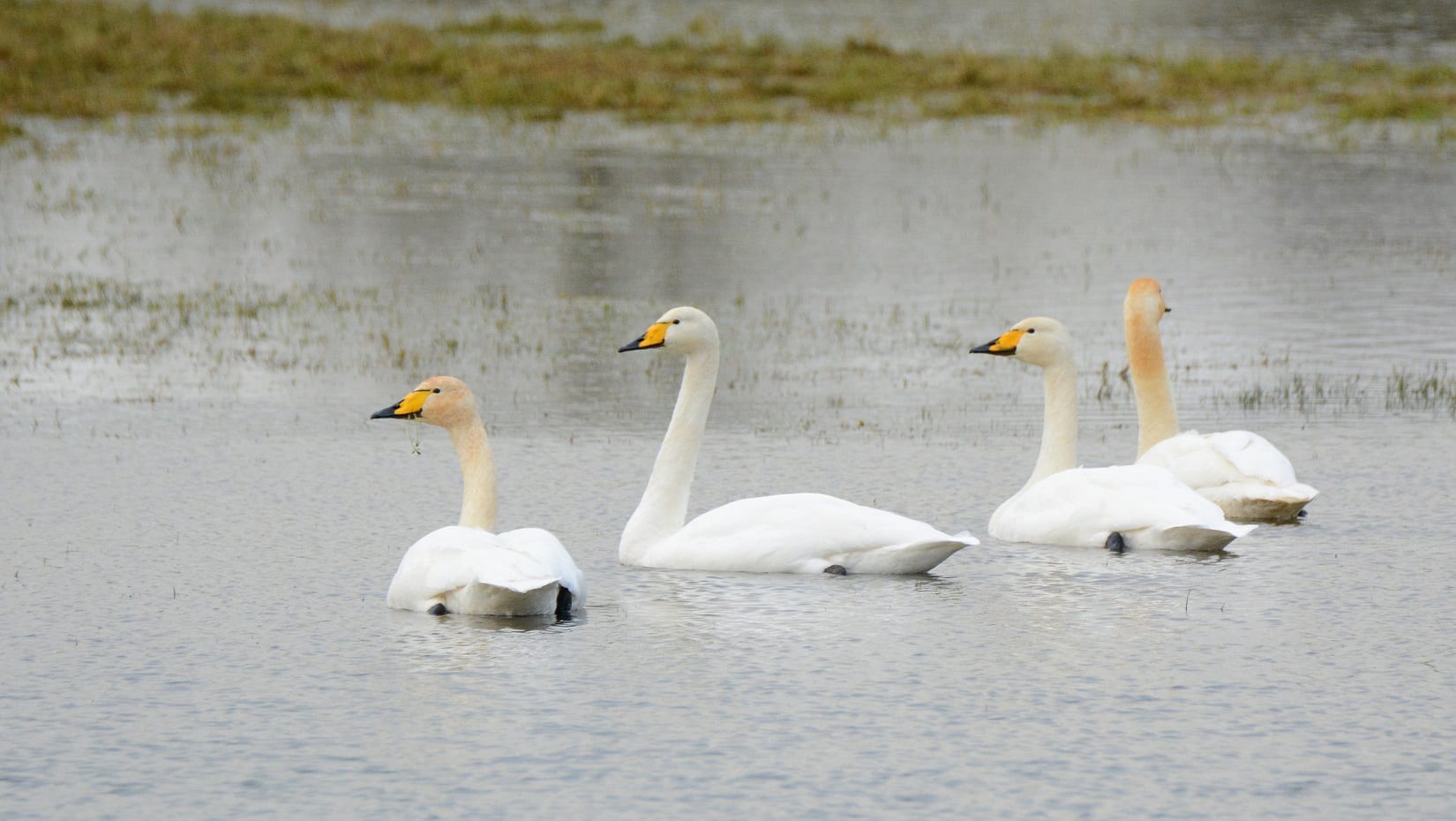
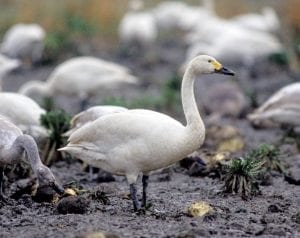
Similar to Bewick's Swan, but larger, with longer neck. Yellow and black bill, with the yellow projecting below the nostril.
Voice
Vocal bugling or honking.
Diet
Aquatic vegetation, but they are commonly found grazing on agricultural grasslands and fields where there is spilled grain, as well as potatoes from cultivated land.
Breeding
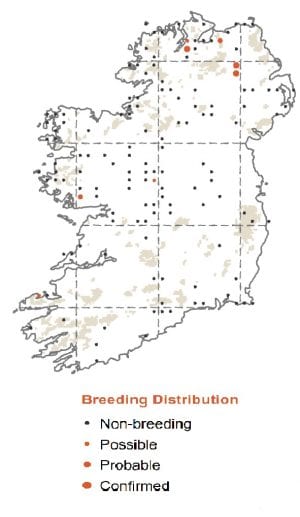
The Whooper Swans that are present in Ireland each winter nest in Iceland during the summer. Each year a small number of Whoopers stay in Ireland for the summer and there have been occasional breeding records on lakes in the midlands and north-west.
Wintering
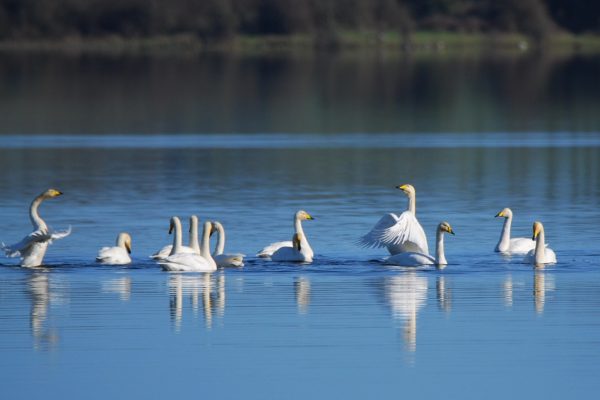
Most on lowland open farmland around inland wetlands, regularly seen while feeding on grasslands and stubble.
Monitored by
Irish Wetland Bird Survey (I-WeBS), and a special swan census is carried out every five years, most recently in 2020. The census takes place in January and aims to count and gather data on every Whooper Swan in Ireland. The census is coordinated in the Republic of Ireland by our I-WeBS team.
Relatively widespread winter migrant, especially north and west of a line between Limerick and Dublin. Lough Swilly (Donegal), Lough Foyle (Donegal/Derry), Wexford Harbour & Slobs, Lough Gara (Sligo) and Donegal Bay all support greatest numbers (350- >2,000 birds).
Breeding grounds in Iceland and Northern Europe.
Blog posts about this bird
Birds in Irish Mythology
The following story is written by Rhys Gadd for the 2025 winter issue of Bird Detectives, our junior magazine. Become a member today for full access to Bird Detectives and Wings.
 The children in the story are destined to spend the first 300 years on Lough Derryvaragh, before moving to the Sea of Moyle, between Scotland and Ireland, for another 300 years, finally coming to Inis Glora, an island off the coast of Co. Mayo, where they live out the last 300 years of the spell
before returning to their original human form. Could this be a story to explain the disappearance of the swans during the winter?
The children in the story are destined to spend the first 300 years on Lough Derryvaragh, before moving to the Sea of Moyle, between Scotland and Ireland, for another 300 years, finally coming to Inis Glora, an island off the coast of Co. Mayo, where they live out the last 300 years of the spell
before returning to their original human form. Could this be a story to explain the disappearance of the swans during the winter?
 Well, Saint Patrick bestowed a blessing on Curlews so that people may never find their nests, therefore protecting them from harm. Unfortunately, this hasn’t necessarily worked for Curlews, as their breeding population in Ireland has declined by 96% since the 1960’s.
The devastation of their breeding habitats did not require people to find their nests, which are unfortunately often destroyed without anyone knowing. Thankfully, here at BirdWatch Ireland we may have found a loophole from this so that we may again help protect the Curlew. By employing specialised drones with thermal imagery technology, we can find these nests much more effectively than people ever have before, monitoring and protecting the species, hopefully to ensure their survival for many future generations to come – just as Saint Patrick would have wanted!
Well, Saint Patrick bestowed a blessing on Curlews so that people may never find their nests, therefore protecting them from harm. Unfortunately, this hasn’t necessarily worked for Curlews, as their breeding population in Ireland has declined by 96% since the 1960’s.
The devastation of their breeding habitats did not require people to find their nests, which are unfortunately often destroyed without anyone knowing. Thankfully, here at BirdWatch Ireland we may have found a loophole from this so that we may again help protect the Curlew. By employing specialised drones with thermal imagery technology, we can find these nests much more effectively than people ever have before, monitoring and protecting the species, hopefully to ensure their survival for many future generations to come – just as Saint Patrick would have wanted!
The Children of Lir
We have lived side-by-side with birds for millennia. They were probably some of the first animal species to return to Ireland after the Ice Age and our lives have been intertwined with them ever since the first people moved onto the Emerald Isle. Because of this, the stories of birds are deeply intertwined with early Irish and Celtic mythology. The tale of the Children of Lir is a famous one, as I’m sure you know. Lir, the ancient Irish god of the sea, had four children. It is said that they were beloved by anyone they encountered. That is, except for one person, Aoife. Aoife, Lir’s third wife, was jealous of the boys, for she could not have children herself and grew resentful of their charm and of the love which their father reserved for them. So, she hatched a plan. The children, adventurous as they were, loved to go on walks – the feeling of being emersed in nature, surrounded by the sounds and the songs of the birds and the bees, with the sun on their faces and a gentle breeze was something they held second to none. This, Aoife decided, she would use against them. She easily persuaded the children to follow her to Lough Derravaragh in Co. Westmeath, with her loyal servants in tow. She could barely contain her delight after getting to the lake, for she hoped their end was near. She swiftly ordered her servants to kill the boys as she cackled and cackled over her dastardly plan. She cackled so much that she could barely hear the meek yet defiant response from her servants. They refused. Such was the charm of the four children that the servants simply could not bring themselves to do it. Aoife was outraged and decided to cast a spell herself, turning each of the children into swans for 900 years. It is a famous tale that immediately brings to mind an elegant swan gracefully paddling down a river or a canal. But, did you know, the swan that usually comes to mind likely isn’t the same species featured in the story? Mute Swans, with which you will be familiar and which most people assume are the swans in question, first appeared in Ireland around 2,000 years ago. It is not fully known whether the swans were able to do this themselves or whether they were first brought over by people. So, the swans to which the story of the Children of Lir refers are likely either Bewick’s or Whooper Swans, both migratory species that are only found in Ireland in the winter . something which the story might allude to.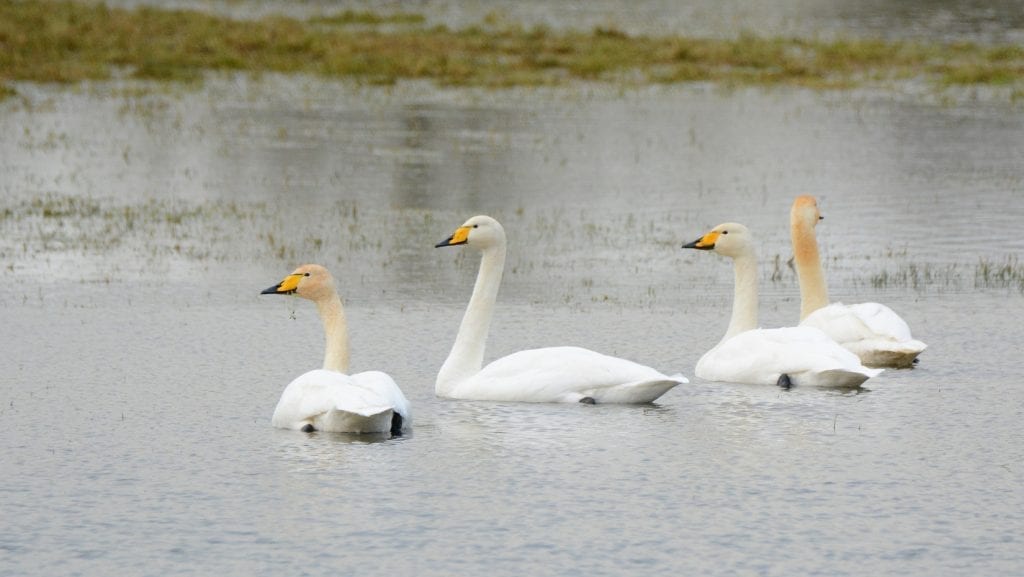 The children in the story are destined to spend the first 300 years on Lough Derryvaragh, before moving to the Sea of Moyle, between Scotland and Ireland, for another 300 years, finally coming to Inis Glora, an island off the coast of Co. Mayo, where they live out the last 300 years of the spell
before returning to their original human form. Could this be a story to explain the disappearance of the swans during the winter?
The children in the story are destined to spend the first 300 years on Lough Derryvaragh, before moving to the Sea of Moyle, between Scotland and Ireland, for another 300 years, finally coming to Inis Glora, an island off the coast of Co. Mayo, where they live out the last 300 years of the spell
before returning to their original human form. Could this be a story to explain the disappearance of the swans during the winter?
A Blessing From St. Patrick
Another, less ancient story tells of the time Saint Patrick left Ireland. After Saint Patrick had finished his business in Ireland, banishing all the snakes and what not, he travelled to the Isle of Man. There, so the story goes, he became awestruck by a beautiful bird: the Curlew. Its iconic downturned bill and eerily beautiful, rolling song made the saint think that he must some how protect this bird for future generations to appreciate.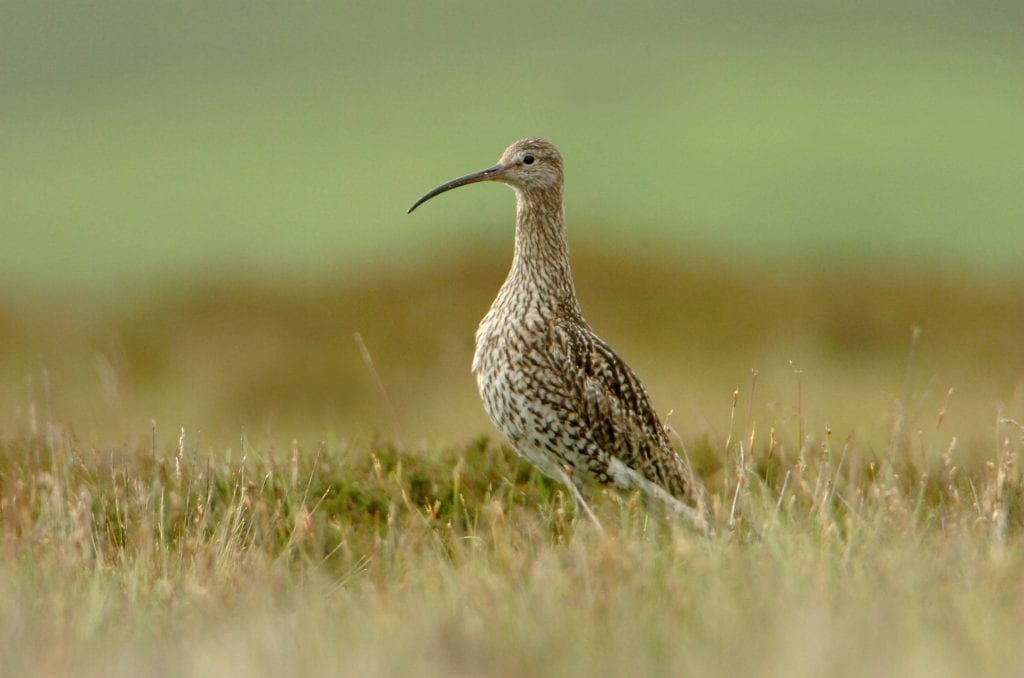 Well, Saint Patrick bestowed a blessing on Curlews so that people may never find their nests, therefore protecting them from harm. Unfortunately, this hasn’t necessarily worked for Curlews, as their breeding population in Ireland has declined by 96% since the 1960’s.
The devastation of their breeding habitats did not require people to find their nests, which are unfortunately often destroyed without anyone knowing. Thankfully, here at BirdWatch Ireland we may have found a loophole from this so that we may again help protect the Curlew. By employing specialised drones with thermal imagery technology, we can find these nests much more effectively than people ever have before, monitoring and protecting the species, hopefully to ensure their survival for many future generations to come – just as Saint Patrick would have wanted!
Well, Saint Patrick bestowed a blessing on Curlews so that people may never find their nests, therefore protecting them from harm. Unfortunately, this hasn’t necessarily worked for Curlews, as their breeding population in Ireland has declined by 96% since the 1960’s.
The devastation of their breeding habitats did not require people to find their nests, which are unfortunately often destroyed without anyone knowing. Thankfully, here at BirdWatch Ireland we may have found a loophole from this so that we may again help protect the Curlew. By employing specialised drones with thermal imagery technology, we can find these nests much more effectively than people ever have before, monitoring and protecting the species, hopefully to ensure their survival for many future generations to come – just as Saint Patrick would have wanted!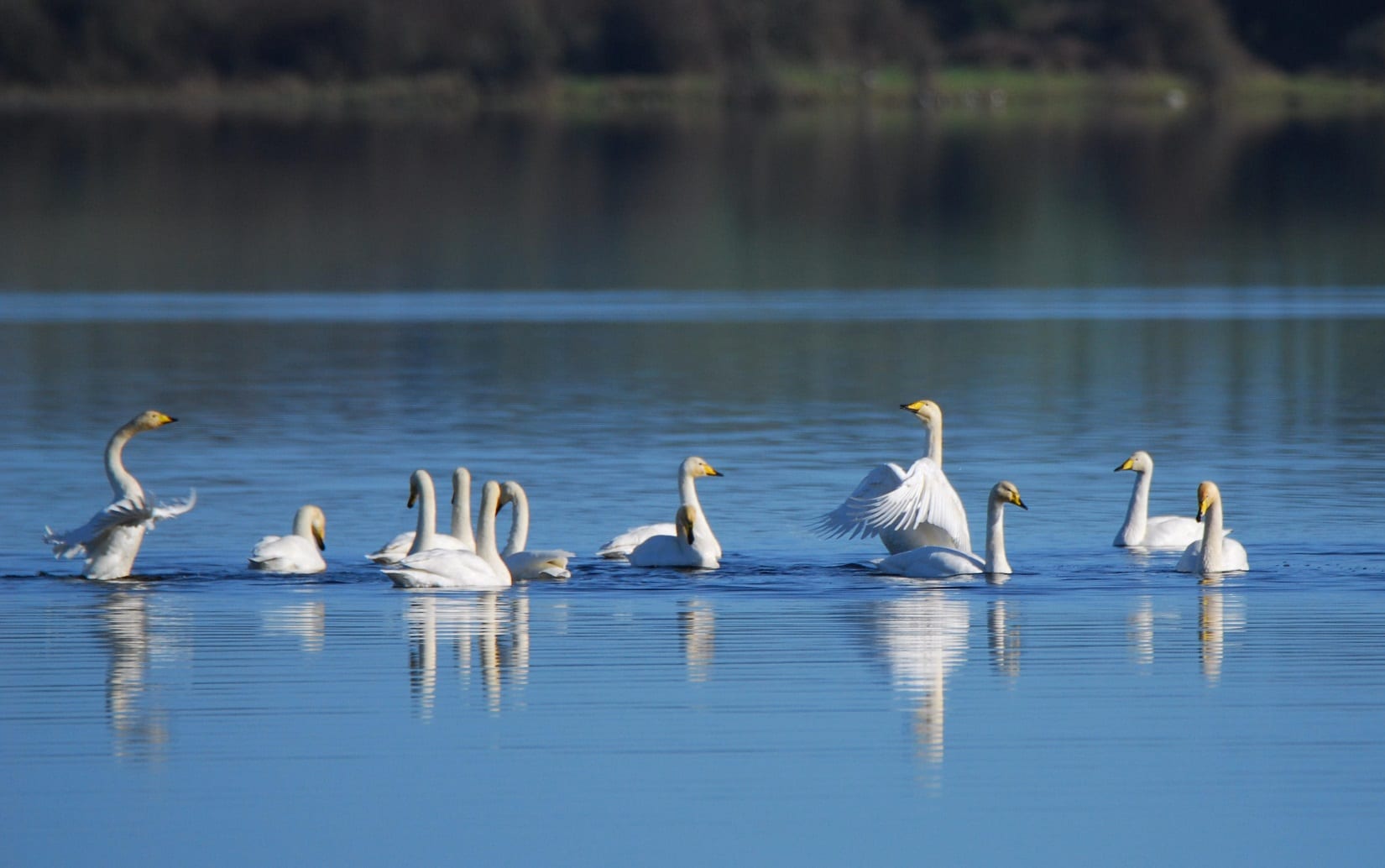
International Swan Census will take place in January 2026
The results of the last International Swan Census in 2020 showed an increase in Whooper Swan numbers in Ireland – up 24.9% in the Republic of Ireland and up 32% in Northern Ireland – compared to the previous census in 2015. At 19,111 birds, this was the highest number recorded in Ireland to date (14,467 in Republic of Ireland and 4,644 in Northern Ireland).
Nevertheless, the proportion of the overall Icelandic-breeding flyway population of Whooper Swans that winter in Ireland is actually decreasing. This is largely due to an increase in the number of birds at sites in England, where there were rapid rises recorded at some key sites.
All of the Icelandic-breeding Whooper Swan population winters in Ireland and Great Britain (with a very small number wintering in the Channel Islands and Isle of Man), while a proportion remains in Iceland. A total of 43,255 birds was recorded across this region in 2020, with ~49% occurring in Britain, ~44% on the island of Ireland, and ~7% overwintering in Iceland. With Ireland supporting such a significant proportion of the international population of this species it is critical that we regularly assess how the birds are faring.
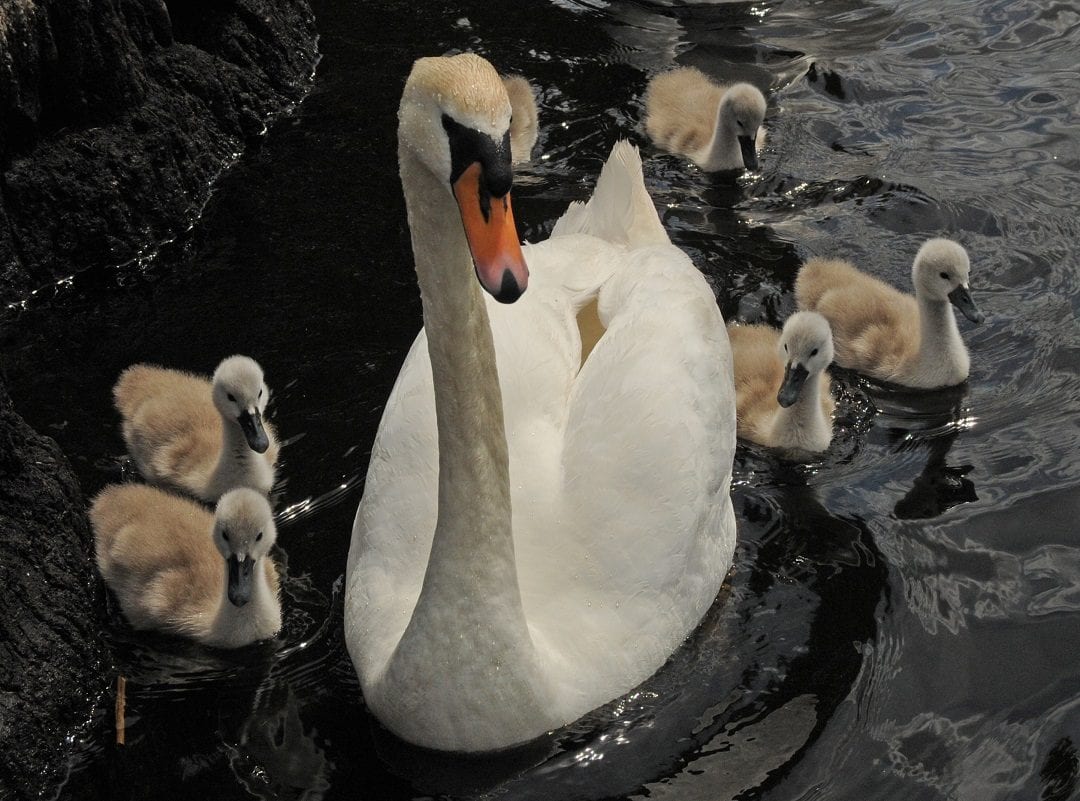
 Whooper Swans
(Photo: Brian Burke)
Whooper Swans
(Photo: Brian Burke)
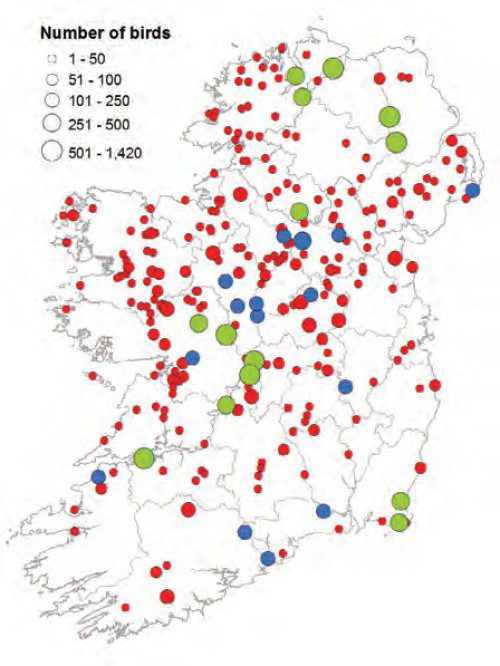 Distribution of Whooper Swans in Ireland in the January 2020 census, at site level. Sites exceeding the international 1% threshold are illustrated in green, those exceeding the national 1% threshold are in blue and other sites are shown in red.
 Bewick's Swan
(Photo: Richard T. Mills)
Bewick's Swan
(Photo: Richard T. Mills)