
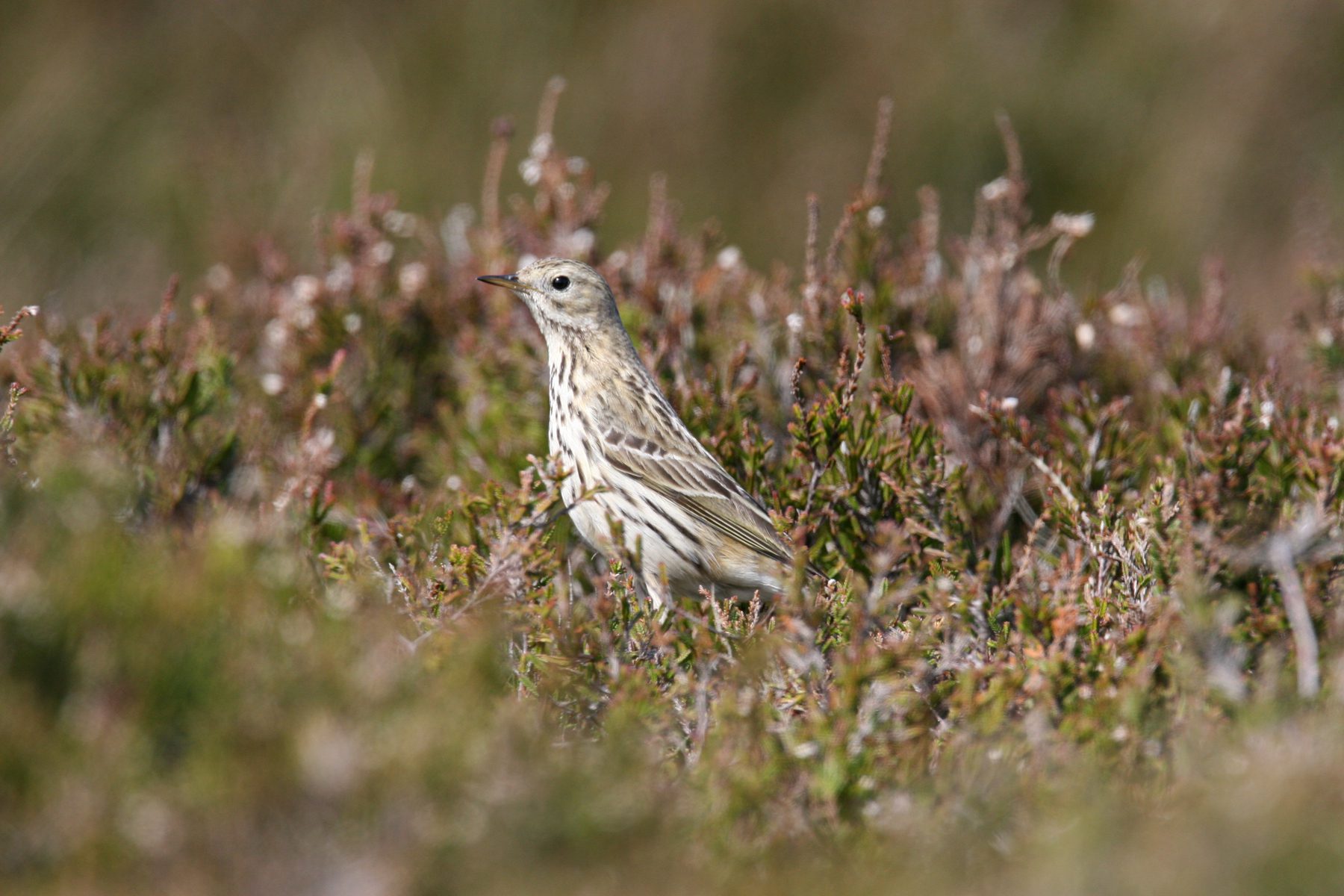
About Moorland Habitat

The moorland group includes mostly upland peat-based habitats, including wet and dry heath, blanket bog and upland grassland. These habitats are found where soils are acidic, often wet and nutrient poor, where heather, grasses, sedges and mosses thrive.   The long tradition of human influence in the uplands has meant that the plants and animals that live there have evolved alongside the activities of people for thousands of years. However, accelerated changes and activities, including drainage, peat cutting, over grazing, afforestation and wind farms constructed on peat, have reduced the quantity and quality of habitats available to birds, leading to significant declines in some bird populations. Restoration of moorland habitats provides many other benefits, including the prevention of carbon release and improvements to water quality.

Areas of Opportunity for Restoration

We identified 457 km2 of moorland habitat in Natura 2000 sites (340km2 in Special Areas of Conservation (SAC) and 117 km2 of moorland in Special Protection Areas (SPAs) where habitat restoration would most benefit threatened bird species. This is also the habitat group with the most land in public ownership (84 km2), where restoration measures could more easily be  targeted. Data on raised bogs in the Midlands need to be further analysed and areas of opportunity for restoration are not included in this report.

Map of Areas of Opportunity for restoration of Moorland habitats. Click on a square to see associated species and other information.

Restoration Measures

Restoration measures for moorland habitats to benefit threatened bird species include re-wetting drained peatlands, removing inappropriately planted forestry on peat soils, cessation of peat extraction, restoring peat-forming vegetation and controlling invasive species and scrub encroachment to maintain open conditions. Reducing disturbance and predation pressure is critical as is protecting large, connected and open habitats.