Farmland

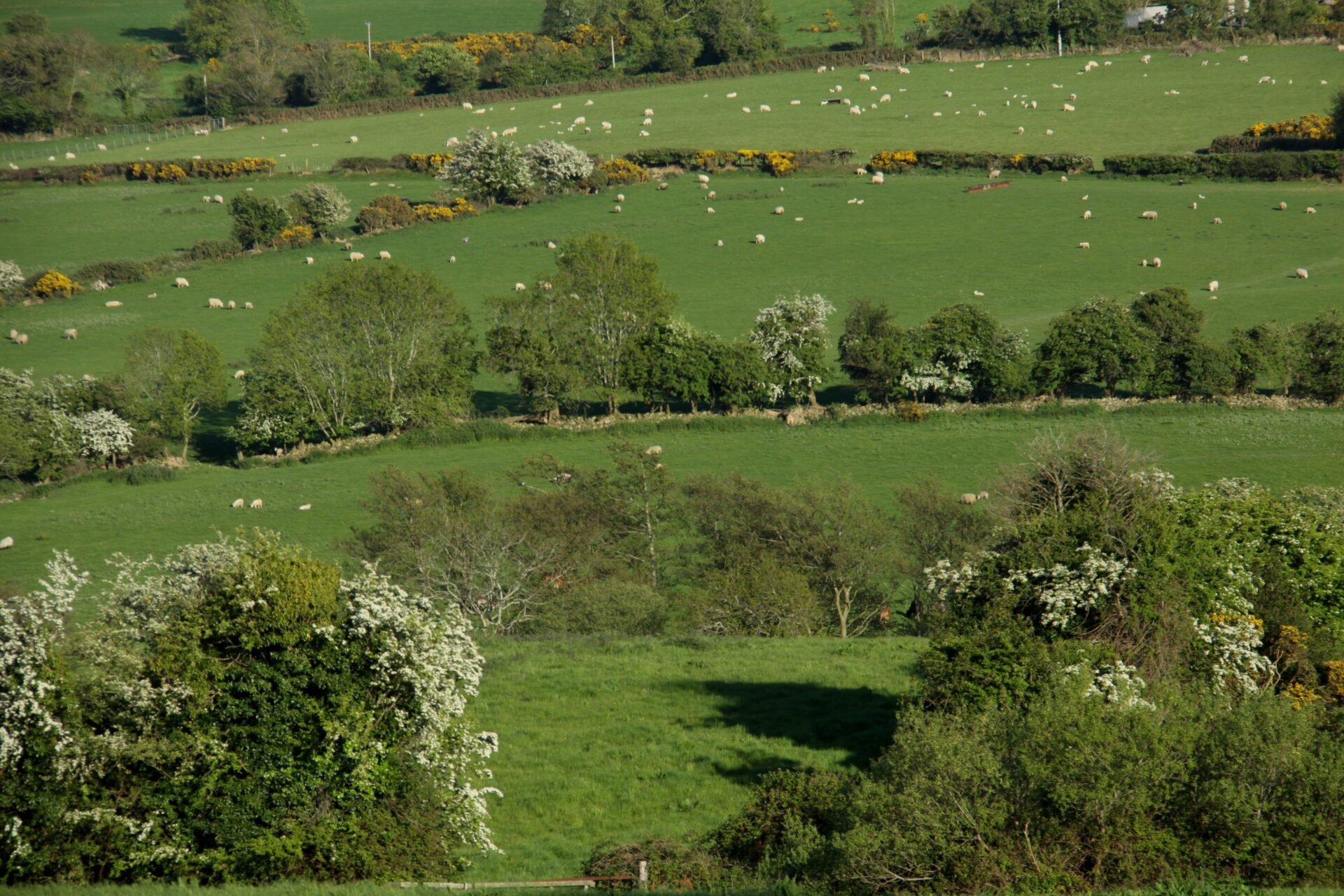
Farmland in Ireland supports a rich diversity of habitats important for many threatened birds and other wildlife. With the active involvement and support of farmers, habitats such as species-rich grasslands are important for Skylarks, traditional hay meadows shelter breeding Corncrakes and rough grazing areas can be important for Hen Harriers. In winter, too, flooded grasslands support geese and swans and stubble fields can sustain small birds which rely on seeds.  We identified 29 species that would benefit from the restoration of farmland habitats. These include rare breeding species which in Ireland now are restricted to just a few places, such as Curlew and Lapwing, but also those which are more widespread, such as Kestrel and Yellowhammer. Wintering waterbirds, such as Greenland White-fronted Goose, are also included in cases where farmland is an important habitat that supports their populations.

Areas of Opportunity for Restoration

Most of these farmland bird species are found on a range of habitats across Ireland and there is often less detailed information on their specific locations, making the identification of the Areas of Opportunity more challenging.  However, using information from the Bird Atlases, together with more detailed spatial data where available, we were able to identify those 10km squares which had a high number of the focal species, and therefore where measures to protect and restore farmland habitats would be most beneficial.


Areas where there are higher numbers of scarce breeding species include the midland bogs and wetlands of the River Shannon from Lough Ree to Lough Derg, parts of Connemara and north Co. Donegal.  Areas important for wintering waterbirds associated with farmland occur around many of the main estuaries, including Lough Swilly, Dundalk Bay, the Shannon/Fergus Estuary and the Wexford Slobs. Areas with higher numbers of the more widespread target species are distributed across Ireland, therefore measures to restore farmland habitats, particularly through agri-environment schemes, which focus on measures to support these species, will be generally beneficial.

Map of Areas of Opportunity for restoration of Farmland habitats. Click on a square to see associated species and other information.

Restoration Measures

Restoration measures for the target farmland bird species in general should focus on providing the ecological support networks that provide sufficient nesting, roosting  and feeding areas to allow populations to recover to sustainable levels. As most farmland in Ireland is in private ownership, agri-environment schemes are the main way in which farmers can be incentivised to undertake measures to benefit farmland birds.  For birds of prey such as Kestrel and Barn Owl, this includes measures to provide habitats, such as extensively managed grasslands, rough grass margins and high-quality hedgerows, as well as providing appropriately sited nest boxes.

For small farmland birds such as Yellowhammer, measures such as leaving winter stubbles or providing wild bird cover crops can provide seeds to help them survive the winter. These measure will also benefit Stock Doves, together with retaining mature trees that can provide nest sites.

For breeding waders, reducing predation of nests and chicks is the most important measure. This can be through predator-proof fencing and targeted predator control.  Other measures include providing wet areas such as scrapes or wet flushes in spring and low intensity grazing management of extensive pastures.

For wintering farmland birds, including geese and wintering waders, providing undisturbed areas of wetland is key, including coastal pastures and floodplain grasslands. These areas should be left undisturbed over winter, with low intensity management.

The Areas of Opportunity above indicate the areas where agri-environment schemes with measures which provide these and other habitats beneficial to threatened farmland birds should be targeted.